Bai Jaewoo, Kim You-Tae, Ryu Sangryeol, Lee Ju-Hoon
Department of Food and Animal Biotechnology, Department of Agricultural Biotechnology, Center for Food and Bioconvergence, Research Institute of Agriculture and Life Sciences, Seoul National University Seoul, South Korea.
Department of Food Science and Biotechnology and Institute of Life Science and Resources, Kyung Hee University Yongin, South Korea.
Front Microbiol. 2016 Apr 8;7:474. doi: 10.3389/fmicb.2016.00474. eCollection 2016.
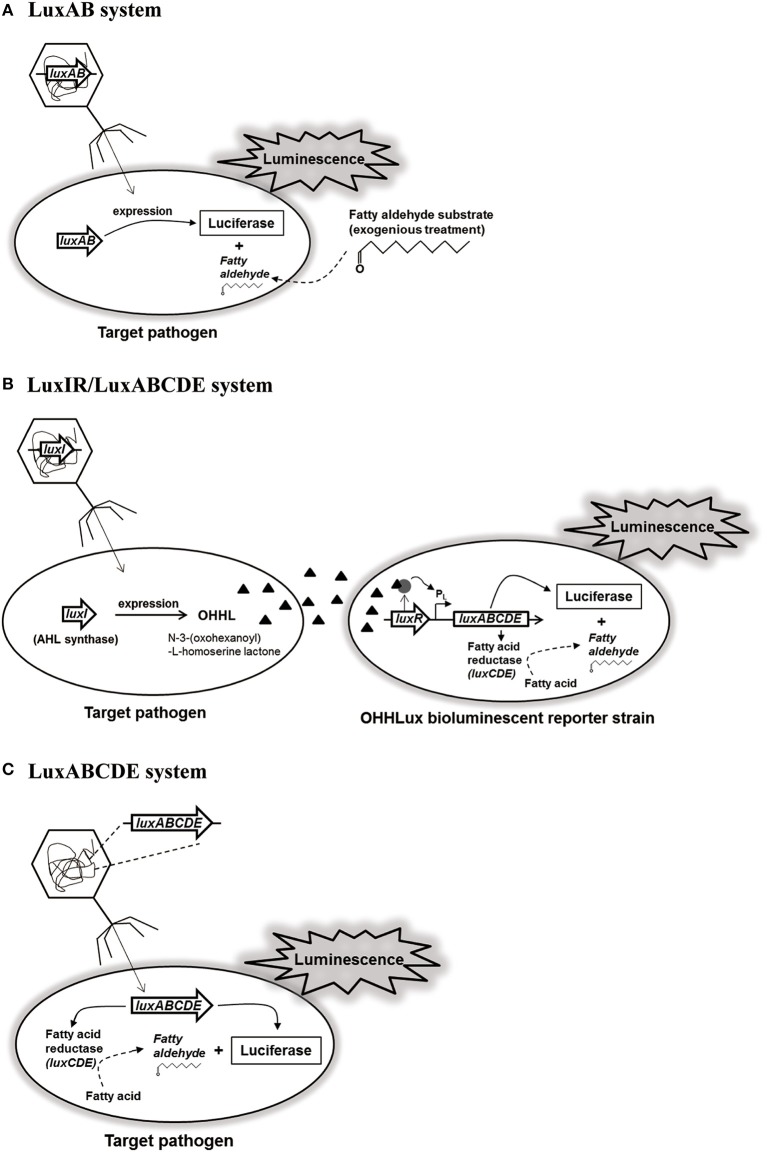
Bacteriophages have been suggested as natural food preservatives as well as rapid detection materials for food-borne pathogens in various foods. Since Listeria monocytogenes-targeting phage cocktail (ListShield) was approved for applications in foods, numerous phages have been screened and experimentally characterized for phage applications in foods. A single phage and phage cocktail treatments to various foods contaminated with food-borne pathogens including E. coli O157:H7, Salmonella enterica, Campylobacter jejuni, Listeria monocytogenes, Staphylococcus aureus, Cronobacter sakazakii, and Vibrio spp. revealed that they have great potential to control various food-borne pathogens and may be alternative for conventional food preservatives. In addition, phage-derived endolysins with high host specificity and host lysis activities may be preferred to food applications rather than phages. For rapid detection of food-borne pathogens, cell-wall binding domains (CBDs) from endolysins have been suggested due to their high host-specific binding. Fluorescence-tagged CBDs have been successfully evaluated and suggested to be alternative materials of expensive antibodies for various detection applications. Most recently, reporter phage systems have been developed and tested to confirm their usability and accuracy for specific detection. These systems revealed some advantages like rapid detection of only viable pathogenic cells without interference by food components in a very short reaction time, suggesting that these systems may be suitable for monitoring of pathogens in foods. Consequently, phage is the next-generation biocontrol agent as well as rapid detection tool to confirm and even identify the food-borne pathogens present in various foods.
噬菌体已被提议作为天然食品防腐剂以及各种食品中食源性病原体的快速检测材料。自从靶向单核细胞增生李斯特菌的噬菌体鸡尾酒制剂(ListShield)被批准用于食品中以来,已经筛选了许多噬菌体并对其在食品中的应用进行了实验表征。用单一噬菌体和噬菌体鸡尾酒制剂处理被包括大肠杆菌O157:H7、肠炎沙门氏菌、空肠弯曲菌、单核细胞增生李斯特菌、金黄色葡萄球菌、阪崎肠杆菌和弧菌属在内的食源性病原体污染的各种食品,结果表明它们在控制各种食源性病原体方面具有巨大潜力,并且可能成为传统食品防腐剂的替代品。此外,具有高宿主特异性和宿主裂解活性的噬菌体衍生溶菌酶可能比噬菌体更适合食品应用。对于食源性病原体的快速检测,由于其高宿主特异性结合,已有人提出使用来自溶菌酶的细胞壁结合结构域(CBD)。荧光标记的CBD已成功得到评估,并被认为是用于各种检测应用的昂贵抗体的替代材料。最近,已开发并测试了报告噬菌体系统,以确认其在特异性检测中的可用性和准确性。这些系统显示出一些优点,例如在非常短的反应时间内仅快速检测存活的致病细胞而不受食品成分的干扰,这表明这些系统可能适用于监测食品中的病原体。因此,噬菌体是下一代生物防治剂以及快速检测工具,可用于确认甚至识别各种食品中存在的食源性病原体。