Fedorenko Evelina, Varley Rosemary
Psychiatry Department, Massachusetts General Hospital, Charlestown, Massachusetts.
Harvard Medical School, Boston, Massachusetts.
Ann N Y Acad Sci. 2016 Apr;1369(1):132-53. doi: 10.1111/nyas.13046. Epub 2016 Apr 20.
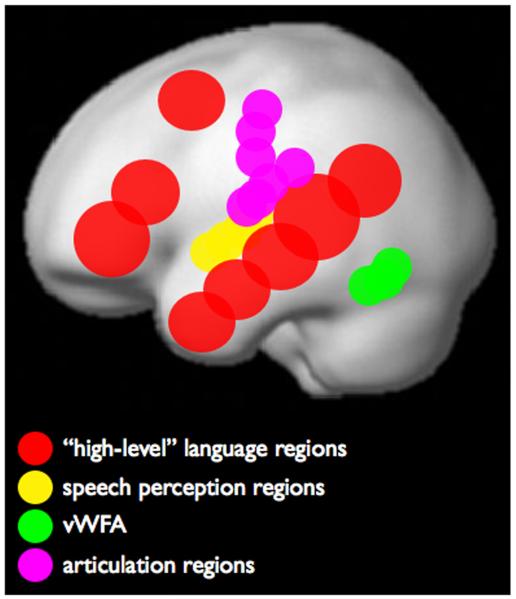
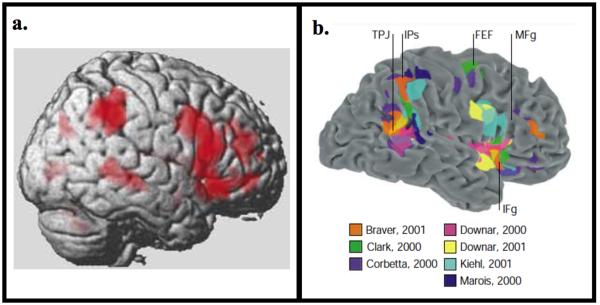
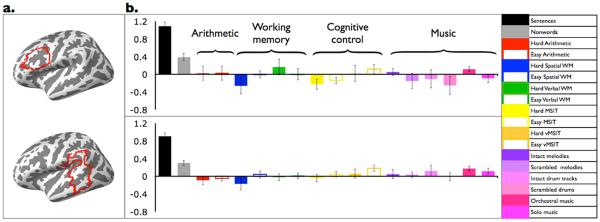
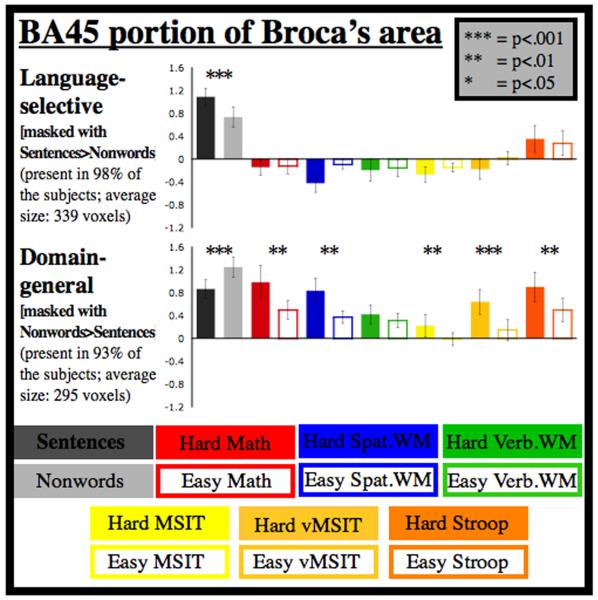
Is thought possible without language? Individuals with global aphasia, who have almost no ability to understand or produce language, provide a powerful opportunity to find out. Surprisingly, despite their near-total loss of language, these individuals are nonetheless able to add and subtract, solve logic problems, think about another person's thoughts, appreciate music, and successfully navigate their environments. Further, neuroimaging studies show that healthy adults strongly engage the brain's language areas when they understand a sentence, but not when they perform other nonlinguistic tasks such as arithmetic, storing information in working memory, inhibiting prepotent responses, or listening to music. Together, these two complementary lines of evidence provide a clear answer: many aspects of thought engage distinct brain regions from, and do not depend on, language.
没有语言就无法思考吗?患有完全性失语症的人几乎没有理解或生成语言的能力,这为我们提供了一个绝佳的机会来探寻答案。令人惊讶的是,尽管他们几乎完全丧失了语言能力,但这些人仍然能够进行加减法运算、解决逻辑问题、思考他人的想法、欣赏音乐并成功地在周围环境中活动。此外,神经影像学研究表明,健康的成年人在理解句子时会强烈激活大脑的语言区域,但在执行其他非语言任务时,如算术、在工作记忆中存储信息、抑制优势反应或听音乐时,则不会激活这些区域。这两条相互补充的证据共同给出了一个明确的答案:思维的许多方面所涉及的大脑区域与语言不同,且不依赖于语言。