Bemm Felix, Becker Dirk, Larisch Christina, Kreuzer Ines, Escalante-Perez Maria, Schulze Waltraud X, Ankenbrand Markus, Van de Weyer Anna-Lena, Krol Elzbieta, Al-Rasheid Khaled A, Mithöfer Axel, Weber Andreas P, Schultz Jörg, Hedrich Rainer
Center for Computational and Theoretical Biology, Campus Hubland Nord; Department of Bioinformatics, Biocenter, Am Hubland, University of Würzburg, D-97218 Würzburg, Germany;
Institute for Molecular Plant Physiology and Biophysics, Biocenter, University of Würzburg, 97082 Würzburg, Germany;
Genome Res. 2016 Jun;26(6):812-25. doi: 10.1101/gr.202200.115. Epub 2016 May 4.
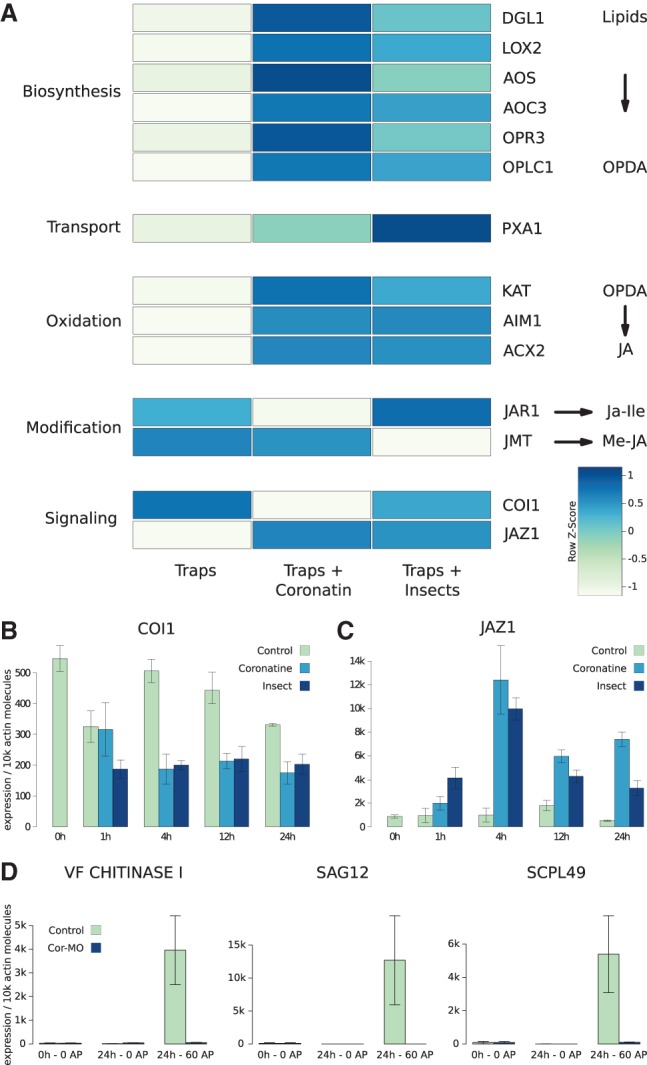
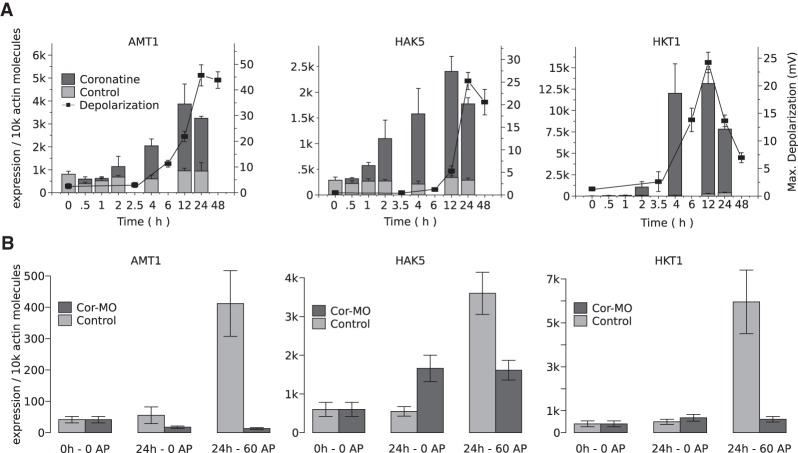
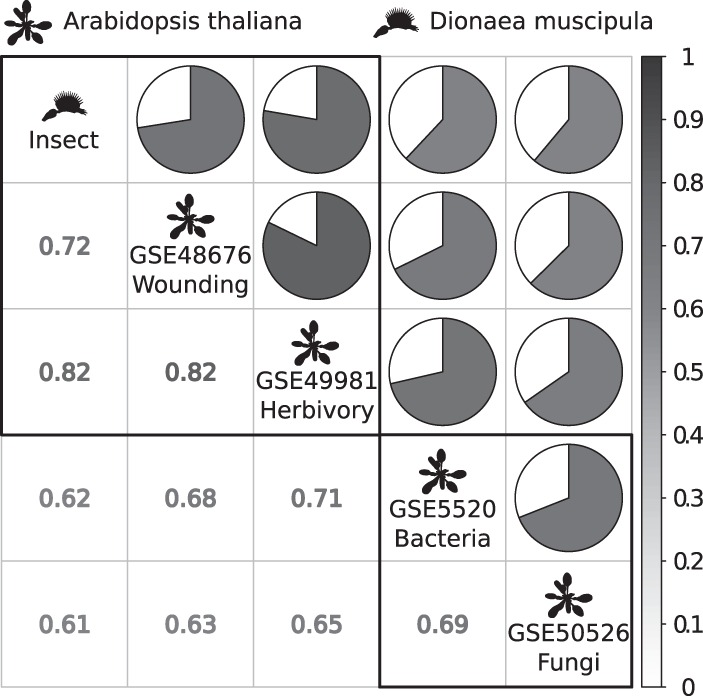
Although the concept of botanical carnivory has been known since Darwin's time, the molecular mechanisms that allow animal feeding remain unknown, primarily due to a complete lack of genomic information. Here, we show that the transcriptomic landscape of the Dionaea trap is dramatically shifted toward signal transduction and nutrient transport upon insect feeding, with touch hormone signaling and protein secretion prevailing. At the same time, a massive induction of general defense responses is accompanied by the repression of cell death-related genes/processes. We hypothesize that the carnivory syndrome of Dionaea evolved by exaptation of ancient defense pathways, replacing cell death with nutrient acquisition.
尽管自达尔文时代起就已了解植物食肉的概念,但允许植物捕食动物的分子机制仍然未知,主要原因是完全缺乏基因组信息。在这里,我们表明,捕蝇草陷阱的转录组格局在昆虫取食后显著转向信号转导和养分运输,其中触摸激素信号传导和蛋白质分泌占主导地位。与此同时,一般防御反应的大量诱导伴随着细胞死亡相关基因/过程的抑制。我们推测,捕蝇草的食肉综合征是通过古老防御途径的适应性改变进化而来的,用养分获取取代了细胞死亡。