Pani Giuseppe, Verslegers Mieke, Quintens Roel, Samari Nada, de Saint-Georges Louis, van Oostveldt Patrick, Baatout Sarah, Benotmane Mohammed Abderrafi
Radiobiology Unit, Laboratory of Molecular and Cellular Biology, Institute for Environment, Health and Safety, Belgian Nuclear Research Centre, SCK•CEN, Mol, Belgium.
Cell Systems and Imaging Research Group (CSI), Department of Molecular Biotechnology, Ghent University, Ghent, Belgium.
PLoS One. 2016 May 20;11(5):e0155260. doi: 10.1371/journal.pone.0155260. eCollection 2016.
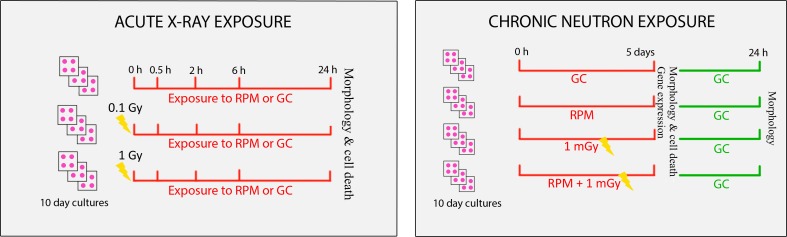
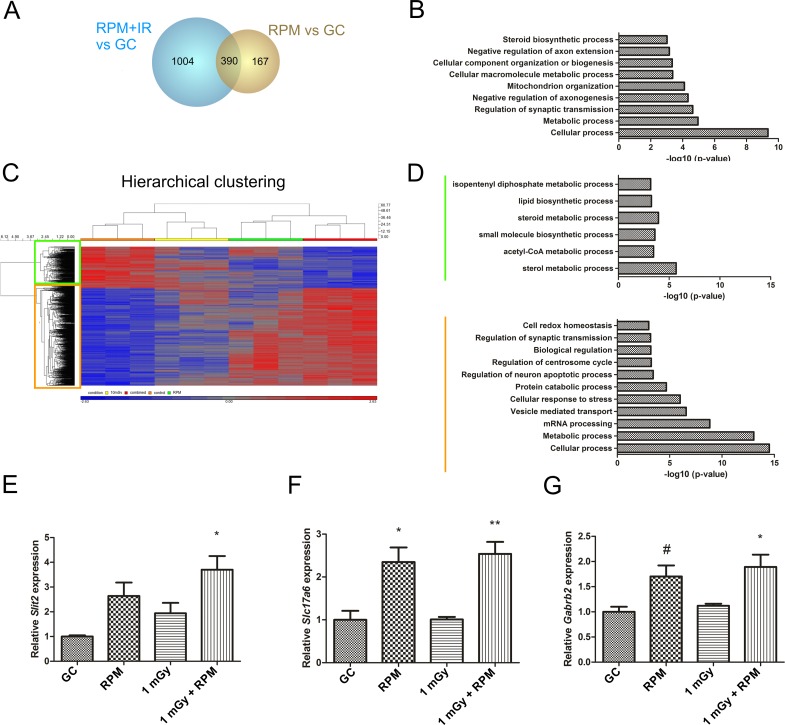
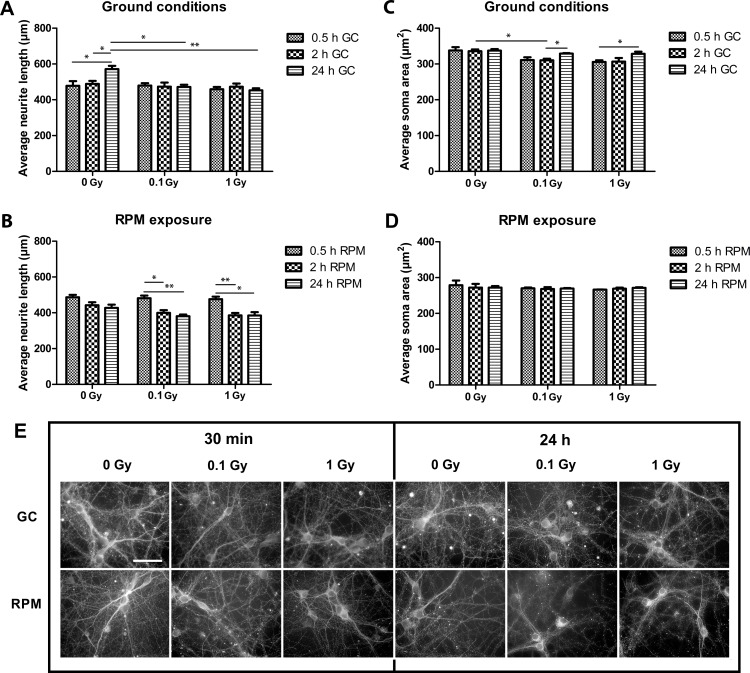
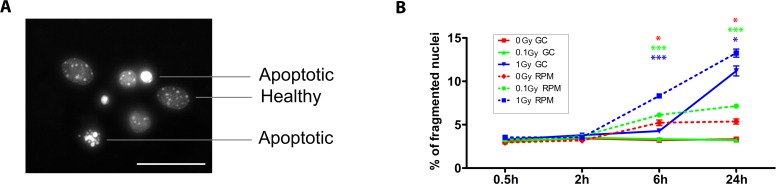
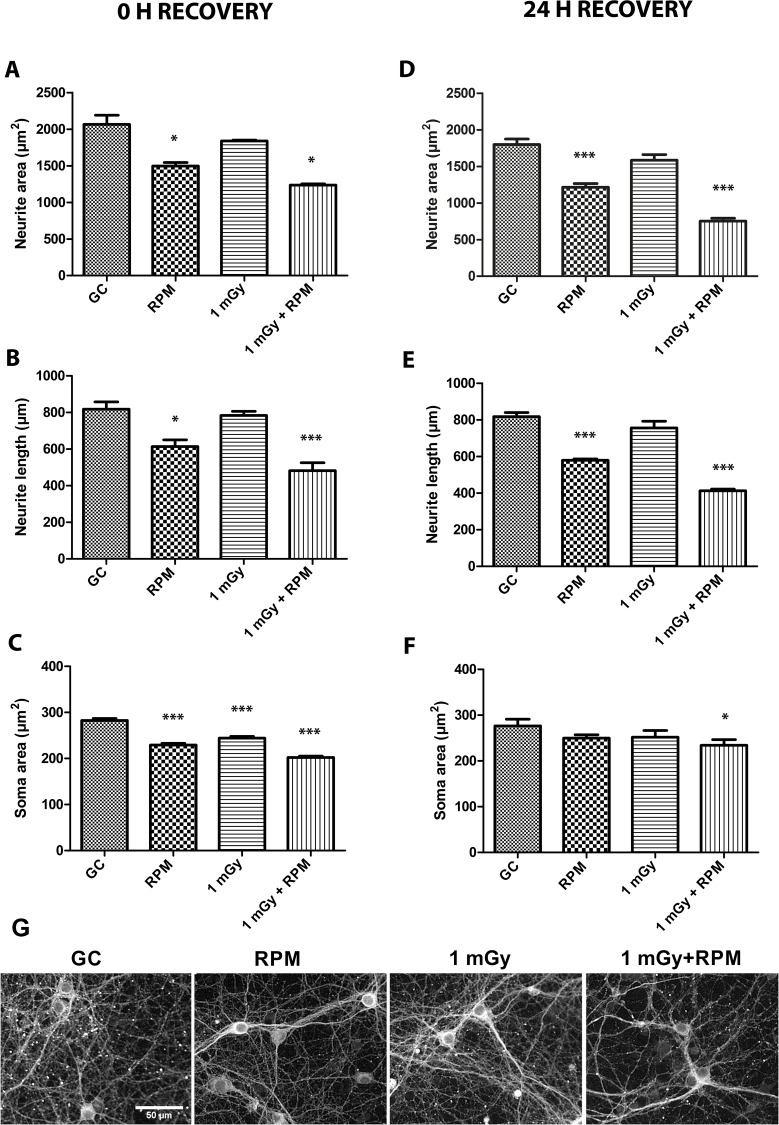
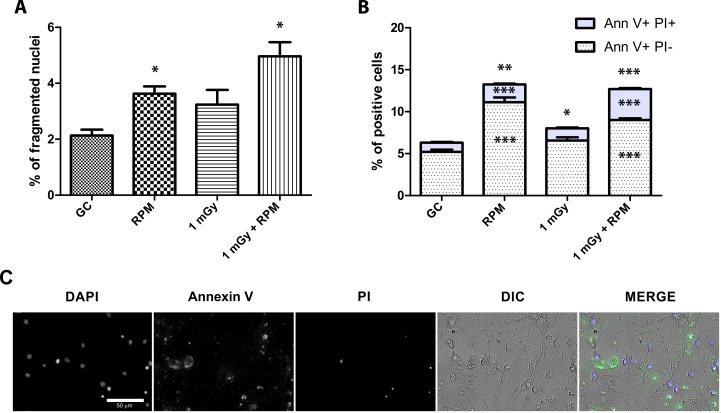
During orbital or interplanetary space flights, astronauts are exposed to cosmic radiations and microgravity. However, most earth-based studies on the potential health risks of space conditions have investigated the effects of these two conditions separately. This study aimed at assessing the combined effect of radiation exposure and microgravity on neuronal morphology and survival in vitro. In particular, we investigated the effects of simulated microgravity after acute (X-rays) or during chronic (Californium-252) exposure to ionizing radiation using mouse mature neuron cultures. Acute exposure to low (0.1 Gy) doses of X-rays caused a delay in neurite outgrowth and a reduction in soma size, while only the high dose impaired neuronal survival. Of interest, the strongest effect on neuronal morphology and survival was evident in cells exposed to microgravity and in particular in cells exposed to both microgravity and radiation. Removal of neurons from simulated microgravity for a period of 24 h was not sufficient to recover neurite length, whereas the soma size showed a clear re-adaptation to normal ground conditions. Genome-wide gene expression analysis confirmed a modulation of genes involved in neurite extension, cell survival and synaptic communication, suggesting that these changes might be responsible for the observed morphological effects. In general, the observed synergistic changes in neuronal network integrity and cell survival induced by simulated space conditions might help to better evaluate the astronaut's health risks and underline the importance of investigating the central nervous system and long-term cognition during and after a space flight.
在轨道或行星际太空飞行期间,宇航员会受到宇宙辐射和微重力的影响。然而,大多数基于地球的关于太空条件潜在健康风险的研究都是分别调查这两种条件的影响。本研究旨在评估辐射暴露和微重力对体外神经元形态和存活的联合作用。具体而言,我们使用小鼠成熟神经元培养物,研究了急性(X射线)或慢性(锎-252)暴露于电离辐射后模拟微重力的影响。急性暴露于低剂量(0.1 Gy)的X射线会导致神经突生长延迟和胞体大小减小,而只有高剂量会损害神经元存活。有趣的是,对神经元形态和存活影响最强的是暴露于微重力的细胞,尤其是同时暴露于微重力和辐射的细胞。将神经元从模拟微重力环境中移除24小时不足以恢复神经突长度,而胞体大小则显示出明显重新适应正常地面条件的情况。全基因组基因表达分析证实了参与神经突延伸、细胞存活和突触通讯的基因发生了调控,这表明这些变化可能是观察到的形态学效应的原因。总体而言,模拟太空条件诱导的神经元网络完整性和细胞存活方面观察到的协同变化,可能有助于更好地评估宇航员的健康风险,并强调在太空飞行期间及之后研究中枢神经系统和长期认知的重要性。