Bouchami Ons, de Lencastre Herminia, Miragaia Maria
Laboratory of Molecular Genetics, Instituto de Tecnologia Química e Biológica (ITQB) António Xavier, Oeiras, Portugal.
Laboratory of Bacterial Evolution and Molecular Epidemiology, Instituto de Tecnologia Química e Biológica (ITQB) António Xavier, Oeiras, Portugal.
PLoS One. 2016 Jun 1;11(6):e0156653. doi: 10.1371/journal.pone.0156653. eCollection 2016.
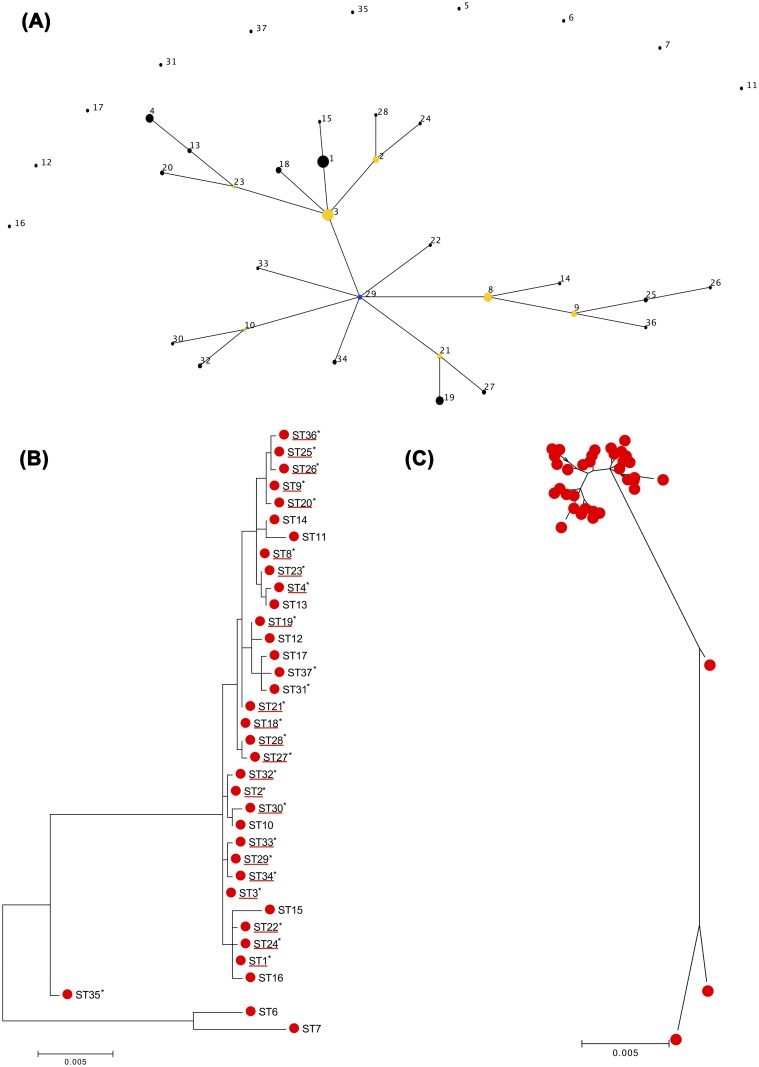
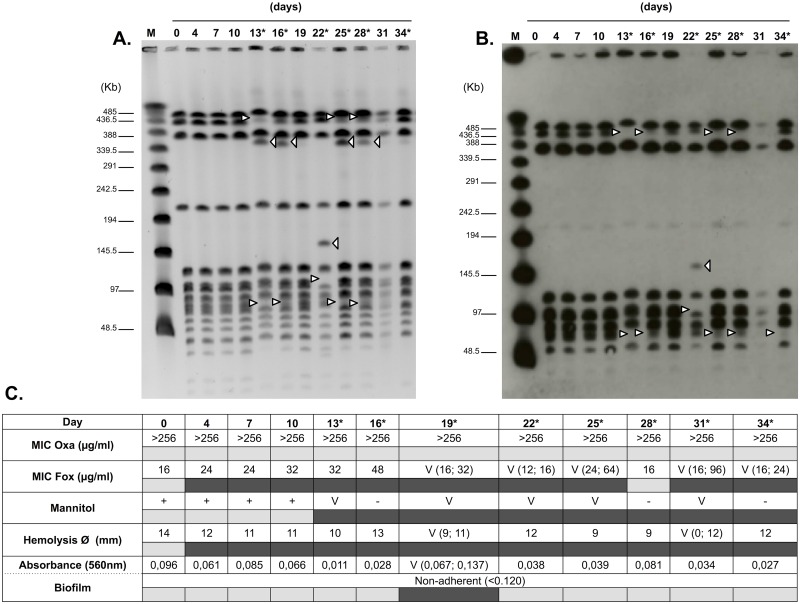
Staphylococcus haemolyticus is one of the most common pathogens associated with medical-device related infections, but its molecular epidemiology is poorly explored. In the current study, we aimed to better understand the genetic mechanisms contributing to S. haemolyticus diversity in the hospital environment and their impact on the population structure and clinical relevant phenotypic traits. The analysis of a representative S. haemolyticus collection by multilocus sequence typing (MLST) has identified a single highly prevalent and diverse genetic lineage of nosocomial S. haemolyticus clonal complex (CC) 29 accounting for 91% of the collection of isolates disseminated worldwide. The examination of the sequence changes at MLST loci during clonal diversification showed that recombination had a higher impact than mutation in shaping the S. haemolyticus population. Also, we ascertained that another mechanism contributing significantly to clonal diversification and adaptation was mediated by insertion sequence (IS) elements. We found that all nosocomial S. haemolyticus, belonging to different STs, were rich in IS1272 copies, as determined by Southern hybridization of macrorestriction patterns. In particular, we observed that the chromosome of a S. haemolyticus strain within CC29 was highly unstable during serial growth in vitro which paralleled with IS1272 transposition events and changes in clinically relevant phenotypic traits namely, mannitol fermentation, susceptibility to beta-lactams, biofilm formation and hemolysis. Our results suggest that recombination and IS transposition might be a strategy of adaptation, evolution and pathogenicity of the major S. haemolyticus prevalent lineage in the hospital environment.
溶血葡萄球菌是与医疗设备相关感染相关的最常见病原体之一,但其分子流行病学研究较少。在本研究中,我们旨在更好地了解导致医院环境中溶血葡萄球菌多样性的遗传机制及其对种群结构和临床相关表型特征的影响。通过多位点序列分型(MLST)对具有代表性的溶血葡萄球菌菌株进行分析,确定了医院溶血葡萄球菌克隆复合体(CC)29的一个单一高度流行且多样的遗传谱系,占全球传播的分离株集合的91%。对克隆多样化过程中MLST位点序列变化的检查表明,重组在塑造溶血葡萄球菌种群方面比突变具有更高的影响。此外,我们确定另一个对克隆多样化和适应性有显著贡献的机制是由插入序列(IS)元件介导的。通过对酶切图谱的Southern杂交确定,我们发现所有属于不同ST型的医院溶血葡萄球菌都富含IS1272拷贝。特别是,我们观察到CC29内的一株溶血葡萄球菌菌株的染色体在体外连续传代培养过程中高度不稳定,这与IS1272转座事件以及临床相关表型特征(即甘露醇发酵、对β-内酰胺类药物的敏感性、生物膜形成和溶血)的变化平行。我们的结果表明,重组和IS转座可能是医院环境中主要溶血葡萄球菌流行谱系适应、进化和致病的一种策略。