Muhammad Abubakar Amali, Arulselvan Palanisamy, Cheah Pike See, Abas Farida, Fakurazi Sharida
Laboratory of Vaccine and Immunotherapeutics, Institute of Bioscience, Serdang, Malaysia.
Unit of Anatomy, Department of Human Anatomy, Faculty of Medicine and Health Sciences, Serdang, Malaysia.
Drug Des Devel Ther. 2016 May 24;10:1715-30. doi: 10.2147/DDDT.S96968. eCollection 2016.
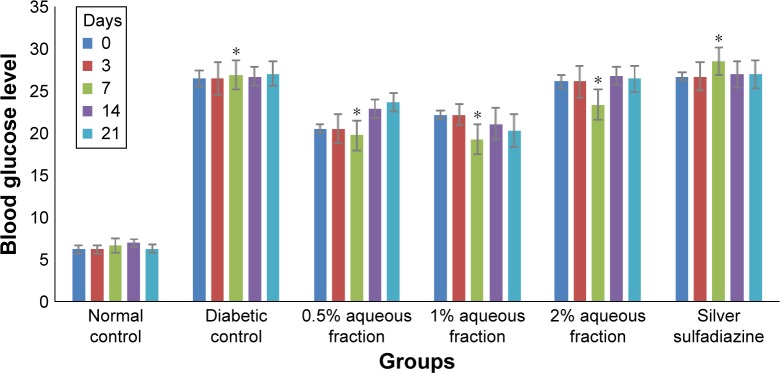
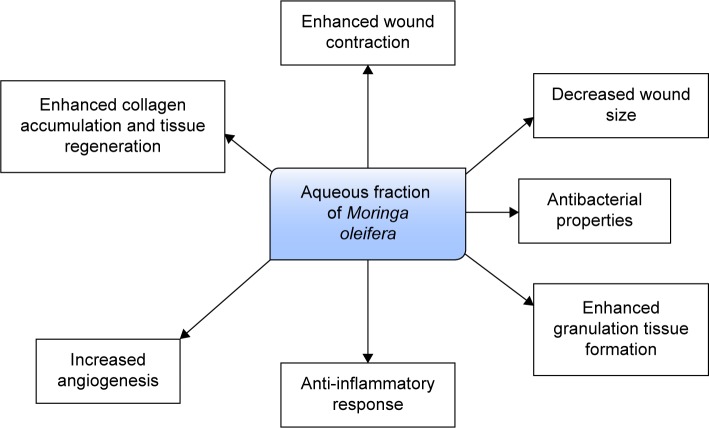
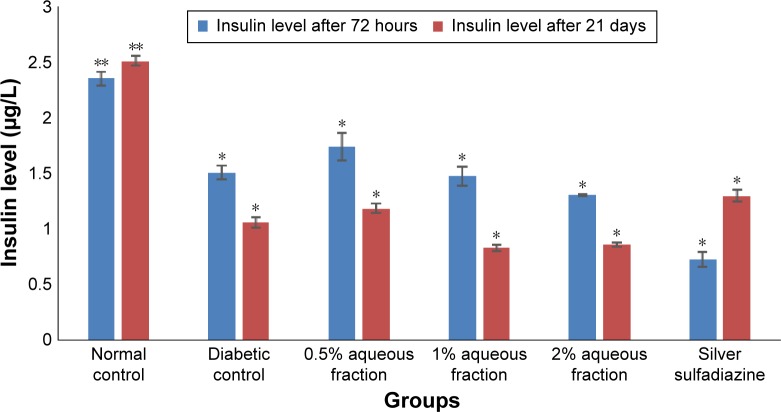
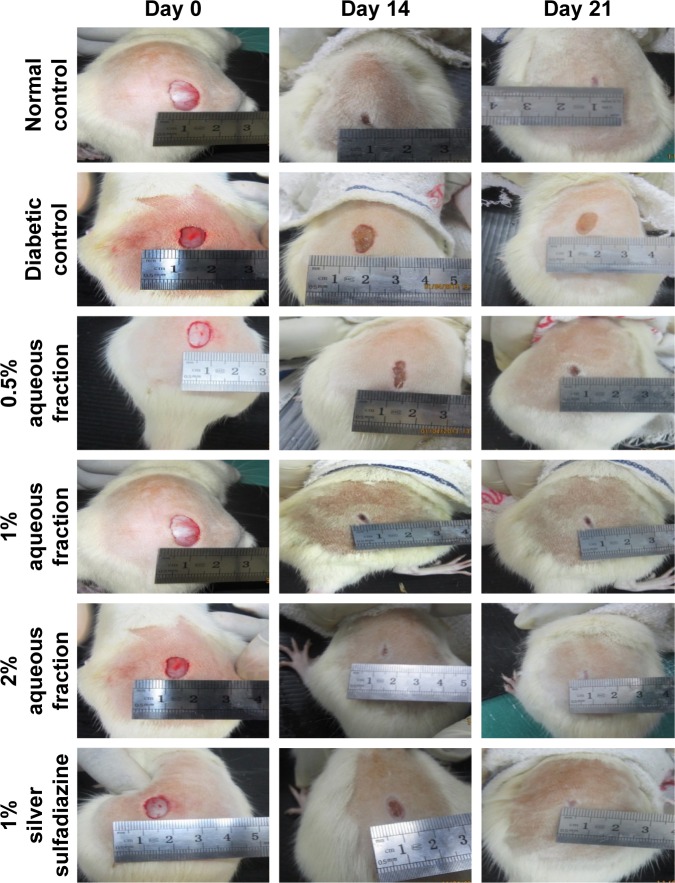
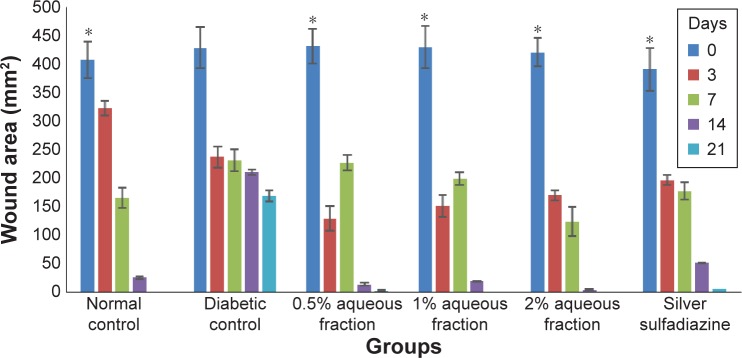
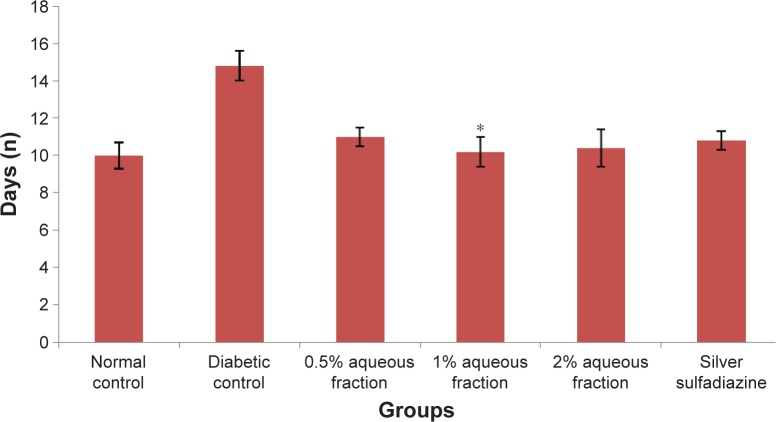
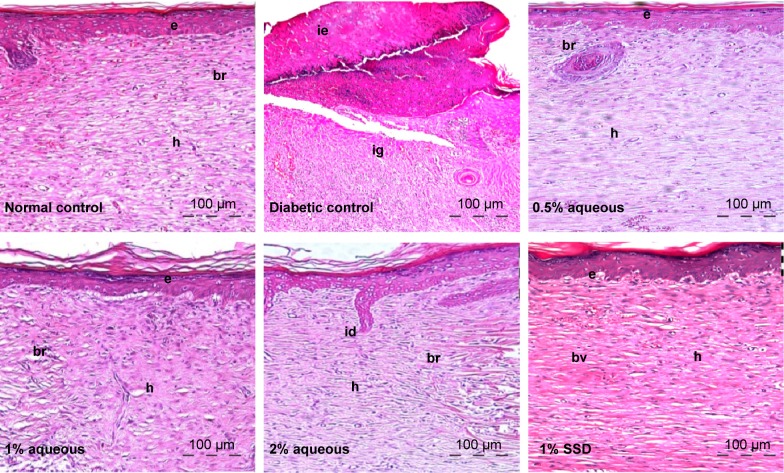
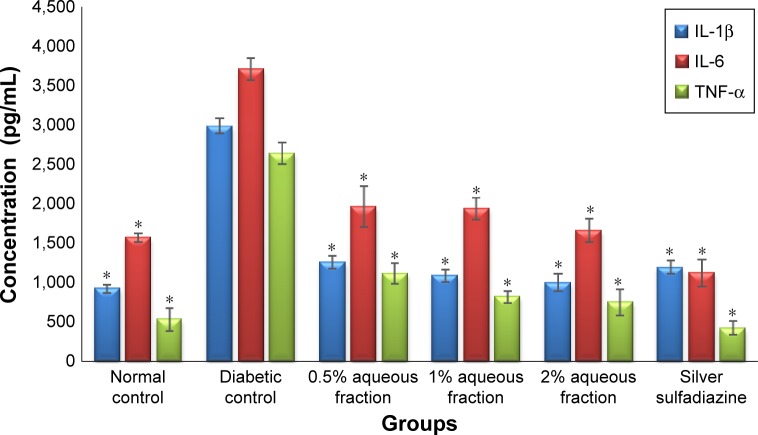
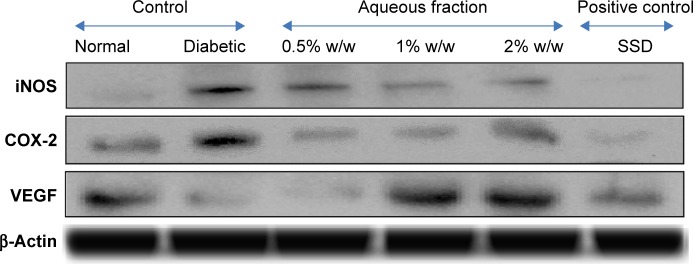
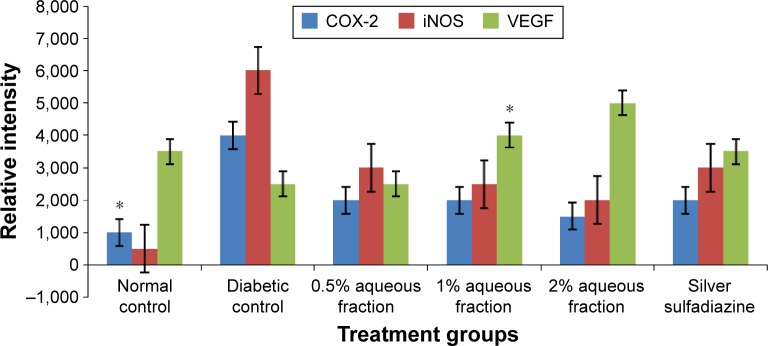
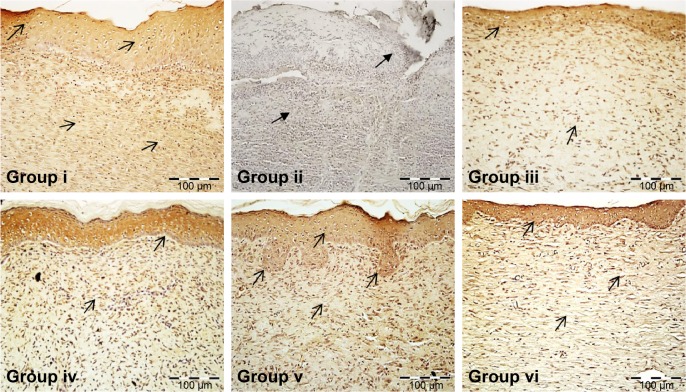
Diabetic foot ulcer is a serious complication of diabetes, which affects a significant percentage (15%) of diabetics and up to 15%-24% of those affected may require amputation. Therefore, the economic burden of diabetic foot ulcers is enormous and is associated with high cost of treatment and prolongs hospitalization. The present study was conducted to evaluate antibacterial and in vivo wound healing activities of an aqueous fraction of Moringa oleifera on a diabetic condition. Antibacterial activity testing was carried out using agar well and tube dilution techniques. The in vivo study was conducted using six groups of animals that comprise of one normal and diabetic control group each, three treatment groups of 0.5%, 1%, and 2% w/w aqueous fraction, and a positive control group (1% w/w silver sulfadiazine). Rats were induced with diabetes using a combination of streptozotocin 65 and 150 mg/kg nicotinamide daily for 2 days, and excision wounds were created and treated with various doses (0.5%, 1%, and 2% w/w aqueous fraction) daily for 21 days. Biophysical, histological, and biochemical parameters were investigated. The results of the study revealed that aqueous fraction possessed antibacterial activity through inhibition of growth of Staphylococcus aureus, Pseudomonas aeruginosa, and Escherichia coli organisms. The topical application of aqueous fraction revealed enhancement of wound healing under sustained hyperglycemic condition for the duration of the experiment. This enhancement was achieved through decreased wound size, improved wound contraction, and tissue regeneration, as well as downregulation of inflammatory mediators, such as tumor necrosis factor-α, interleukin-1β, interleukin-6, inducible nitric oxide synthase, and cyclooxygenase-2, and upregulation of an angiogenic marker vascular endothelial growth factor in wound tissue treated with various doses of aqueous fraction of M. oleifera. The findings suggest that aqueous fraction of M. oleifera containing Vicenin-2 active compound may accelerate wound healing in hyperglycemic condition.
糖尿病足溃疡是糖尿病的一种严重并发症,影响着相当一部分(15%)的糖尿病患者,其中高达15%-24%的患者可能需要截肢。因此,糖尿病足溃疡的经济负担巨大,与高昂的治疗成本相关,还会延长住院时间。本研究旨在评估辣木水提物在糖尿病条件下的抗菌和体内伤口愈合活性。抗菌活性测试采用琼脂孔扩散法和试管稀释法进行。体内研究使用了六组动物,每组包括一个正常对照组和一个糖尿病对照组,三个治疗组分别使用0.5%、1%和2% w/w的水提物,以及一个阳性对照组(1% w/w磺胺嘧啶银)。通过每天联合使用65和150 mg/kg链脲佐菌素与烟酰胺诱导大鼠患糖尿病,持续2天,然后创建切除伤口,并每天用不同剂量(0.5%、1%和2% w/w水提物)治疗21天。对生物物理、组织学和生化参数进行了研究。研究结果表明,水提物通过抑制金黄色葡萄球菌、铜绿假单胞菌和大肠杆菌的生长而具有抗菌活性。在实验期间持续高血糖的条件下,水提物的局部应用显示出促进伤口愈合的作用。这种促进作用是通过减小伤口大小、改善伤口收缩和组织再生实现的,同时还下调了肿瘤坏死因子-α、白细胞介素-1β、白细胞介素-6、诱导型一氧化氮合酶和环氧化酶-2等炎症介质的表达,并上调了经不同剂量辣木水提物处理的伤口组织中血管生成标志物血管内皮生长因子的表达。这些发现表明,含有Vicenin-2活性化合物的辣木水提物可能会在高血糖条件下加速伤口愈合。