Gharaee-Kermani Mehrnaz, Moore Bethany B, Macoska Jill A
Department of Biology, Center for Personalized Cancer Therapy, The University of Massachusetts, Boston, 02125, United States of America.
Department of Internal Medicine, The University of Michigan, Ann Arbor, Michigan, 48109, United States of America.
PLoS One. 2016 Jul 1;11(7):e0158357. doi: 10.1371/journal.pone.0158357. eCollection 2016.
Resveratrol, a phytoalexin found in berries, peanuts, grapes, and red wine, inhibits oxidation, inflammation, and cell proliferation and collagen synthesis in multiple cell types and or animal models. It represses collagen deposition in the vasculature, heart, lung, kidney, liver, and esophagus in animal models and may have some utility as an anti-fibrotic. Recent studies have shown that increased collagen deposition and tissue stiffness in the peri-urethral area of the prostate are associated with lower urinary tract dysfunction (LUTD) and urinary obstructive symptoms. The aim of this study was to determine whether Resveratrol might be useful to inhibit or revert TGFβ- and/or CXCL12-mediated myofibroblast phenoconversion of prostate fibroblasts in vitro, and therefore whether the use of anti-fibrotic therapeutics might be efficacious for the treatment of LUTD.
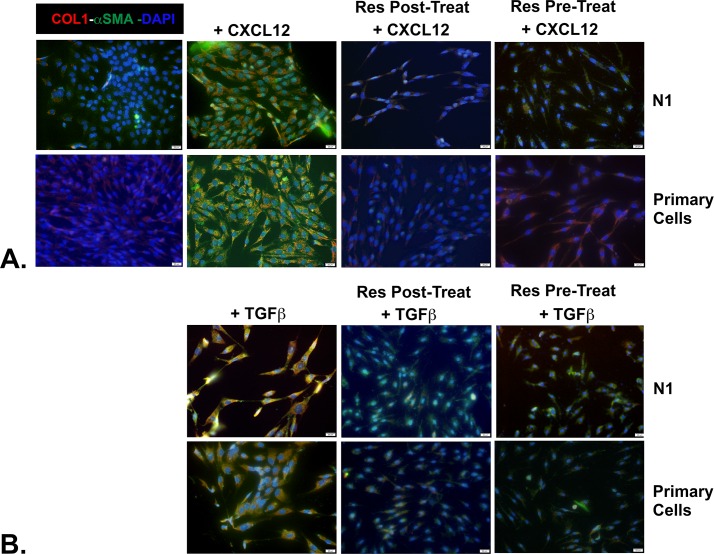
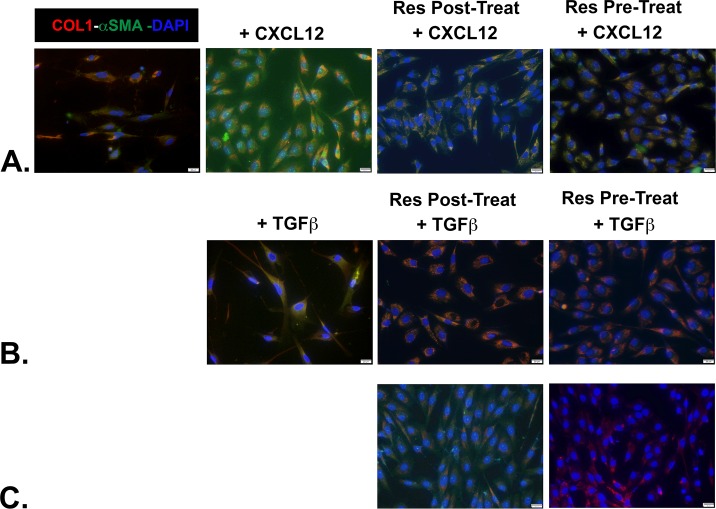
Primary prostate and lung tissues were explanted and fibroblast monolayers expanded in vitro. Primary and N1 immortalized prostate stromal fibroblasts, as well as primary fibroblasts cultured from a normal lung and one affected by idiopathic pulmonary fibrosis (IPF) for comparison, were grown in serum-free defined media supplemented with vehicle, TGFβ or CXCL12, pre- or post-treatment with Resveratrol, and were evaluated using immunofluorescence for alpha smooth muscle actin (αSMA) and collagen I (COL1) protein expression and assessed for cell proliferation, apoptosis, and COL1 and EGR1 transcript expression.
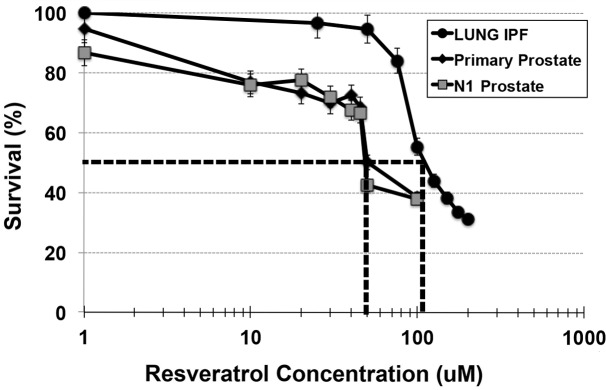
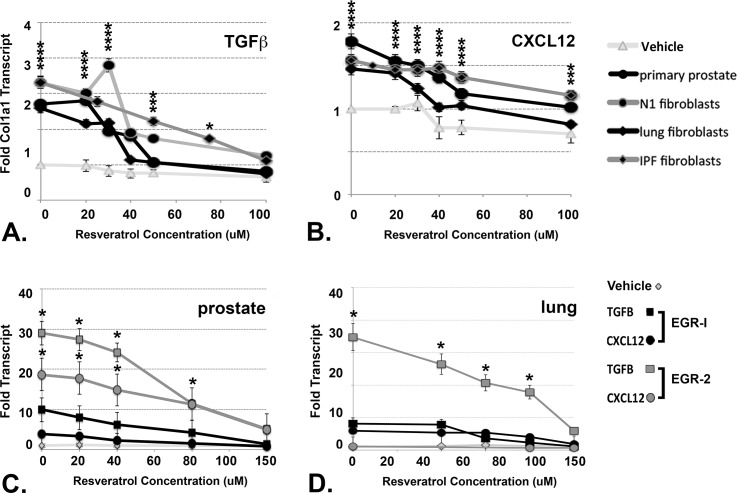
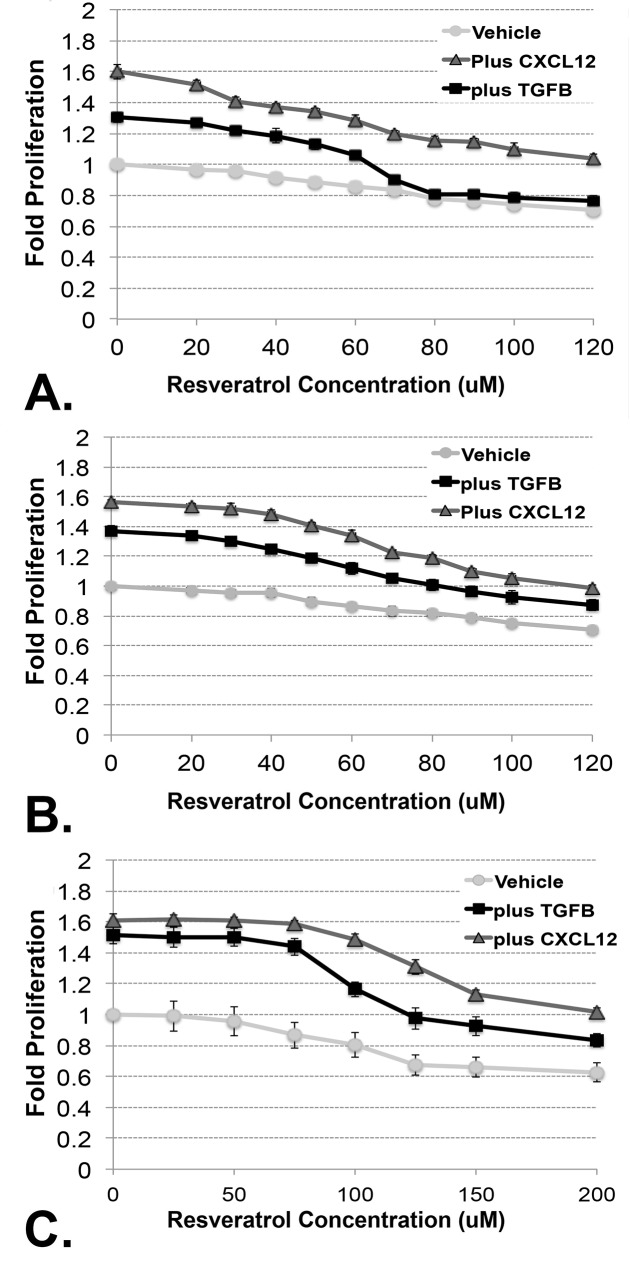
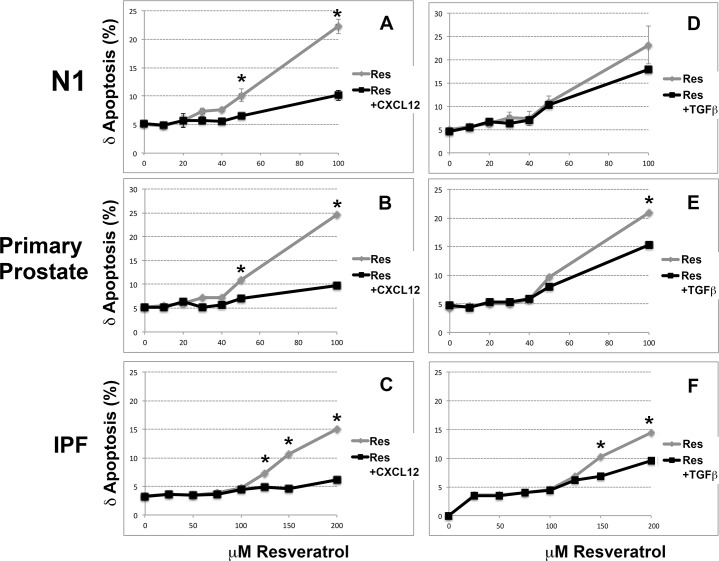
This study showed that low concentrations of Resveratrol (≤50 μM) had no effect on N1 or primary prostate fibroblast cell proliferation, apoptosis, or COL1 or EGR1 gene transcription but repressed and reversed myofibroblast phenoconversion. As expected, these same effects were observed for IPF lung fibroblasts though higher levels of Resveratrol (≥100uM) were required. Taken together, these data suggest that, like lung fibroblasts, prostate fibroblast to myofibroblast phenoconversion can be both repressed and reversed by Resveratrol treatment. Thus, anti-fibrotic therapeutics might be efficacious for the treatment of LUTD.
白藜芦醇是一种存在于浆果、花生、葡萄和红酒中的植物抗毒素,在多种细胞类型和动物模型中可抑制氧化、炎症、细胞增殖及胶原蛋白合成。在动物模型中,它可抑制血管、心脏、肺、肾脏、肝脏和食管中的胶原蛋白沉积,可能具有抗纤维化作用。最近的研究表明,前列腺尿道周围区域胶原蛋白沉积增加和组织硬度增加与下尿路功能障碍(LUTD)及尿路梗阻症状有关。本研究的目的是确定白藜芦醇是否可用于体外抑制或逆转转化生长因子β(TGFβ)和/或CXC趋化因子配体12(CXCL12)介导的前列腺成纤维细胞向肌成纤维细胞的表型转化,以及抗纤维化疗法是否对LUTD的治疗有效。
将原代前列腺和肺组织外植并在体外扩增成纤维细胞单层。将原代和N1永生化前列腺基质成纤维细胞,以及从正常肺组织和特发性肺纤维化(IPF)肺组织培养的原代成纤维细胞用于比较,在添加载体、TGFβ或CXCL12的无血清限定培养基中培养,用白藜芦醇进行预处理或后处理,通过免疫荧光评估α平滑肌肌动蛋白(αSMA)和胶原蛋白I(COL1)蛋白表达,并评估细胞增殖、凋亡以及COL1和早期生长反应蛋白1(EGR1)转录表达。
本研究表明,低浓度白藜芦醇(≤50μM)对N1或原代前列腺成纤维细胞的增殖、凋亡或COL1或EGR1基因转录没有影响,但可抑制并逆转肌成纤维细胞的表型转化。正如预期的那样,虽然需要更高水平的白藜芦醇(≥100μM),但在IPF肺成纤维细胞中也观察到了相同的效果。综上所述,这些数据表明,与肺成纤维细胞一样,白藜芦醇处理可抑制并逆转前列腺成纤维细胞向肌成纤维细胞的表型转化。因此,抗纤维化疗法可能对LUTD的治疗有效。