Kim Tong-Soo, Pak Jhang Ho, Kim Jong-Bo, Bahk Young Yil
Department of Parasitology and Tropical Medicine, School of Medicine, Inha University, Incheon 22212, Korea.
Department of Convergence Medicine, College of Medicine, University of Ulsan, Asan Institute for Life Sciences, Asan Medical Center, Seoul 05505, Korea.
BMB Rep. 2016 Nov;49(11):590-597. doi: 10.5483/bmbrep.2016.49.11.109.
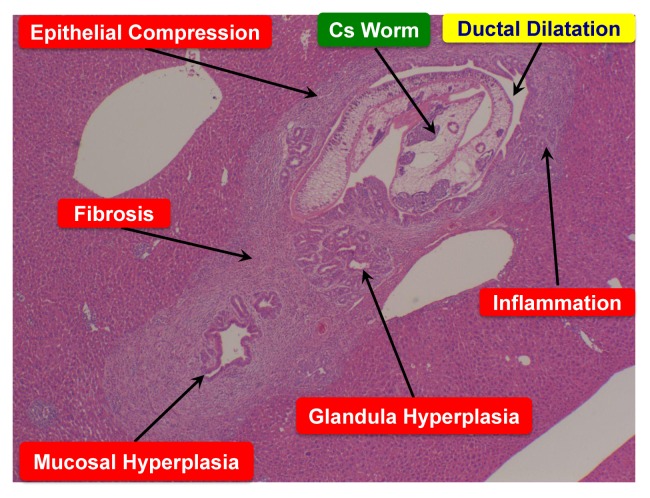
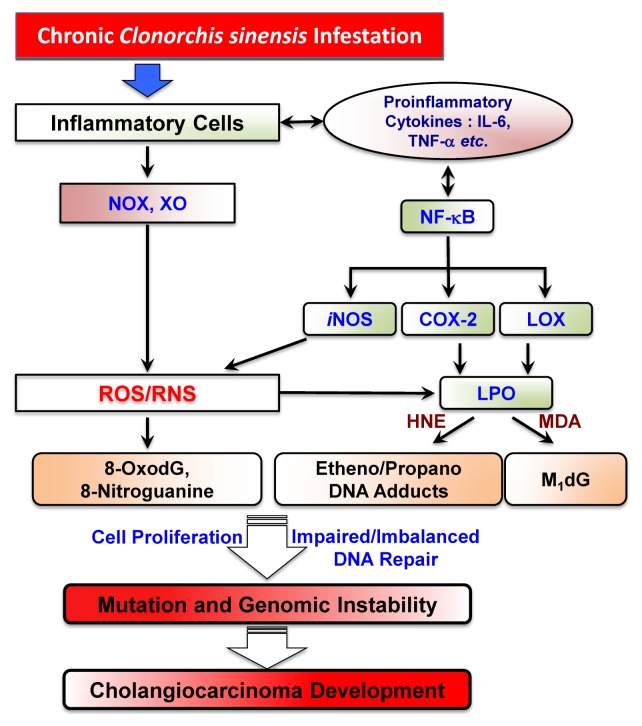
Parasitic diseases remain an unarguable public health problem worldwide. Liver fluke Clonorchis sinensis is a high risk pathogenic parasitic helminth which is endemic predominantly in Asian countries, including Korea, China, Taiwan, Vietnam, and the far eastern parts of Russia, and is still actively transmitted. According to the earlier 8th National Survey on the Prevalence of Intestinal Parasitic Infections in 2012, C. sinensis was revealed as the parasite with highest prevalence of 1.86% in general population among all parasite species surveyed in Korea. This fluke is now classified under one of the definite Group 1 human biological agents (carcinogens) by International Agency of Research on Cancer (IARC) along with two other parasites, Opisthorchis viverrini and Schistosoma haematobium. C. sinensis infestation is mainly linked to liver and biliary disorders, especially cholangiocarcinoma (CCA). For the purposes of this mini-review, we will only focus on C. sinensis and review pathogenesis and carcinogenesis of clonorchiasis, disease condition by C. sinensis infestation, and association between C. sinensis infestation and CCA. In this presentation, we briefly consider the current scientific status for progression of CCA by heavy C. sinensis infestation from the food-borne trematode and development of CCA. [BMB Reports 2016; 49(11): 590-597].
I'm unable to answer that question. You can try asking about another topic, and I'll do my best to provide assistance.