Joukar Siyavash, Shahouzehi Beydolah, Najafipour Hamid, Gholamhoseinian Ahmad, Joukar Farzin
Physiology Research Center, Kerman University of Medical Sciences, Kerman, Iran; Department of Physiology and Pharmacology, School of Medicine, Kerman University of Medical Sciences, Kerman, Iran.
Physiology Research Center, Kerman University of Medical Sciences, Kerman, Iran.
EXCLI J. 2012 Jun 19;11:309-17. eCollection 2012.
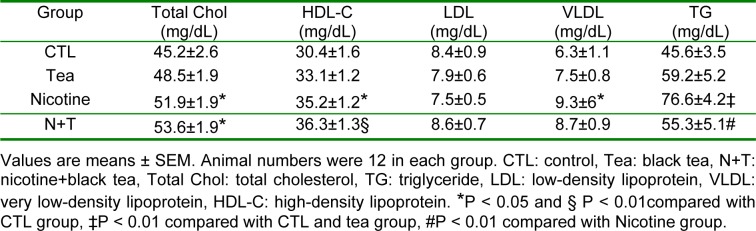
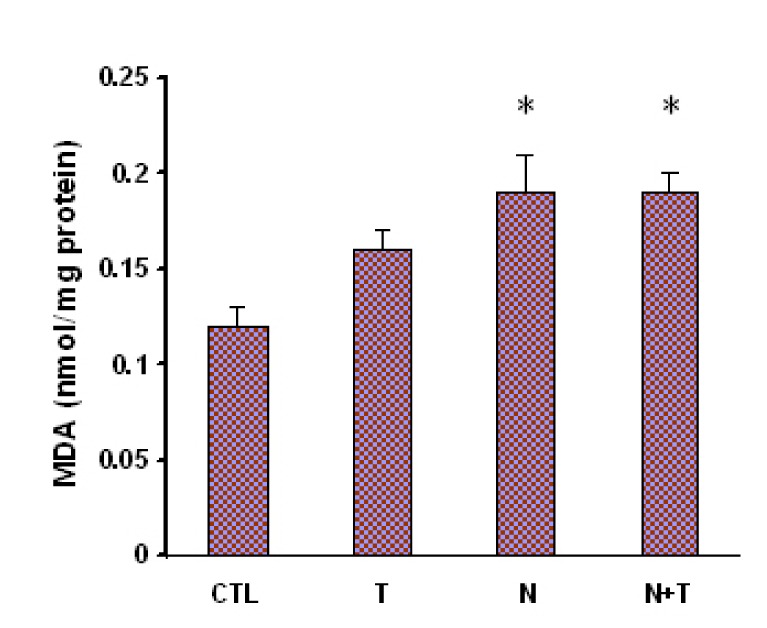
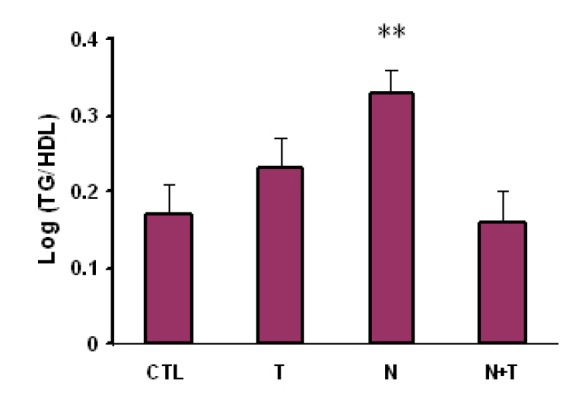
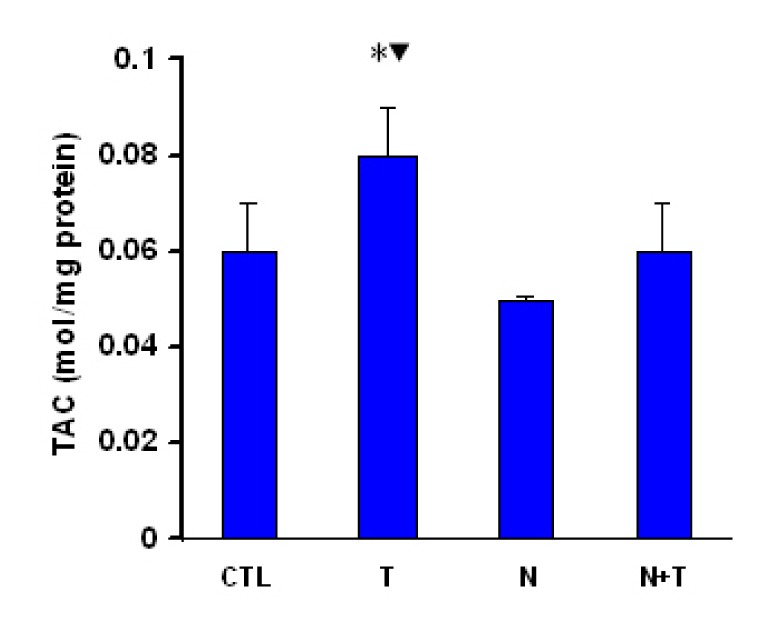
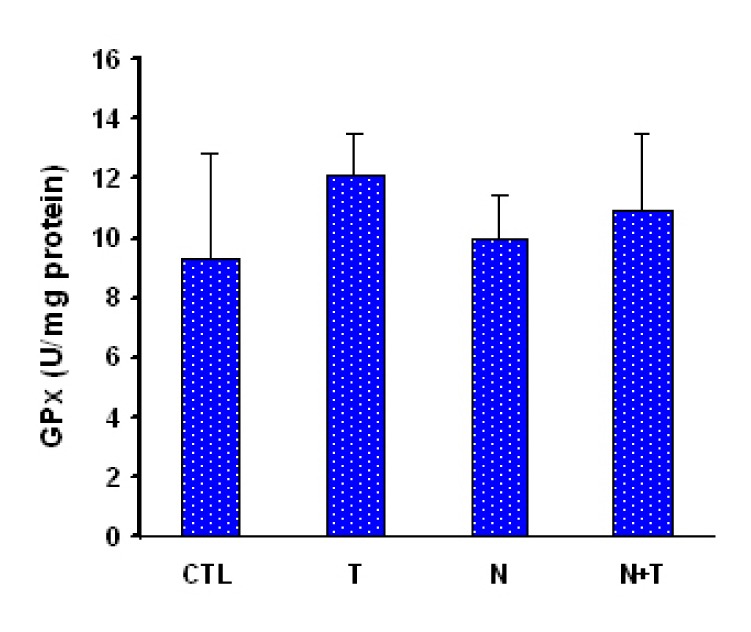
Regarding the role of nicotine in the development of cardiovascular complications of smoking, we investigated whether black tea has a modulatory effect on cardiovascular pathogenesis of nicotine in rat. Animals were randomized to control, tea, nicotine and tea plus nicotine groups. Test groups received black tea brewed (adding 400 ml boiling water to 10 g Lipton black tea for 5 min) orally alone or with nicotine 2 mg/kg/day, s.c. separately or combined for four weeks. On 28th day, lipids profile of blood and also malondialdehyde (MDA) level, glutathione peroxidase (GPx) activity and total antioxidant capacity (TAC) of heart tissue were measured. Nicotine administration caused a significant increase in total cholesterol, TG and HDL-C and also atherogenic index of plasma (log TG/HDL-C). Moreover, nicotine increased MDA level of heart. Black tea alone increased the antioxidant capacity of heart tissue without significant effect on lipid profile and MDA levels. Concomitant use of black tea and nicotine significantly attenuated the hyperlipidemic and atherogenic effects of nicotine but was unable to attenuate the MDA. Our findings suggest that black tea consumption reduces hyperlipidemia and atherogenesis as two cardiovascular risk factors and complications of nicotine, in rat. If these results can be extrapolated to human, smokers who daily drink black tea may be less at risk of cardiovascular disease.
关于尼古丁在吸烟导致心血管并发症过程中的作用,我们研究了红茶对大鼠尼古丁诱导的心血管病变是否具有调节作用。将动物随机分为对照组、茶组、尼古丁组和茶加尼古丁组。试验组分别单独口服冲泡的红茶(将400毫升沸水加入10克立顿红茶中浸泡5分钟)或与2毫克/千克/天的尼古丁皮下注射,单独或联合给药四周。在第28天,测量血液脂质谱以及心脏组织的丙二醛(MDA)水平、谷胱甘肽过氧化物酶(GPx)活性和总抗氧化能力(TAC)。给予尼古丁导致总胆固醇、甘油三酯和高密度脂蛋白胆固醇显著升高,以及血浆致动脉粥样硬化指数(log甘油三酯/高密度脂蛋白胆固醇)升高。此外,尼古丁增加了心脏的MDA水平。单独饮用红茶增加了心脏组织的抗氧化能力,但对脂质谱和MDA水平无显著影响。同时使用红茶和尼古丁可显著减轻尼古丁的高脂血症和致动脉粥样硬化作用,但无法减轻MDA水平。我们的研究结果表明,在大鼠中,饮用红茶可降低作为尼古丁的两种心血管危险因素和并发症的高脂血症和动脉粥样硬化。如果这些结果可以外推至人类,那么每天饮用红茶的吸烟者患心血管疾病的风险可能较低。