Li Wu, Liu Jianhua, Ashraf Umair, Li Gaoke, Li Yuliang, Lu Wenjia, Gao Lei, Han Fuguang, Hu Jianguang
Crop Research Institute, Guangdong Academy of Agricultural SciencesGuangzhou, China; Key Laboratory of Crops Genetics and Improvement of Guangdong ProvinceGuangzhou, China.
Department of Crop Science and Technology, College of Agriculture, South China Agricultural UniversityGuangzhou, China; Scientific Observing and Experimental Station of Crop Cultivation in South China, Ministry of AgricultureGuangzhou, China.
Front Plant Sci. 2016 Jun 22;7:919. doi: 10.3389/fpls.2016.00919. eCollection 2016.
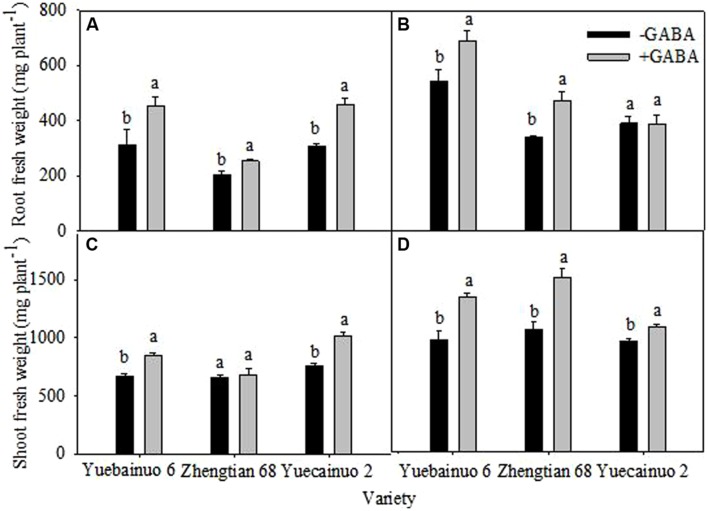
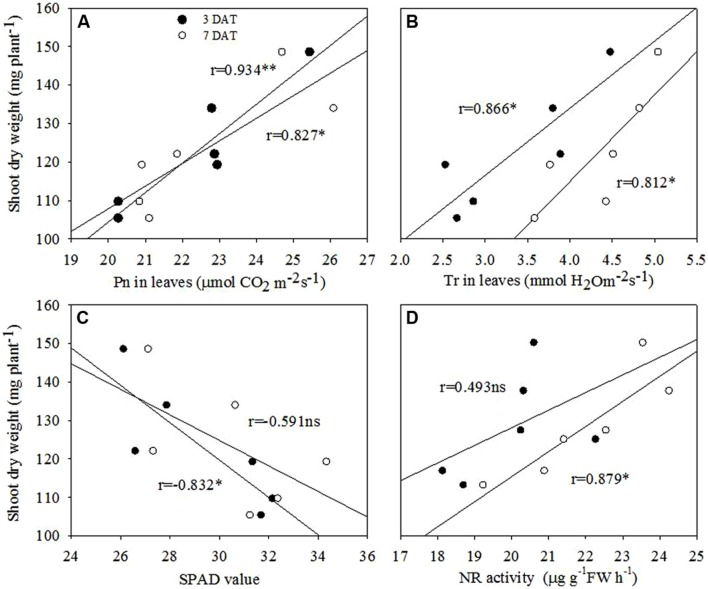
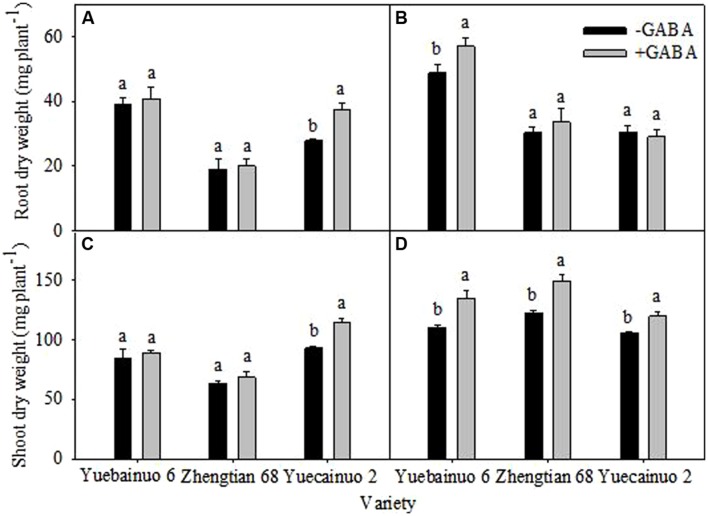
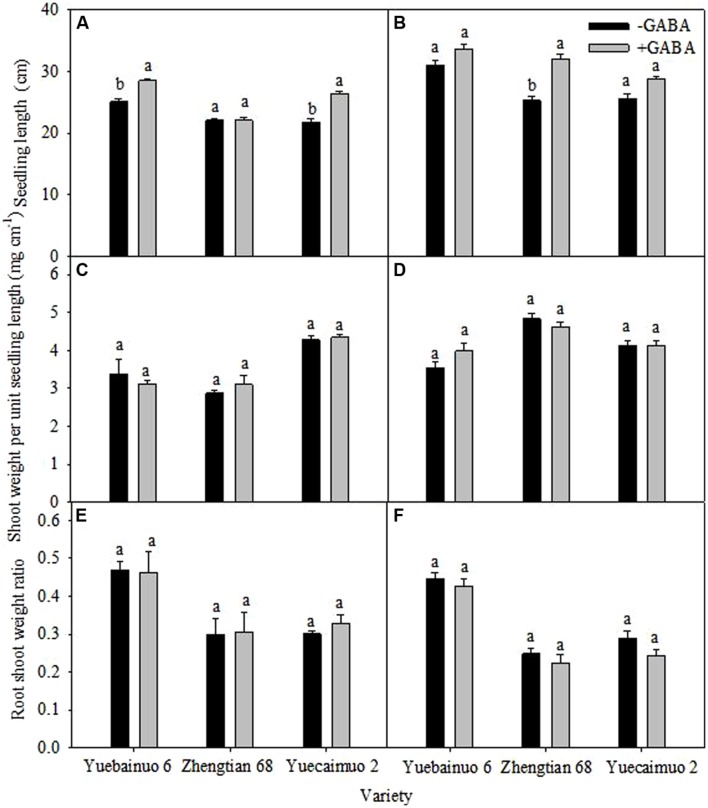
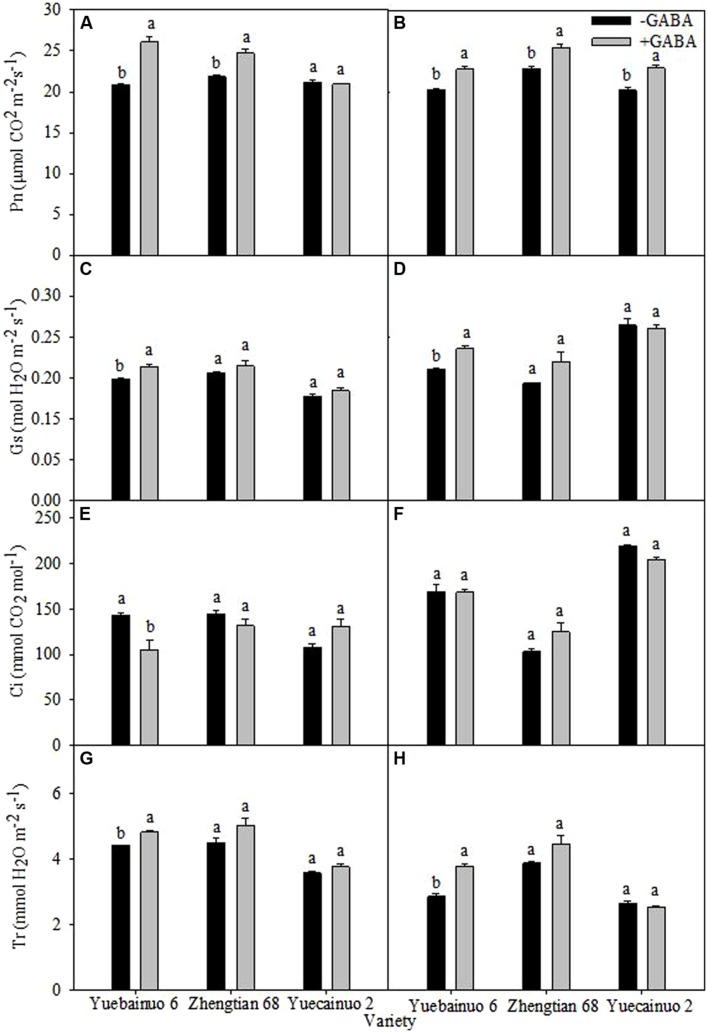
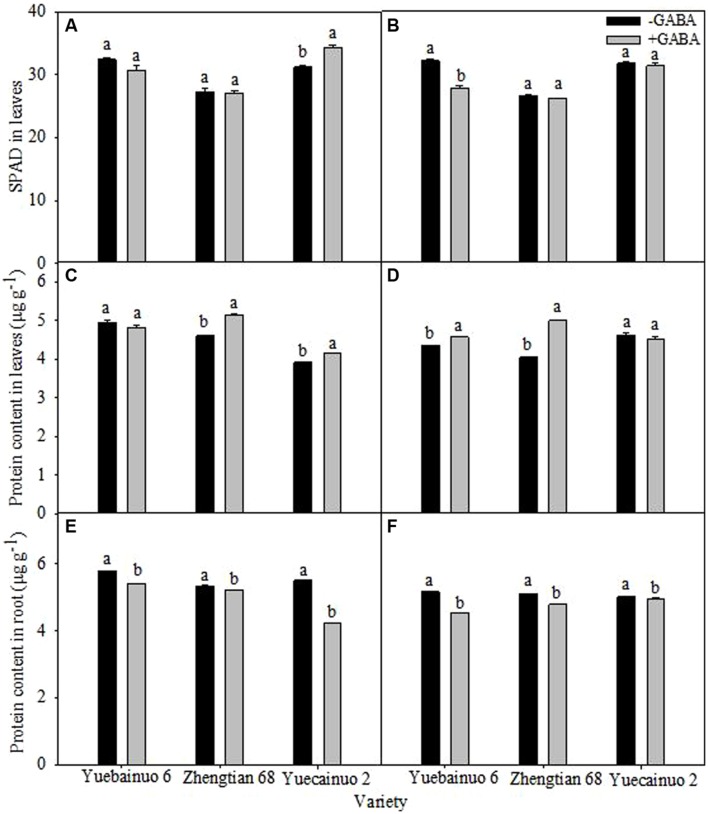
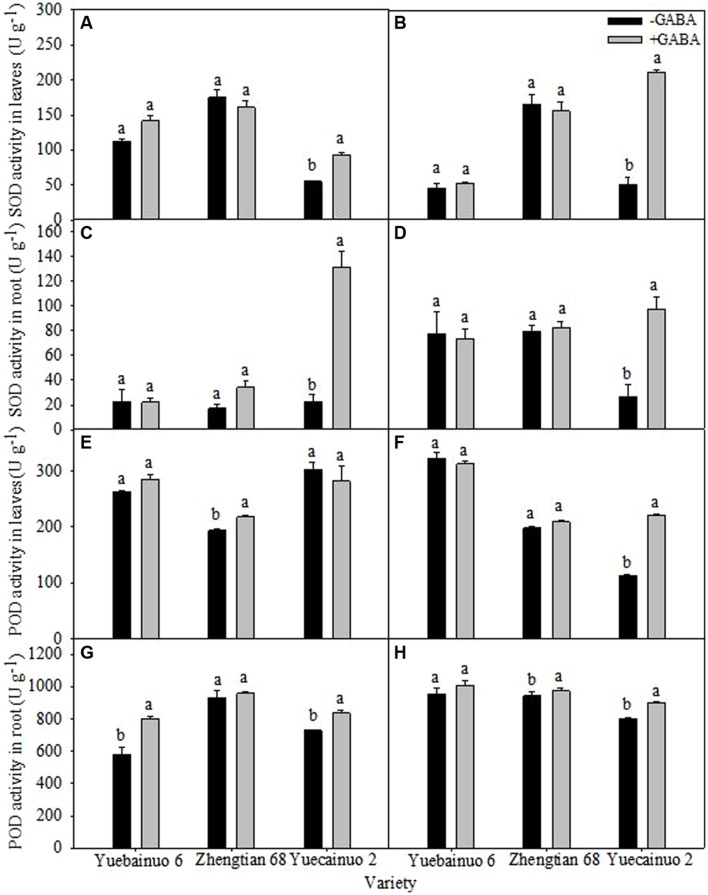
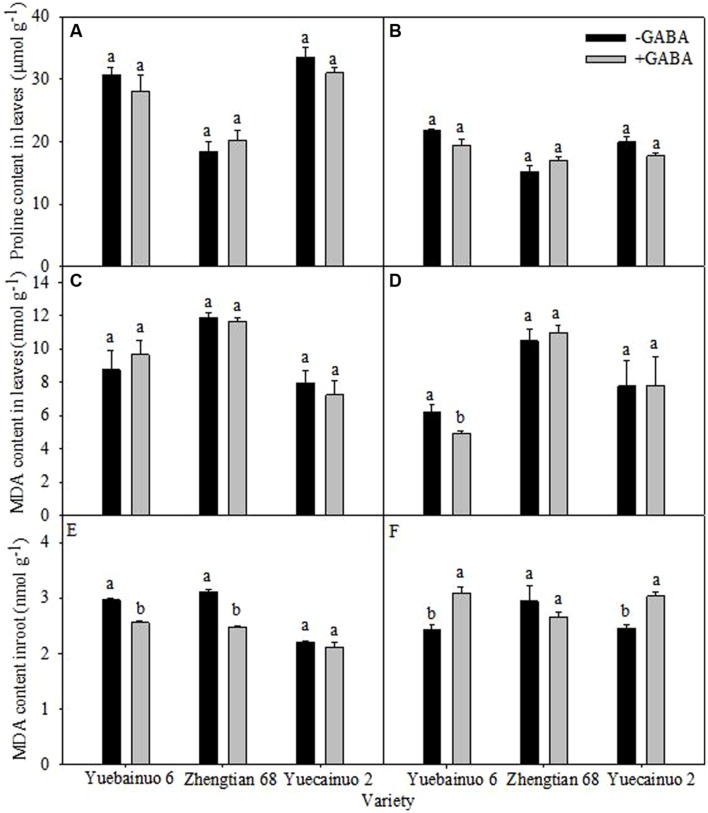
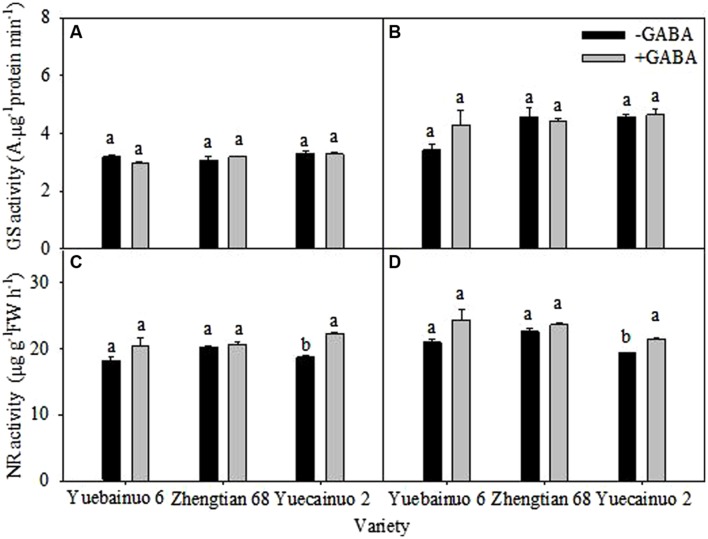
γ-aminobutyric acid (GABA) is an endogenous signaling molecule and involved in growth regulations and plant development, however, a little information is available on the consequences of exogenous GABA application on growth, development, and associated physio-biochemical processes in maize. The present study examined the GABA-induced regulations in early growth, net photosynthetic rate, gas exchange, osmoregulation, and enzymatic activities in three maize cultivars, i.e., Yuecainuo 6, Zhengtian 68, and Yuecainuo 2. Two levels of GABA, i.e., 0 mg L(-1) and 50 mg L(-1), in solution form, with total application volume of 100 ml per pot containing 15 maize seedlings were exogenously applied. Results revealed that exogenous GABA application improved seedling growth in terms of seedling length and biomass accumulation in all maize cultivars at both 3 and 7 days after treatment (DAT). It also promoted net photosynthesis and variably affected gas exchange attributes, i.e., stomatal conductance (Gs), intercellular CO2 concentration (Ci), and transpiration rate (Tr), as well as leaves SPAD value. Furthermore, lipid peroxidation [in terms of malondialdehyde (MDA)] under GABA treated maize seedlings were also remained variable; however, osmolyte accumulation (protein and proline) and activities of anti-oxidants enzymes, i.e., super-oxide dismutase and peroxidase were also affected differently at both 3 and 7 DAT in all maize cultivars. Furthermore, enzymes involved in nitrogen metabolism, e.g., nitrate reductase and glutamine synthetase were improved. These results suggest the involvement of GABA in various physio-metablical mechanisms which might lead to improvement in morphological growth of maize. In future, research is still needed at molecular and genetic levels to unravel the involvement of GABA-mediated regulations in growth and its associated physio-biochemical mechanisms.
γ-氨基丁酸(GABA)是一种内源性信号分子,参与生长调节和植物发育,然而,关于外源施加GABA对玉米生长、发育及相关生理生化过程的影响,目前所知甚少。本研究检测了GABA对三个玉米品种(粤彩糯6号、正甜68和粤彩糯2号)早期生长、净光合速率、气体交换、渗透调节和酶活性的诱导调控作用。以溶液形式外源施加两种水平的GABA,即0 mg L(-1)和50 mg L(-1),每盆装有15株玉米幼苗,总施用量为100 ml。结果表明,外源施加GABA可促进所有玉米品种在处理后3天和7天的幼苗长度和生物量积累,从而改善幼苗生长。它还促进了净光合作用,并对气体交换参数(气孔导度、胞间CO2浓度和蒸腾速率)以及叶片SPAD值产生不同影响。此外,GABA处理下玉米幼苗的脂质过氧化(以丙二醛计)也有所变化;然而,在处理后3天和7天,所有玉米品种的渗透溶质积累(蛋白质和脯氨酸)以及抗氧化酶(超氧化物歧化酶和过氧化物酶)的活性也受到不同影响。此外,参与氮代谢的酶(如硝酸还原酶和谷氨酰胺合成酶)活性得到提高。这些结果表明,GABA参与了多种生理代谢机制,这可能导致玉米形态生长得到改善。未来仍需在分子和遗传水平开展研究,以阐明GABA介导的调控在生长及其相关生理生化机制中的作用。