Molecular Pharmacology Program, Memorial Sloan Kettering Cancer Center , New York, New York 10065, United States.
Department of Radiology, Memorial Sloan Kettering Cancer Center , New York, New York 10065, United States.
Nano Lett. 2016 Sep 14;16(9):5601-4. doi: 10.1021/acs.nanolett.6b02161. Epub 2016 Aug 1.
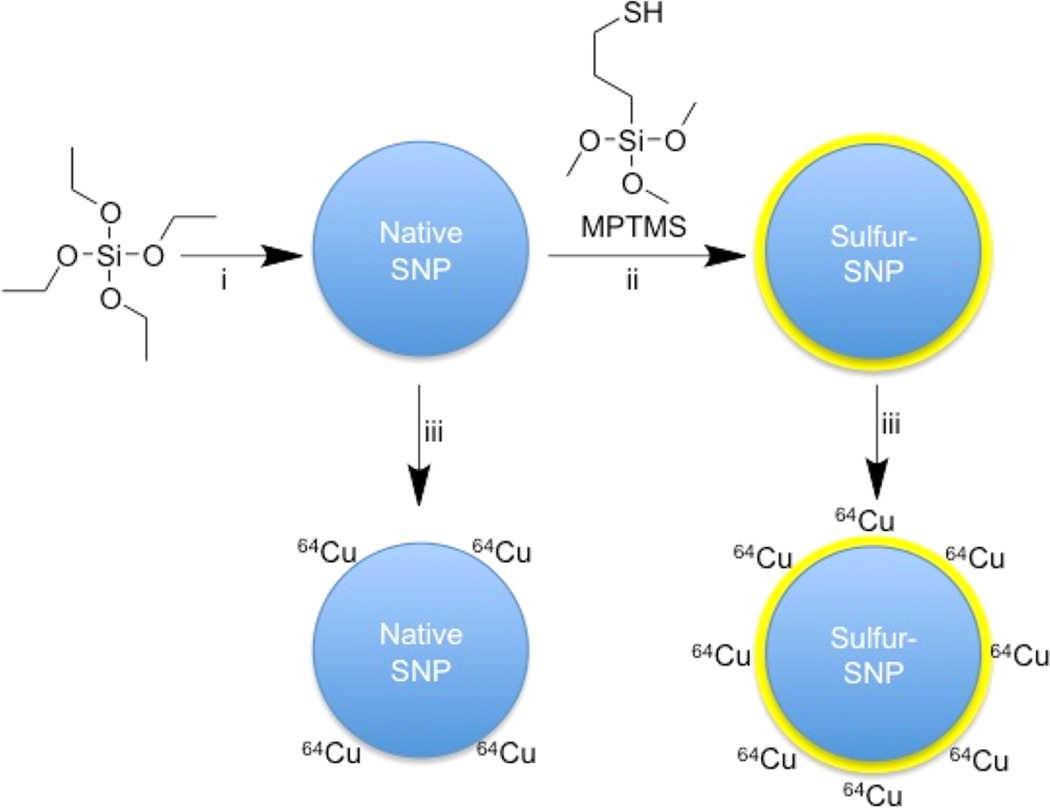
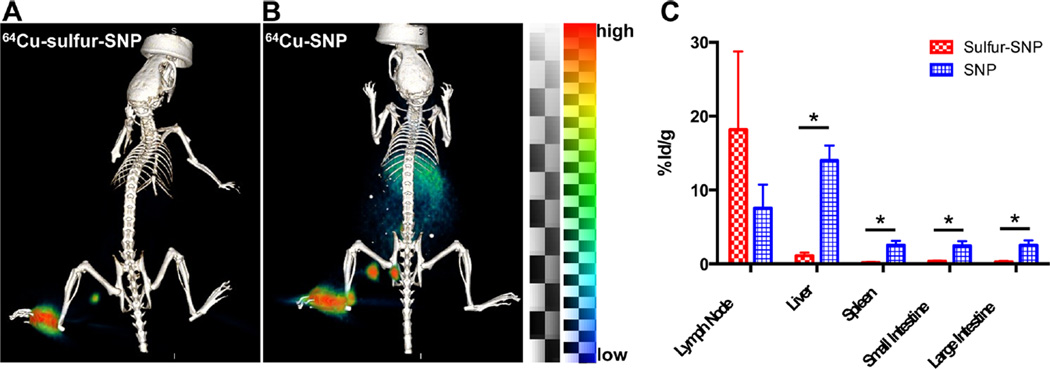
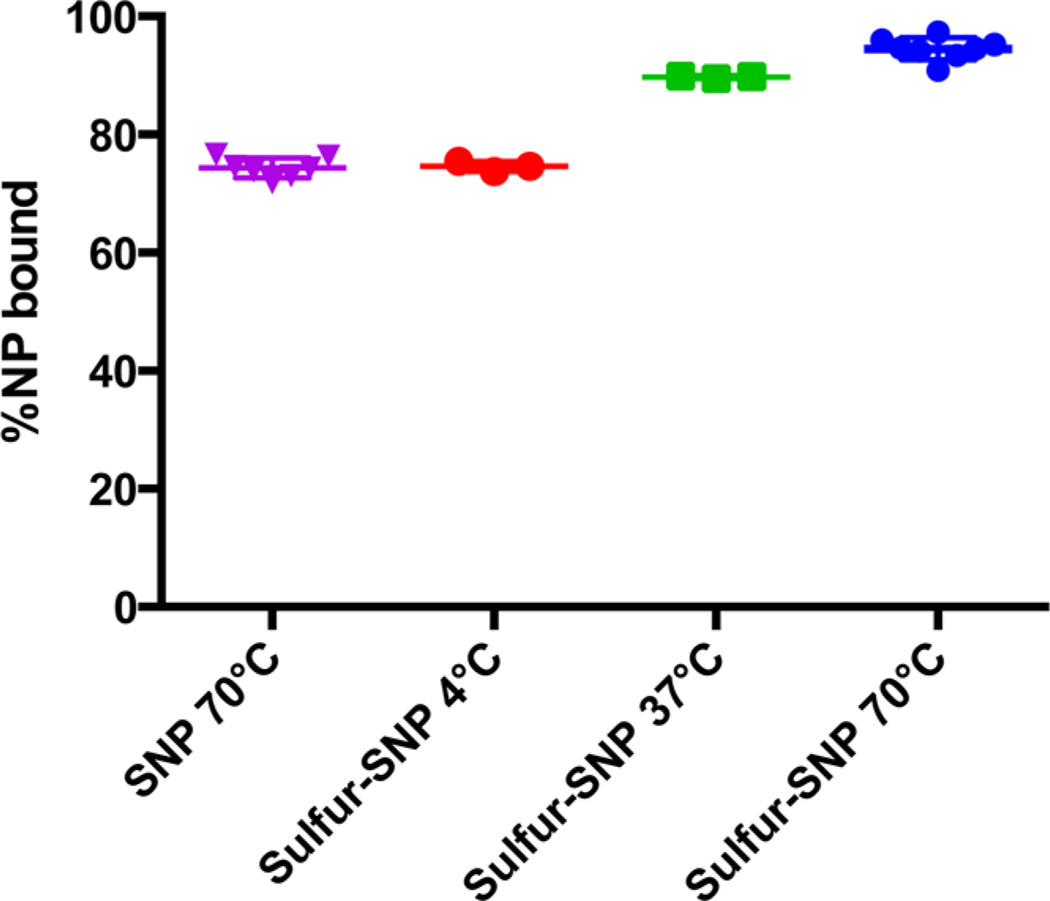
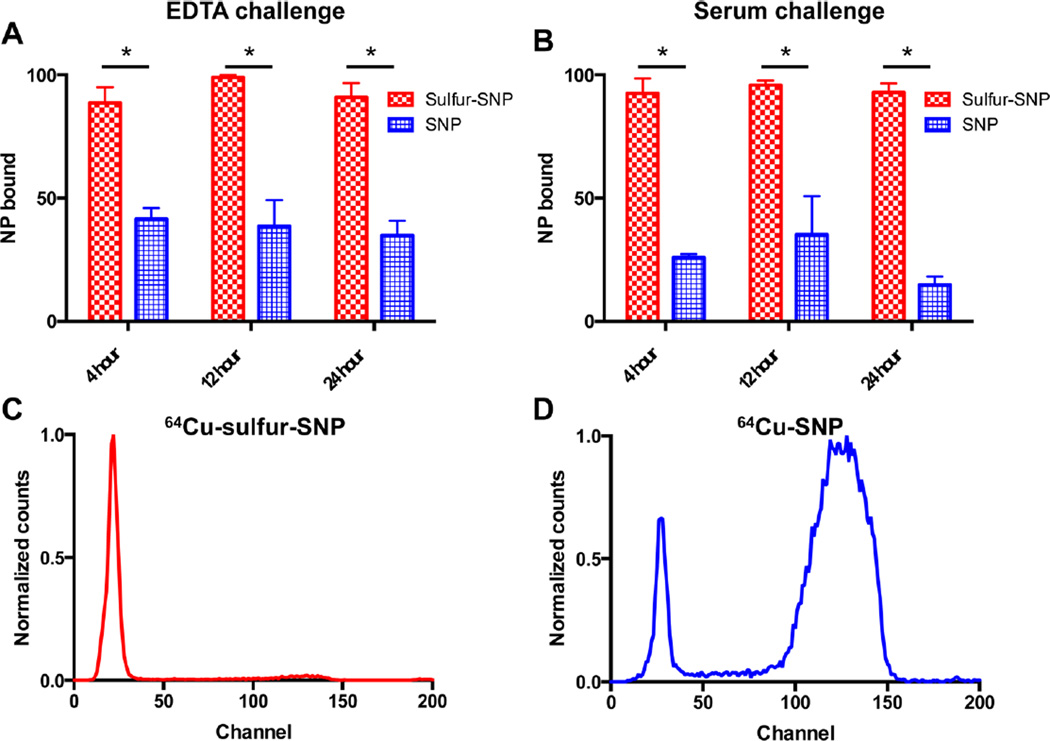
Nanoparticles labeled with radiometals enable whole-body nuclear imaging and therapy. Though chelating agents are commonly used to radiolabel biomolecules, nanoparticles offer the advantage of attaching a radiometal directly to the nanoparticle itself without the need of such agents. We previously demonstrated that direct radiolabeling of silica nanoparticles with hard, oxophilic ions, such as the positron emitters zirconium-89 and gallium-68, is remarkably efficient. However, softer radiometals, such as the widely employed copper-64, do not stably bind to the silica matrix and quickly dissociate under physiological conditions. Here, we overcome this limitation through the use of silica nanoparticles functionalized with a soft electron-donating thiol group to allow stable attachment of copper-64. This approach significantly improves the stability of copper-64 labeled thiol-functionalized silica nanoparticles relative to native silica nanoparticles, thereby enabling in vivo PET imaging, and may be translated to other softer radiometals with affinity for sulfur. The presented approach expands the application of silica nanoparticles as a platform for facile radiolabeling with both hard and soft radiometal ions.
纳米粒子标记放射性金属可实现全身核医学成像和治疗。虽然螯合剂常用于放射性标记生物分子,但纳米粒子具有将放射性金属直接附着到纳米粒子本身的优势,而无需使用此类试剂。我们之前证明了直接用正电子发射体锆-89 和镓-68 等硬亲氧离子对二氧化硅纳米粒子进行放射性标记是非常有效的。然而,较软的放射性金属,如广泛使用的铜-64,则不能稳定地结合到二氧化硅基质中,并在生理条件下迅速解离。在这里,我们通过使用带有软供电子巯基的二氧化硅纳米粒子来克服这一限制,从而允许铜-64 的稳定附着。与天然二氧化硅纳米粒子相比,这种方法显著提高了铜-64 标记的巯基功能化二氧化硅纳米粒子的稳定性,从而能够进行体内 PET 成像,并可能推广到对硫具有亲和力的其他较软的放射性金属。所提出的方法扩展了二氧化硅纳米粒子作为平台的应用,可方便地对硬和软放射性金属离子进行放射性标记。