Connolly Adam J, Bishop Martin J
Department of Imaging Sciences and Bioengineering, King's College London, St Thomas' Hospital, London, UK.
Clin Med Insights Cardiol. 2016 Jul 26;10(Suppl 1):27-40. doi: 10.4137/CMC.S39708. eCollection 2016.
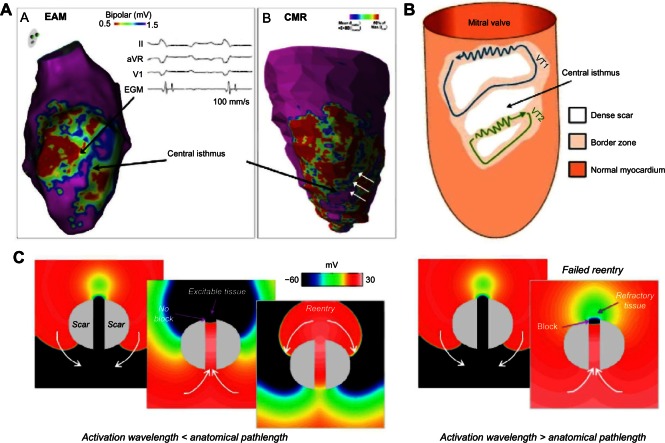
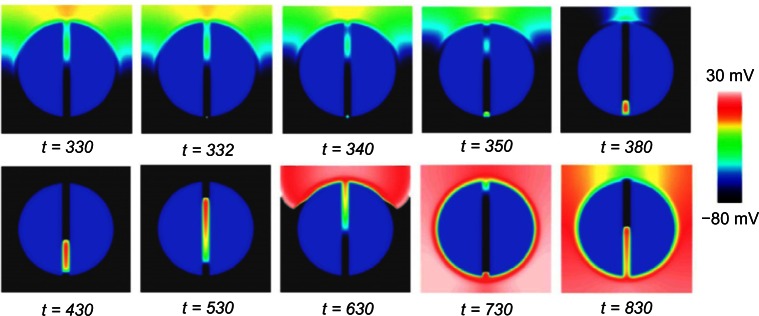
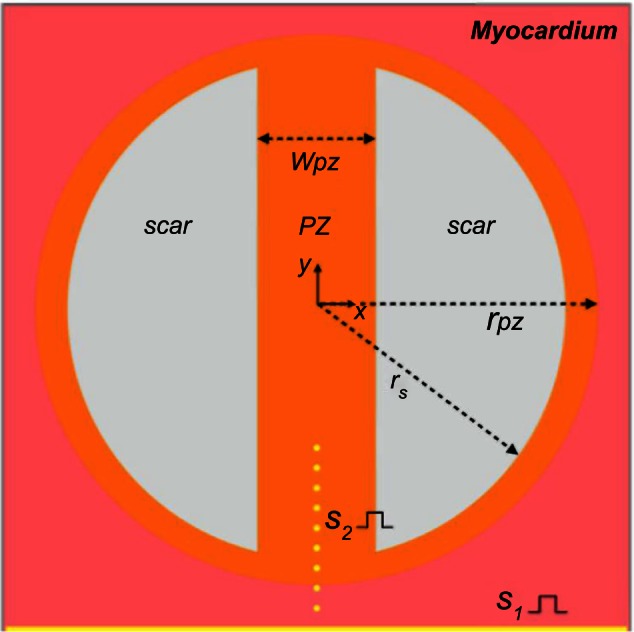
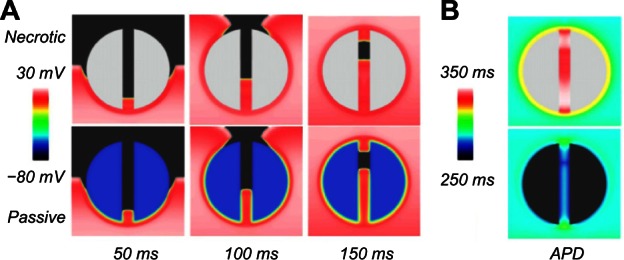
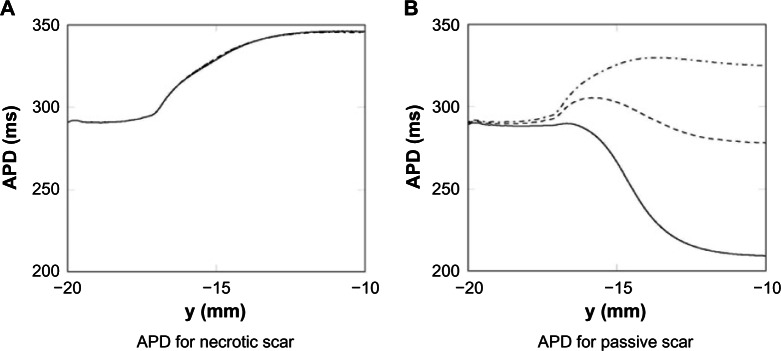
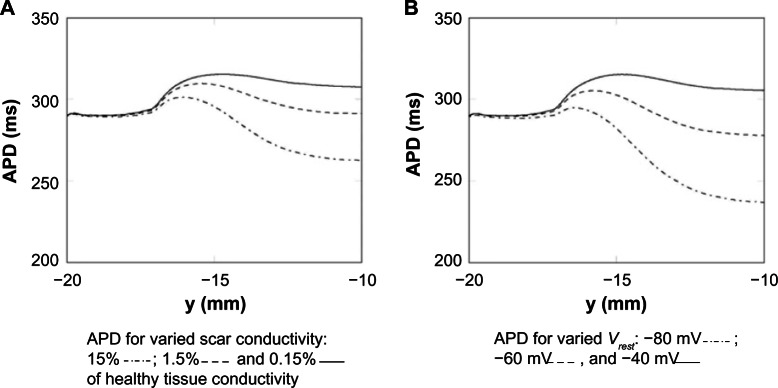
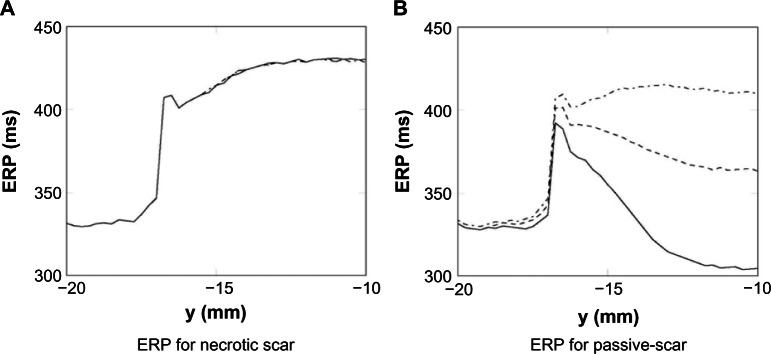
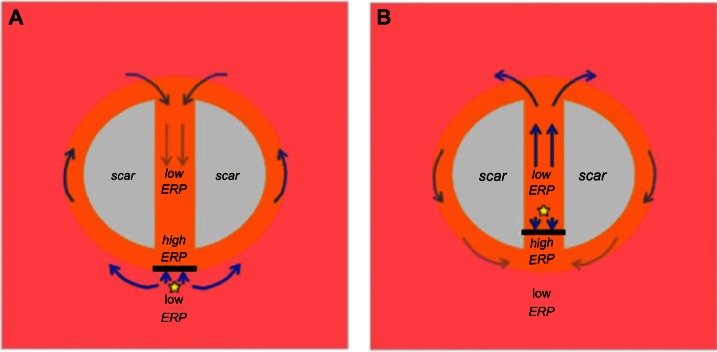
Image-based computational modeling is becoming an increasingly used clinical tool to provide insight into the mechanisms of reentrant arrhythmias. In the context of ischemic heart disease, faithful representation of the electrophysiological properties of the infarct region within models is essential, due to the scars known for arrhythmic properties. Here, we review the different computational representations of the infarcted region, summarizing the experimental measurements upon which they are based. We then focus on the two most common representations of the scar core (complete insulator or electrically passive tissue) and perform simulations of electrical propagation around idealized infarct geometries. Our simulations highlight significant differences in action potential duration and focal effective refractory period (ERP) around the scar, driven by differences in electrotonic loading, depending on the choice of scar representation. Finally, a novel mechanism for arrhythmia induction, following a focal ectopic beat, is demonstrated, which relies on localized gradients in ERP directly caused by the electrotonic sink effects of the neighboring passive scar.
基于图像的计算建模正日益成为一种临床工具,用于深入了解折返性心律失常的机制。在缺血性心脏病的背景下,由于梗死区域的瘢痕具有致心律失常特性,在模型中忠实地呈现梗死区域的电生理特性至关重要。在此,我们回顾梗死区域的不同计算表示方法,总结其基于的实验测量。然后,我们聚焦于瘢痕核心的两种最常见表示(完全绝缘体或电惰性组织),并对理想化梗死几何形状周围的电传播进行模拟。我们的模拟突出了瘢痕周围动作电位持续时间和局灶有效不应期(ERP)的显著差异,这些差异由电紧张负荷的不同驱动,具体取决于瘢痕表示的选择。最后,我们展示了一种局灶性异位搏动后心律失常诱发的新机制,该机制依赖于相邻被动瘢痕的电紧张汇效应直接导致的ERP局部梯度。