Cicvaric Ana, Yang Jiaye, Krieger Sigurd, Khan Deeba, Kim Eun-Jung, Dominguez-Rodriguez Manuel, Cabatic Maureen, Molz Barbara, Acevedo Aguilar Juan Pablo, Milicevic Radoslav, Smani Tarik, Breuss Johannes M, Kerjaschki Dontscho, Pollak Daniela D, Uhrin Pavel, Monje Francisco J
a Department of Neurophysiology and Neuropharmacology, Center for Physiology and Pharmacology , Medical University of Vienna , Vienna , Austria.
b Clinical Institute of Pathology , Medical University of Vienna , Vienna , Austria.
Ann Med. 2016 Dec;48(8):652-668. doi: 10.1080/07853890.2016.1219455. Epub 2016 Aug 25.
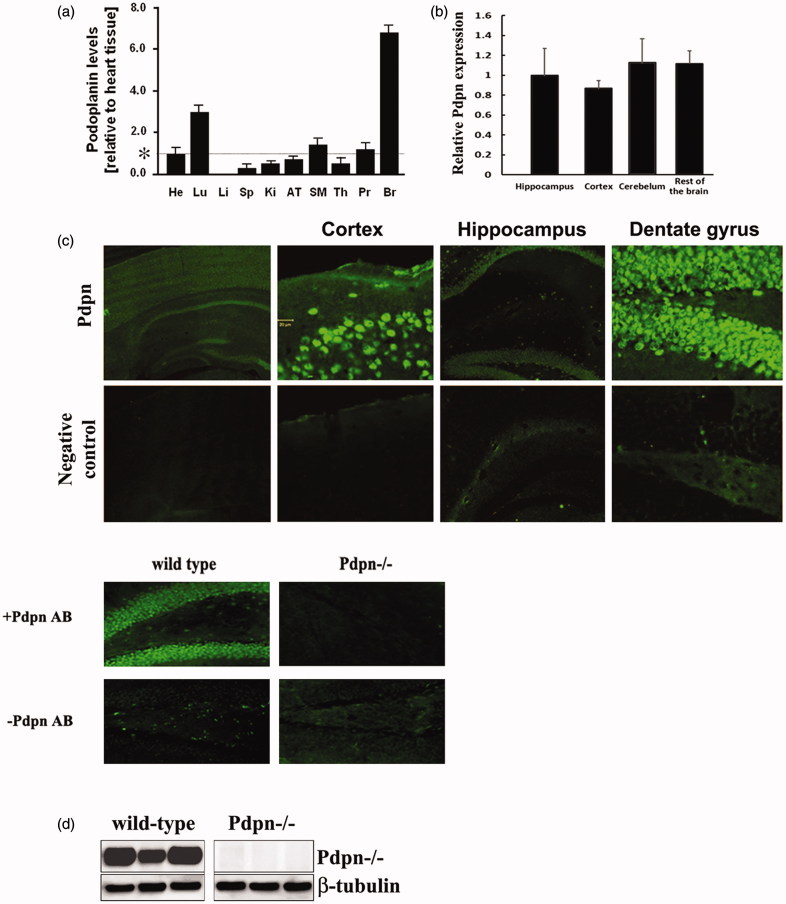
Podoplanin is a cell-surface glycoprotein constitutively expressed in the brain and implicated in human brain tumorigenesis. The intrinsic function of podoplanin in brain neurons remains however uncharacterized.
Using an established podoplanin-knockout mouse model and electrophysiological, biochemical, and behavioral approaches, we investigated the brain neuronal role of podoplanin.
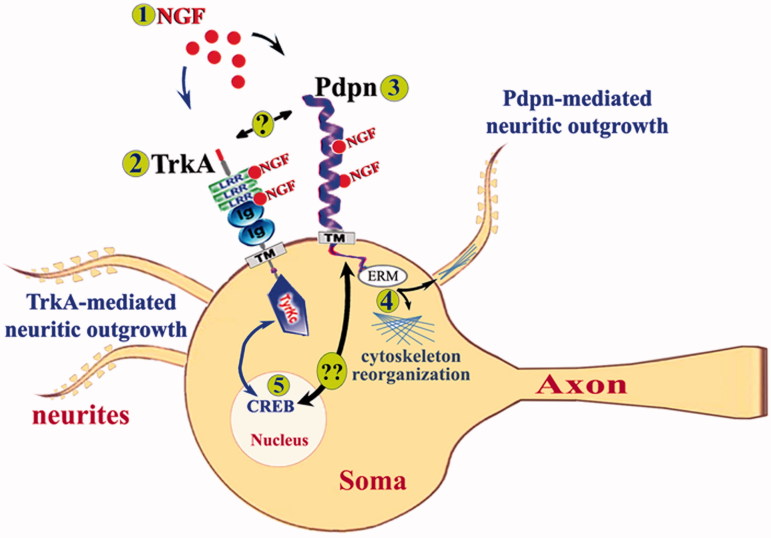
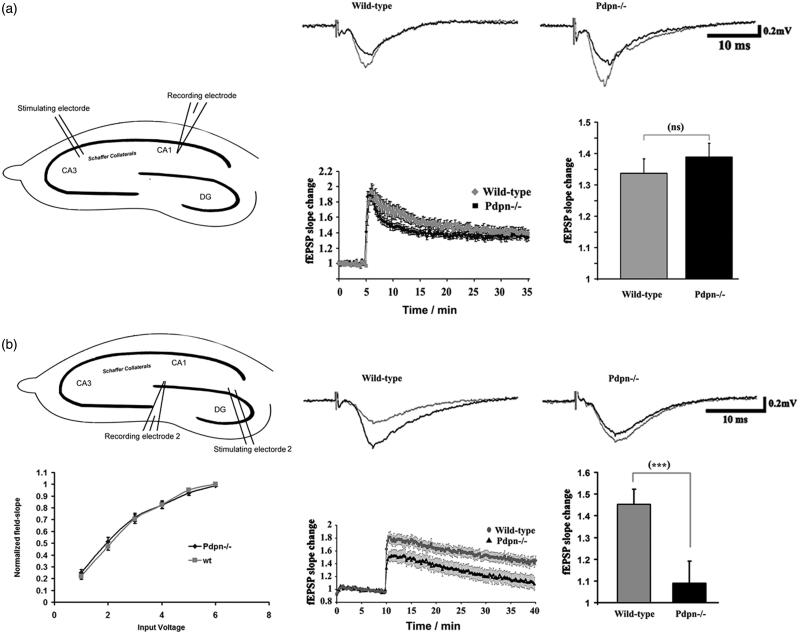
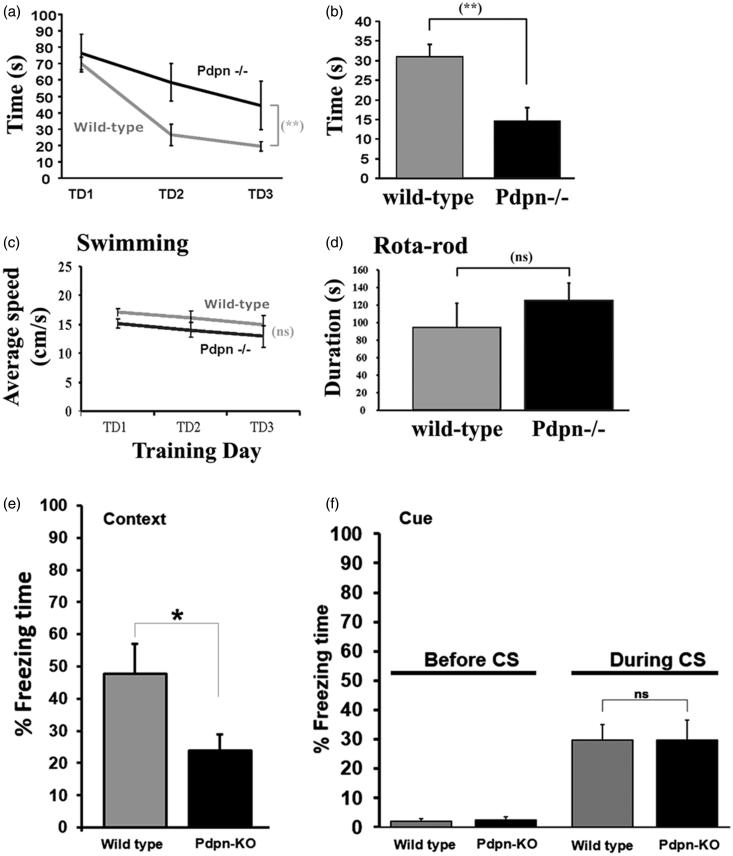
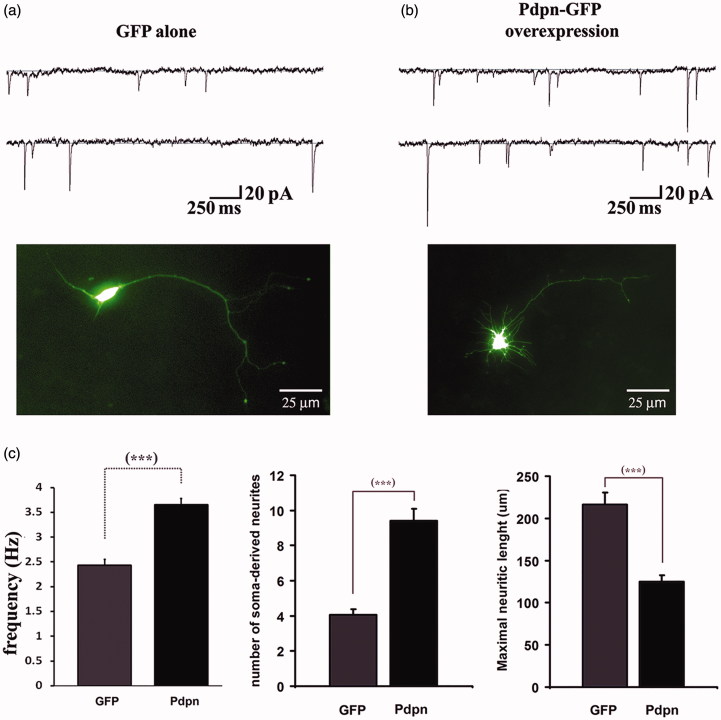
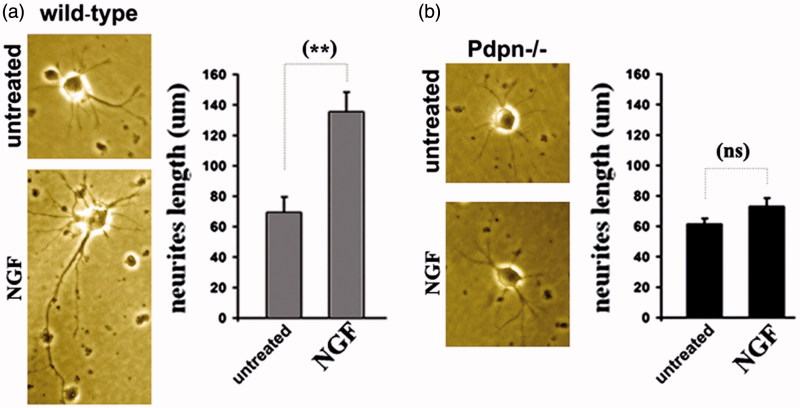
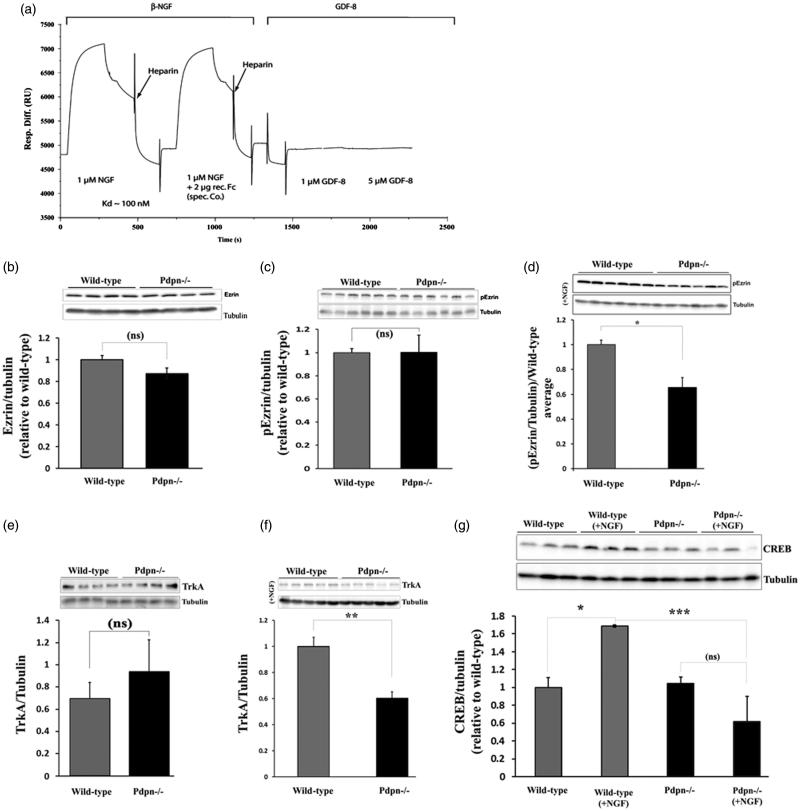
Ex-vivo electrophysiology showed that podoplanin deletion impairs dentate gyrus synaptic strengthening. In vivo, podoplanin deletion selectively impaired hippocampus-dependent spatial learning and memory without affecting amygdala-dependent cued fear conditioning. In vitro, neuronal overexpression of podoplanin promoted synaptic activity and neuritic outgrowth whereas podoplanin-deficient neurons exhibited stunted outgrowth and lower levels of p-Ezrin, TrkA, and CREB in response to nerve growth factor (NGF). Surface Plasmon Resonance data further indicated a physical interaction between podoplanin and NGF.
This work proposes podoplanin as a novel component of the neuronal machinery underlying neuritogenesis, synaptic plasticity, and hippocampus-dependent memory functions. The existence of a relevant cross-talk between podoplanin and the NGF/TrkA signaling pathway is also for the first time proposed here, thus providing a novel molecular complex as a target for future multidisciplinary studies of the brain function in the physiology and the pathology. Key messages Podoplanin, a protein linked to the promotion of human brain tumors, is required in vivo for proper hippocampus-dependent learning and memory functions. Deletion of podoplanin selectively impairs activity-dependent synaptic strengthening at the neurogenic dentate-gyrus and hampers neuritogenesis and phospho Ezrin, TrkA and CREB protein levels upon NGF stimulation. Surface plasmon resonance data indicates a physical interaction between podoplanin and NGF. On these grounds, a relevant cross-talk between podoplanin and NGF as well as a role for podoplanin in plasticity-related brain neuronal functions is here proposed.
血小板反应蛋白-1是一种在大脑中组成性表达的细胞表面糖蛋白,与人类脑肿瘤发生有关。然而,血小板反应蛋白-1在脑神经元中的内在功能仍未明确。
我们使用已建立的血小板反应蛋白-1基因敲除小鼠模型以及电生理、生化和行为学方法,研究了血小板反应蛋白-1在脑神经元中的作用。
体外电生理学研究表明,血小板反应蛋白-1缺失会损害齿状回突触增强。在体内,血小板反应蛋白-1缺失选择性地损害了海马依赖性空间学习和记忆,而不影响杏仁核依赖性线索恐惧条件反射。在体外,血小板反应蛋白-1的神经元过表达促进了突触活动和神经突生长,而血小板反应蛋白-1缺陷型神经元在神经生长因子(NGF)刺激下表现出神经突生长受阻以及p-Ezrin、TrkA和CREB水平降低。表面等离子体共振数据进一步表明血小板反应蛋白-1与NGF之间存在物理相互作用。
本研究提出血小板反应蛋白-1是神经突发生、突触可塑性和海马依赖性记忆功能潜在神经元机制的一个新组成部分。本文还首次提出血小板反应蛋白-1与NGF/TrkA信号通路之间存在相关的相互作用,从而提供了一种新的分子复合物作为未来大脑生理和病理功能多学科研究的靶点。关键信息:血小板反应蛋白-1是一种与人类脑肿瘤发生相关的蛋白质,在体内对正常的海马依赖性学习和记忆功能是必需的。血小板反应蛋白-1的缺失选择性地损害了神经源性齿状回中依赖活动的突触增强,并阻碍了神经突生长以及NGF刺激下的磷酸化Ezrin、TrkA和CREB蛋白水平。表面等离子体共振数据表明血小板反应蛋白-1与NGF之间存在物理相互作用。基于这些结果,本文提出血小板反应蛋白-1与NGF之间存在相关的相互作用以及血小板反应蛋白-1在与可塑性相关的脑神经元功能中的作用。