• 文献检索
  • 文档翻译
  • 深度研究
  • 学术资讯
  • Suppr Zotero 插件Zotero 插件
  • 邀请有礼
  • 套餐&价格
  • 历史记录
应用&插件
Suppr Zotero 插件Zotero 插件浏览器插件Mac 客户端Windows 客户端微信小程序
定价
高级版会员购买积分包购买API积分包
服务
文献检索文档翻译深度研究API 文档MCP 服务
关于我们
关于 Suppr公司介绍联系我们用户协议隐私条款
关注我们

Suppr 超能文献

核心技术专利:CN118964589B侵权必究
粤ICP备2023148730 号-1Suppr @ 2026

文献检索

告别复杂PubMed语法,用中文像聊天一样搜索,搜遍4000万医学文献。AI智能推荐,让科研检索更轻松。

立即免费搜索

文件翻译

保留排版,准确专业,支持PDF/Word/PPT等文件格式,支持 12+语言互译。

免费翻译文档

深度研究

AI帮你快速写综述,25分钟生成高质量综述,智能提取关键信息,辅助科研写作。

立即免费体验

训练可将人类驯化狼的压力降低到与狗相同的程度。

Training Reduces Stress in Human-Socialised Wolves to the Same Degree as in Dogs.

作者信息

Vasconcellos Angélica da Silva, Virányi Zsófia, Range Friederike, Ades César, Scheidegger Jördis Kristin, Möstl Erich, Kotrschal Kurt

机构信息

Program of Post-Graduation in Vertebrate Biology, Pontifical Catholic University of Minas Gerais, Belo Horizonte, Minas Gerais, Brazil.

Institute of Psychology, University of São Paulo, São Paulo, São Paulo, Brazil.

出版信息

PLoS One. 2016 Sep 9;11(9):e0162389. doi: 10.1371/journal.pone.0162389. eCollection 2016.

DOI:10.1371/journal.pone.0162389
PMID:27611784
原文链接:https://pmc.ncbi.nlm.nih.gov/articles/PMC5017772/
Abstract

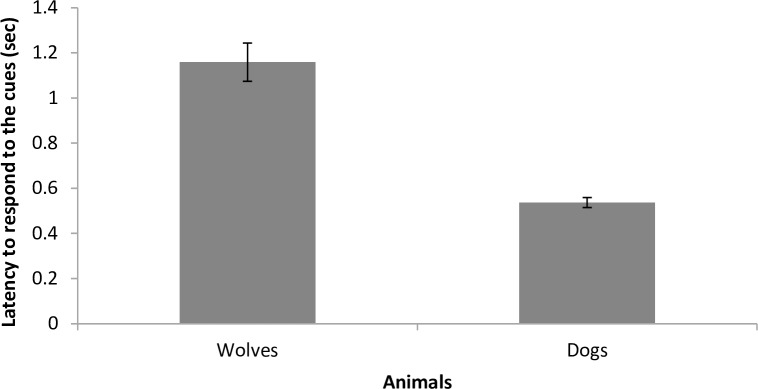
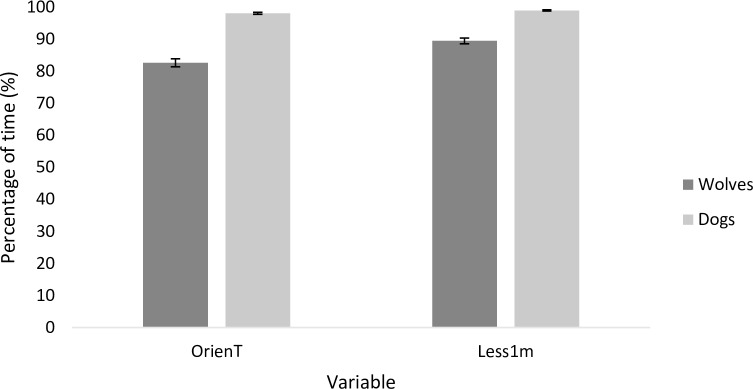
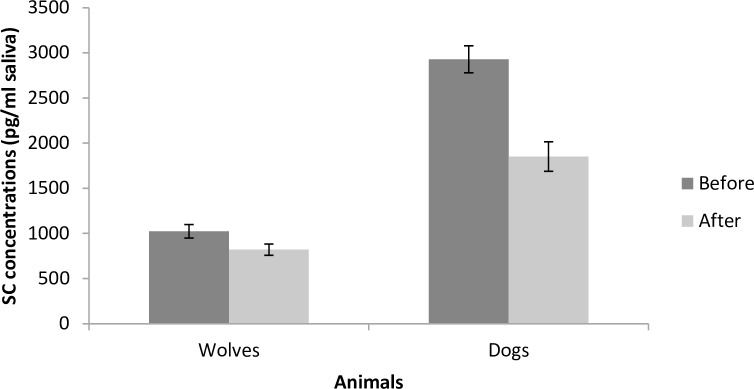
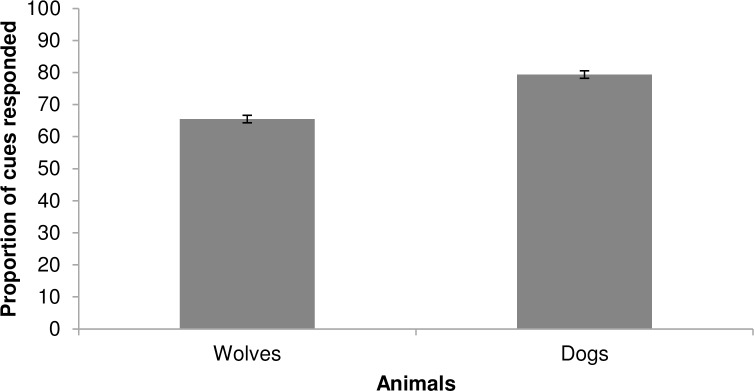
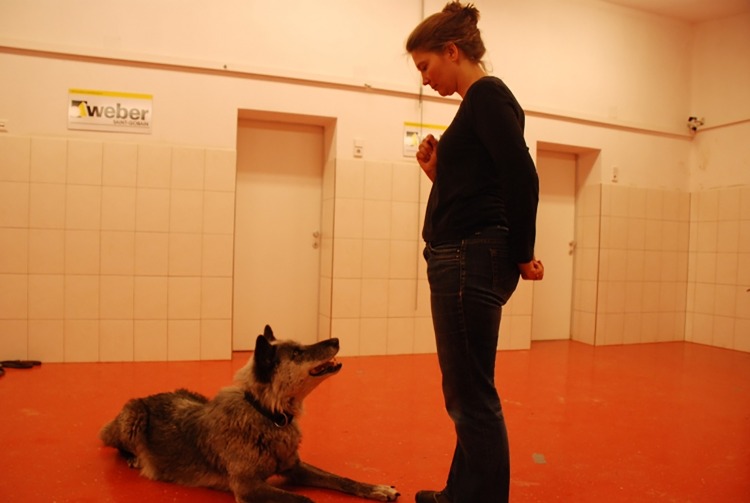
The welfare of animals in captivity is of considerable societal concern. A major source of stress, especially for wild animals, is the lack of control over their environment, which includes not being able to avoid contact with human beings. Paradoxically, some studies have shown that interactions with human beings may improve the welfare of wild animals in captivity. Here, we investigated the behavioural (behaviours indicative of cooperation or stress) and physiological (variations in salivary cortisol concentrations) effects of the increasingly used practice of training wild animals as a way to facilitate handling and/or as behavioural enrichment. We evaluated the effects of indoor training sessions with familiar caretakers on nine human-socialised individuals of a wild species, the wolf (Canis lupus), in comparison to nine individuals of its domesticated form, the dog (Canis lupus familiaris). All animals were raised and kept in intraspecific packs under identical conditions-in accordance with the social structure of the species-in order to control for socialisation with human beings and familiarity with training. We also collected saliva samples of trainers to measure GC and testosterone concentrations, to control for the effects of trainers' stress levels on the responses of the animals. During the training sessions, separated from pack members, the animals stayed voluntarily close to the trainers and mostly adequately performed requested behaviours, indicating concentration to the task. Similarly to dogs, the salivary cortisol level of wolves-used as an index of stress-dropped during these sessions, pointing to a similar stress-reducing effect of the training interaction in both subspecies. The responses to the requested behaviours and the reduction in salivary cortisol level of wolves and dogs varied across trainers, which indicates that the relaxing effect of training has a social component. This points to another factor affecting the welfare of animals during the sessions, beside the rewarding effect of getting food and control over the situation by successfully completing a task. As all responses performed by the animals corresponded to cues already familiar to them, the reported effects were likely due to the above cited factors rather than to a learning process. Our results support previous findings suggesting that training is a potentially powerful tool for improving welfare in some wild social canids by creating structured and positive interactions between these animals and their human caretakers.

摘要

圈养动物的福利是社会相当关注的问题。压力的一个主要来源,尤其是对野生动物来说,是它们无法控制自身环境,这包括无法避免与人类接触。矛盾的是,一些研究表明,与人类的互动可能会改善圈养野生动物的福利。在此,我们调查了越来越多地用于训练野生动物以方便处理和/或作为行为丰富手段的做法对行为(表明合作或压力的行为)和生理(唾液皮质醇浓度变化)的影响。我们评估了与熟悉的饲养员进行室内训练对一种野生动物——狼(Canis lupus)的九个已适应人类社会的个体的影响,并与它的家养形态——狗(Canis lupus familiaris)的九个个体进行比较。所有动物都按照物种的社会结构,在相同条件下以同种群体的方式饲养和生活,以控制与人类的社交以及对训练的熟悉程度。我们还收集了训练员的唾液样本,以测量糖皮质激素(GC)和睾酮浓度,以控制训练员压力水平对动物反应的影响。在训练期间,动物与群体成员分开,它们自愿靠近训练员,并大多能很好地完成要求的行为,这表明它们专注于任务。与狗类似,狼的唾液皮质醇水平——作为压力指标——在这些训练期间下降,这表明训练互动在两个亚种中都有类似的减轻压力的效果。狼和狗对要求行为的反应以及唾液皮质醇水平的降低因训练员而异,这表明训练的放松效果有社会因素。这指出了在训练期间影响动物福利的另一个因素,除了获得食物的奖励效果以及通过成功完成任务对情况的掌控之外。由于动物做出的所有反应都与它们已经熟悉的线索相对应,所报告的效果可能是由于上述因素,而不是学习过程。我们的结果支持了先前的研究发现,即训练是通过在这些动物与其人类饲养员之间建立结构化的积极互动来改善一些野生群居犬科动物福利的潜在有力工具。
https://cdn.ncbi.nlm.nih.gov/pmc/blobs/ace6/5017772/839ea696f5a0/pone.0162389.g005.jpg
https://cdn.ncbi.nlm.nih.gov/pmc/blobs/ace6/5017772/7dc335a2749d/pone.0162389.g001.jpg
https://cdn.ncbi.nlm.nih.gov/pmc/blobs/ace6/5017772/1a60cdab50a6/pone.0162389.g002.jpg
https://cdn.ncbi.nlm.nih.gov/pmc/blobs/ace6/5017772/91e7878957aa/pone.0162389.g003.jpg
https://cdn.ncbi.nlm.nih.gov/pmc/blobs/ace6/5017772/2bf57a8719ea/pone.0162389.g004.jpg
https://cdn.ncbi.nlm.nih.gov/pmc/blobs/ace6/5017772/839ea696f5a0/pone.0162389.g005.jpg
https://cdn.ncbi.nlm.nih.gov/pmc/blobs/ace6/5017772/7dc335a2749d/pone.0162389.g001.jpg
https://cdn.ncbi.nlm.nih.gov/pmc/blobs/ace6/5017772/1a60cdab50a6/pone.0162389.g002.jpg
https://cdn.ncbi.nlm.nih.gov/pmc/blobs/ace6/5017772/91e7878957aa/pone.0162389.g003.jpg
https://cdn.ncbi.nlm.nih.gov/pmc/blobs/ace6/5017772/2bf57a8719ea/pone.0162389.g004.jpg
https://cdn.ncbi.nlm.nih.gov/pmc/blobs/ace6/5017772/839ea696f5a0/pone.0162389.g005.jpg

相似文献

1
Training Reduces Stress in Human-Socialised Wolves to the Same Degree as in Dogs.训练可将人类驯化狼的压力降低到与狗相同的程度。
PLoS One. 2016 Sep 9;11(9):e0162389. doi: 10.1371/journal.pone.0162389. eCollection 2016.
2
Explaining dog wolf differences in utilizing human pointing gestures: selection for synergistic shifts in the development of some social skills.解释狗狼在利用人类指示手势方面的差异:协同转变的选择在一些社会技能的发展中。
PLoS One. 2009 Aug 28;4(8):e6584. doi: 10.1371/journal.pone.0006584.
3
The Power of Discourse: Associations between Trainers' Speech and the Responses of Socialized Wolves and Dogs to Training.话语的力量:训练师的言语与社会化狼和狗对训练的反应之间的关联
Animals (Basel). 2023 Mar 16;13(6):1071. doi: 10.3390/ani13061071.
4
Comprehension of human pointing gestures in young human-reared wolves (Canis lupus) and dogs (Canis familiaris).人工饲养长大的幼年狼(犬属狼种)和狗(犬属犬种)对人类指示手势的理解。
Anim Cogn. 2008 Jul;11(3):373-87. doi: 10.1007/s10071-007-0127-y. Epub 2008 Jan 9.
5
Bonded by nature: Humans form equally strong and reciprocated bonds with similar raised dogs and wolves.天生的纽带:人类与饲养方式相似的狗和狼形成同样强烈且相互的纽带。
Front Psychol. 2023 Jan 4;13:1044940. doi: 10.3389/fpsyg.2022.1044940. eCollection 2022.
6
"Wolves (Canis lupus) and dogs (Canis familiaris) differ in following human gaze into distant space but respond similar to their packmates' gaze": Correction to Werhahn et al. (2016).“狼(犬属灰狼种)和狗(犬属家犬种)在跟随人类目光看向远处空间方面存在差异,但对其同伴目光的反应相似”:对韦尔哈恩等人(2016年)研究的修正
J Comp Psychol. 2017 Feb;131(1):49. doi: 10.1037/com0000056.
7
A comparison between wolves, , and dogs, , in showing behaviour towards humans.狼与狗在对人类表现出的行为方面的比较。 (你提供的原文中“wolves,,”和“dogs,,”表述似乎不完整,我是按照正常理解翻译的,若有错误请告知。)
Anim Behav. 2016 Dec;122:59-66. doi: 10.1016/j.anbehav.2016.09.023.
8
Human-directed attachment behavior in wolves suggests standing ancestral variation for human-dog attachment bonds.狼对人类的依恋行为表明,人类与狗的依恋关系存在着古老的遗传变异。
Ecol Evol. 2022 Sep 20;12(9):e9299. doi: 10.1002/ece3.9299. eCollection 2022 Sep.
9
Seasonal trends in intrapack aggression of captive wolves (Canis lupus) and wolf-dog crosses: implications for management in mixed-subspecies exhibits.圈养狼(Canis lupus)和狼犬杂交种在笼内攻击行为的季节性趋势:对混合亚种展览管理的启示
J Appl Anim Welf Sci. 2015;18(1):1-16. doi: 10.1080/10888705.2014.923773. Epub 2014 Jun 18.
10
Testing the myth: tolerant dogs and aggressive wolves.检验这一谬论:温顺的狗与攻击性强的狼。
Proc Biol Sci. 2015 May 22;282(1807):20150220. doi: 10.1098/rspb.2015.0220.

引用本文的文献

1
Exploring the induction and measurement of positive affective state in equines through a personality-centred lens.通过以个性为中心的视角探索马属动物积极情感状态的诱导与测量。
Sci Rep. 2025 May 27;15(1):18550. doi: 10.1038/s41598-025-98034-8.
2
Testing the Level of Cortisol in Dogs.检测犬类体内皮质醇水平。
Animals (Basel). 2025 Apr 23;15(9):1197. doi: 10.3390/ani15091197.
3
Decreased risk-proneness with increasing age in equally raised and kept wolves and dogs.在同等饲养条件下,狼和狗随着年龄增长风险倾向降低。

本文引用的文献

1
Endocrine aspects of social instability in the olive baboon (Papio anubis).社会不稳定对橄榄狒狒(Papio anubis)内分泌的影响。
Am J Primatol. 1983;5(4):365-379. doi: 10.1002/ajp.1350050406.
2
Testing the myth: tolerant dogs and aggressive wolves.检验这一谬论:温顺的狗与攻击性强的狼。
Proc Biol Sci. 2015 May 22;282(1807):20150220. doi: 10.1098/rspb.2015.0220.
3
Tracking the evolutionary origins of dog-human cooperation: the "Canine Cooperation Hypothesis".探寻狗与人类合作的进化起源:“犬类合作假说”
PLoS One. 2025 Jan 8;20(1):e0313916. doi: 10.1371/journal.pone.0313916. eCollection 2025.
4
Wolf-Dog-Human: Companionship Based on Common Social Tools.狼-狗-人类:基于共同社交工具的伙伴关系。
Animals (Basel). 2023 Aug 28;13(17):2729. doi: 10.3390/ani13172729.
5
Behavior Skills Training with Zoological Staff to Increase Killer Whale Attending Behavior.对动物园工作人员进行行为技能培训以增加虎鲸的参与行为。
Behav Anal Pract. 2022 Jul 20;16(1):266-283. doi: 10.1007/s40617-022-00719-3. eCollection 2023 Mar.
6
The Power of Discourse: Associations between Trainers' Speech and the Responses of Socialized Wolves and Dogs to Training.话语的力量:训练师的言语与社会化狼和狗对训练的反应之间的关联
Animals (Basel). 2023 Mar 16;13(6):1071. doi: 10.3390/ani13061071.
7
Similar behavioral but different endocrine responses to conspecific interactions in hand-raised wolves and dogs.人工饲养的狼和狗对同种互动有相似的行为反应但内分泌反应不同。
iScience. 2023 Jan 14;26(2):105978. doi: 10.1016/j.isci.2023.105978. eCollection 2023 Feb 17.
8
Bonded by nature: Humans form equally strong and reciprocated bonds with similar raised dogs and wolves.天生的纽带:人类与饲养方式相似的狗和狼形成同样强烈且相互的纽带。
Front Psychol. 2023 Jan 4;13:1044940. doi: 10.3389/fpsyg.2022.1044940. eCollection 2022.
9
Expanding the role of the future zoo: Wellbeing should become the fifth aim for modern zoos.拓展未来动物园的作用:福祉应成为现代动物园的第五个目标。
Front Psychol. 2022 Oct 20;13:1018722. doi: 10.3389/fpsyg.2022.1018722. eCollection 2022.
10
Life experience rather than domestication accounts for dogs' increased oxytocin release during social contact with humans.生活经历而非驯化解释了狗在与人类社交接触时增加的催产素释放。
Sci Rep. 2021 Jul 13;11(1):14423. doi: 10.1038/s41598-021-93922-1.
Front Psychol. 2015 Jan 15;5:1582. doi: 10.3389/fpsyg.2014.01582. eCollection 2014.
4
The predictive value of early behavioural assessments in pet dogs--a longitudinal study from neonates to adults.宠物犬早期行为评估的预测价值——一项从新生犬到成年犬的纵向研究
PLoS One. 2014 Jul 8;9(7):e101237. doi: 10.1371/journal.pone.0101237. eCollection 2014.
5
Assessing welfare and suffering.评估福利与痛苦。
Behav Processes. 1991 Dec;25(2-3):117-23. doi: 10.1016/0376-6357(91)90014-Q.
6
Social variables affecting mate preferences, copulation and reproductive outcome in a pack of free-ranging dogs.影响一群自由放养狗的交配偏好、交配和繁殖结果的社会变量。
PLoS One. 2014 Jun 6;9(6):e98594. doi: 10.1371/journal.pone.0098594. eCollection 2014.
7
Inhibition training in wolves and dogs.狼和狗的抑制训练。
Behav Processes. 1983 Oct;8(4):363-77. doi: 10.1016/0376-6357(83)90024-4.
8
Visual attention, an indicator of human-animal relationships? A study of domestic horses (Equus caballus).视觉注意力,是否能反映人-动物关系?一项关于家养马(Equus caballus)的研究。
Front Psychol. 2014 Feb 13;5:108. doi: 10.3389/fpsyg.2014.00108. eCollection 2014.
9
Wolves are better imitators of conspecifics than dogs.狼比狗更善于模仿同类。
PLoS One. 2014 Jan 29;9(1):e86559. doi: 10.1371/journal.pone.0086559. eCollection 2014.
10
Social learning from humans or conspecifics: differences and similarities between wolves and dogs.从人类或同物种中进行社会学习:狼和狗之间的差异和相似之处。
Front Psychol. 2013 Dec 3;4:868. doi: 10.3389/fpsyg.2013.00868. eCollection 2013.