Cell Biology Program, Sloan Kettering Institute for Cancer Research, New York, New York 10065, USA.
BCMB Allied Program, Weill Cornell Medical College, New York, New York 10065, USA.
Nat Nanotechnol. 2016 Nov;11(11):977-985. doi: 10.1038/nnano.2016.164. Epub 2016 Sep 26.
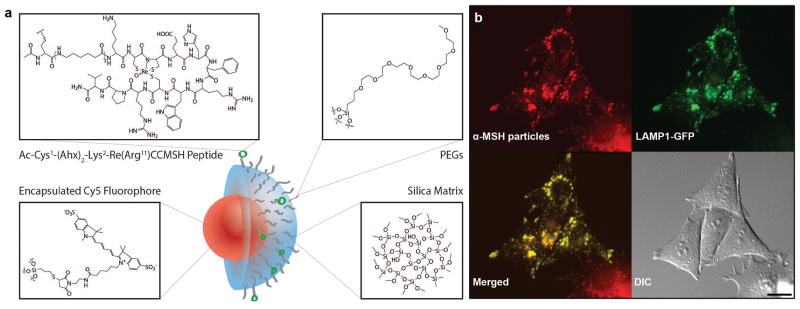
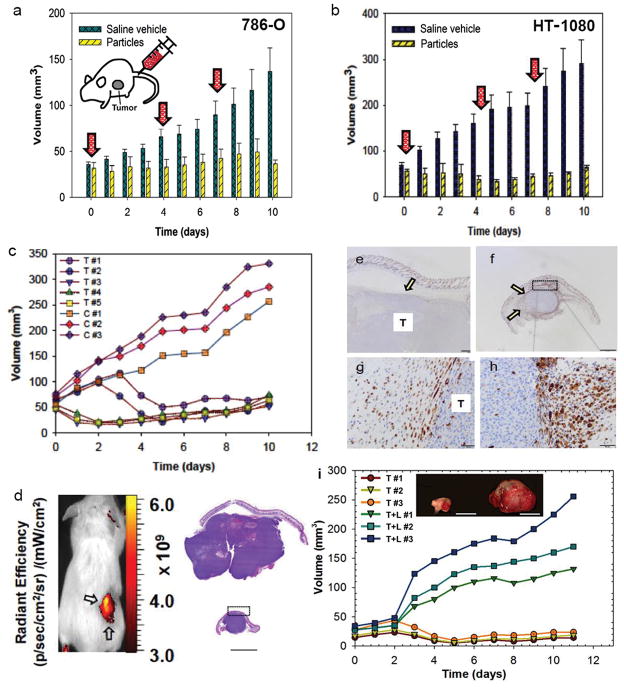
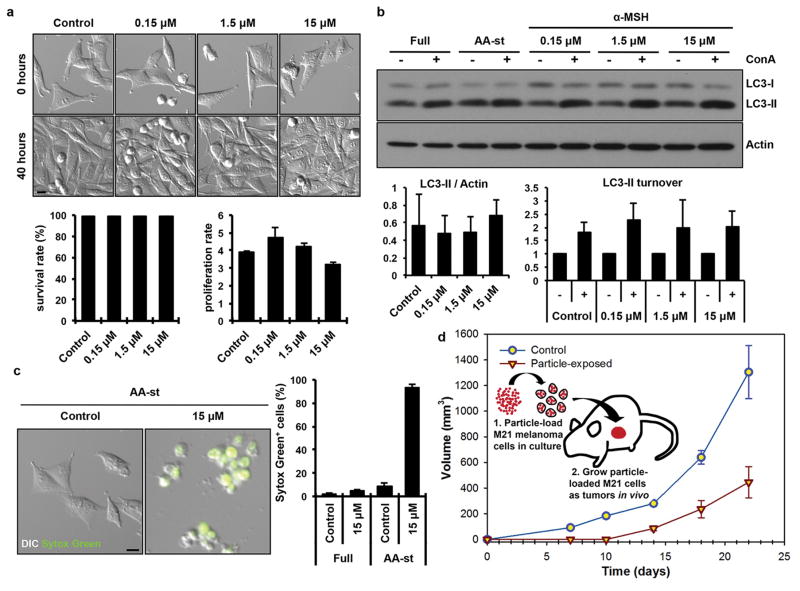
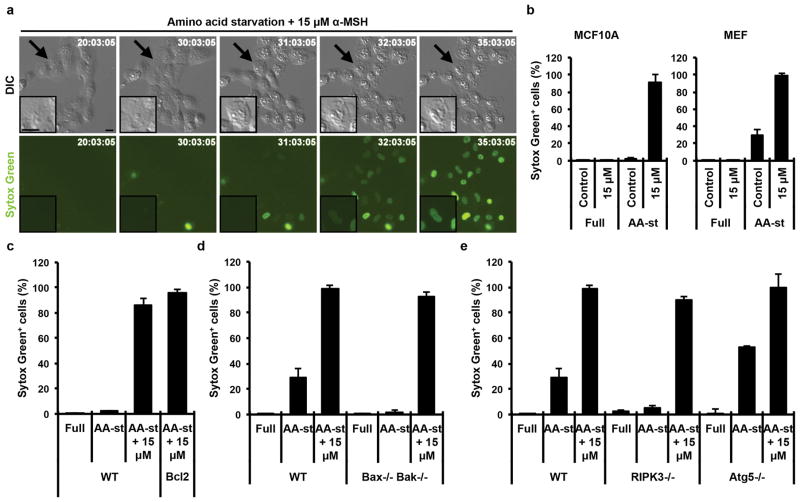
The design of cancer-targeting particles with precisely tuned physicochemical properties may enhance the delivery of therapeutics and access to pharmacological targets. However, a molecular-level understanding of the interactions driving the fate of nanomedicine in biological systems remains elusive. Here, we show that ultrasmall (<10 nm in diameter) poly(ethylene glycol)-coated silica nanoparticles, functionalized with melanoma-targeting peptides, can induce a form of programmed cell death known as ferroptosis in starved cancer cells and cancer-bearing mice. Tumour xenografts in mice intravenously injected with nanoparticles using a high-dose multiple injection scheme exhibit reduced growth or regression, in a manner that is reversed by the pharmacological inhibitor of ferroptosis, liproxstatin-1. These data demonstrate that ferroptosis can be targeted by ultrasmall silica nanoparticles and may have therapeutic potential.
具有精确调谐的物理化学性质的癌症靶向粒子的设计,可以增强治疗药物的递送和药物作用靶点的可及性。然而,对于纳米医学在生物系统中命运的驱动因素的分子水平理解仍然难以捉摸。在这里,我们表明,超小(直径<10nm)的聚乙二醇包覆的二氧化硅纳米粒子,用黑色素瘤靶向肽功能化,可在饥饿的癌细胞和荷瘤小鼠中诱导一种称为铁死亡的程序性细胞死亡形式。用纳米粒子进行高剂量多次注射方案静脉注射的小鼠肿瘤异种移植物的生长减少或消退,这种方式可以被铁死亡的药理学抑制剂 liproxstatin-1 逆转。这些数据表明,超小的二氧化硅纳米粒子可以靶向铁死亡,并可能具有治疗潜力。