Honda Kazufumi, Srivastava Sudhir
Division of Chemotherapy & Clinical Research, National Cancer Center Research Institute, Tokyo 104-0045, Japan.
Japan Agency for Medical Research & Development (AMED) CREST, Tokyo 100-0004, Japan.
Biomark Med. 2016 Nov;10(11):1197-1207. doi: 10.2217/bmm-2016-0209. Epub 2016 Sep 27.
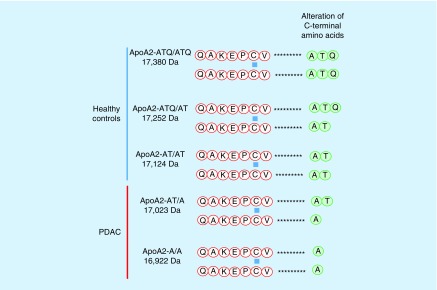
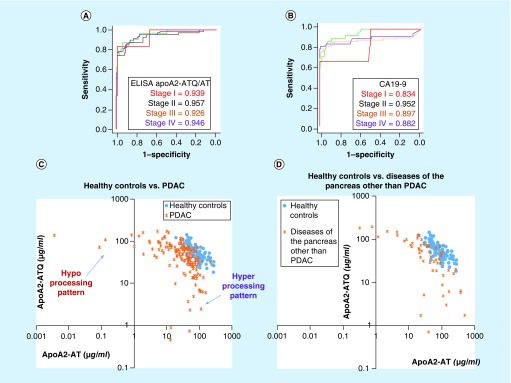
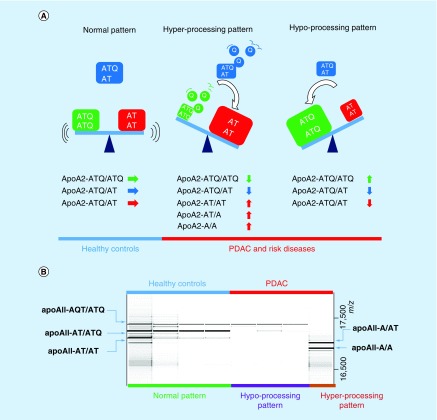
Given the low incidence of pancreatic cancer in the general population, screening of pancreatic cancer in the general population using invasive modalities is not feasible. Combination of invasive screening with noninvasive biomarkers for pancreatic cancer and its precancerous lesions has the potential to reduce mortality due to pancreatic cancer. In this review, we focus on biomarkers found in the blood that can indicate early-stage pancreatic cancer, and we discuss current strategies for screening for pancreatic cancer. We recently identified a unique alteration in apolipoprotein A2 isoforms in pancreatic cancer and its precancerous lesions, and we describe its clinical usefulness as a potential biomarker for the early detection and risk stratification of pancreatic cancer.
鉴于胰腺癌在普通人群中的发病率较低,使用侵入性手段对普通人群进行胰腺癌筛查并不可行。将侵入性筛查与用于胰腺癌及其癌前病变的非侵入性生物标志物相结合,有可能降低胰腺癌导致的死亡率。在本综述中,我们重点关注血液中可指示早期胰腺癌的生物标志物,并讨论当前胰腺癌的筛查策略。我们最近在胰腺癌及其癌前病变中发现了载脂蛋白A2亚型的独特改变,并描述了其作为胰腺癌早期检测和风险分层潜在生物标志物的临床用途。