Department of Hematology, The Affiliated Huaian No.1 People's Hospital of Nanjing Medical University, Huai'an, 223300, Jiangsu, People's Republic of China.
Medical College, Anhui University of Science and Technology, Huainan, 232001, Anhui, People's Republic of China.
Sci Rep. 2022 May 14;12(1):8008. doi: 10.1038/s41598-022-11760-1.
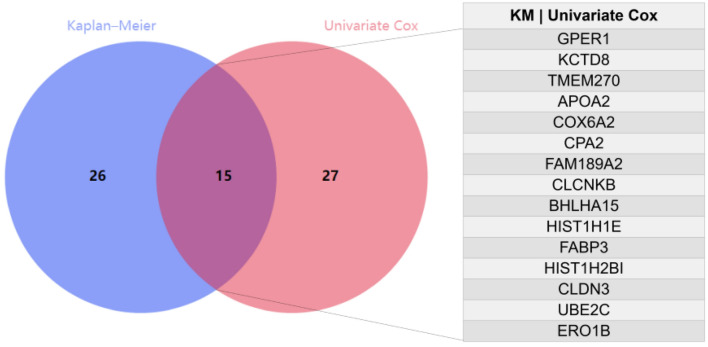
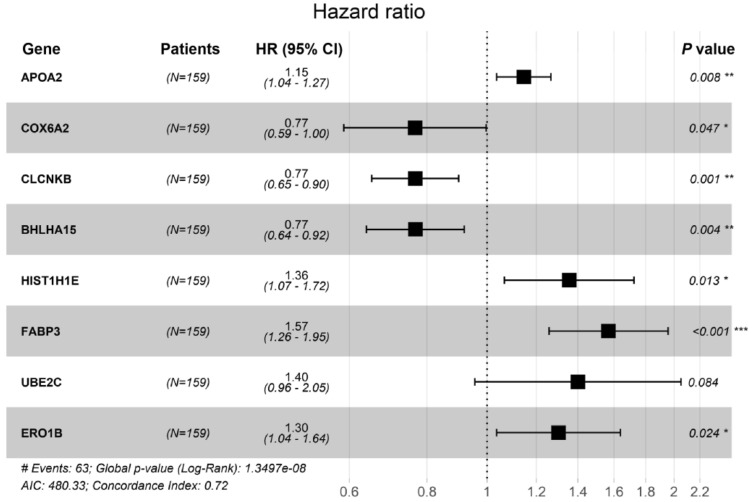
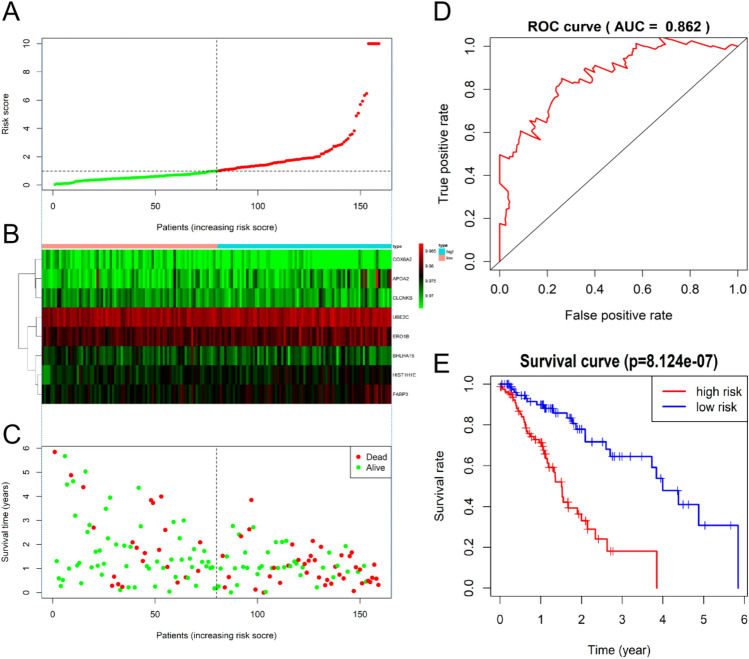
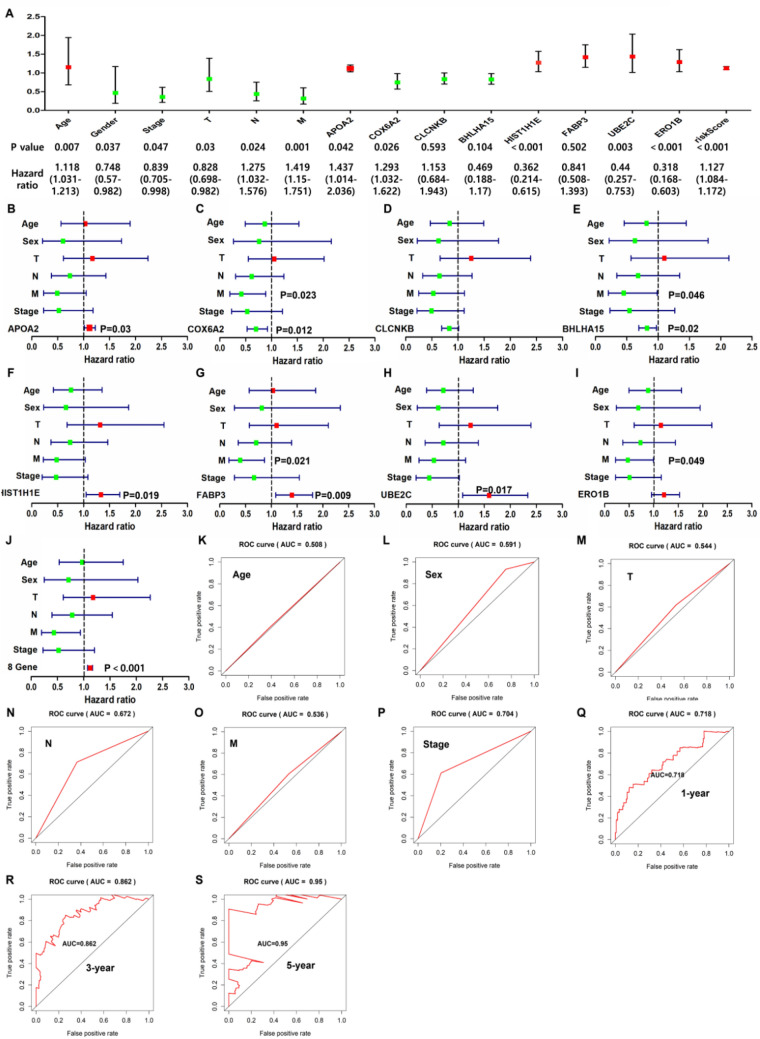
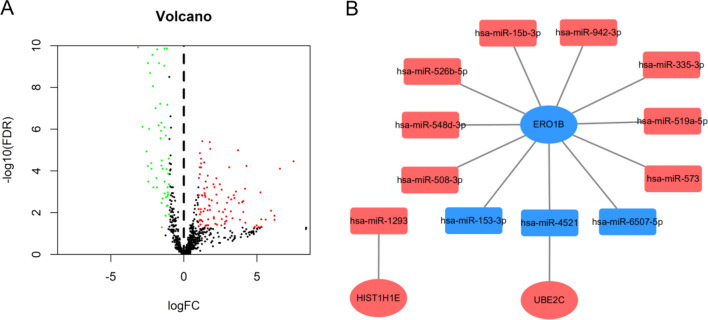
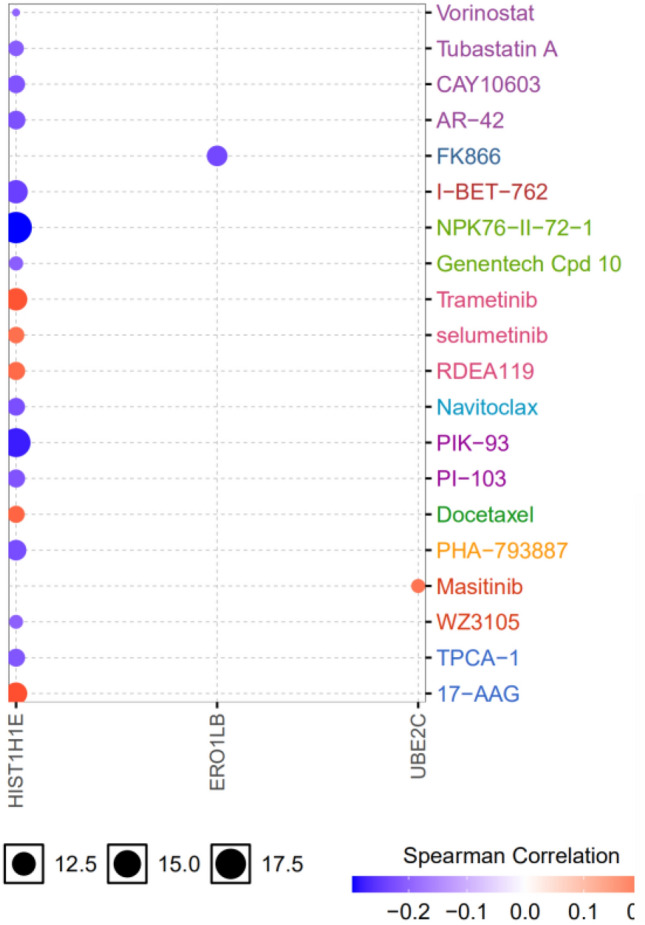
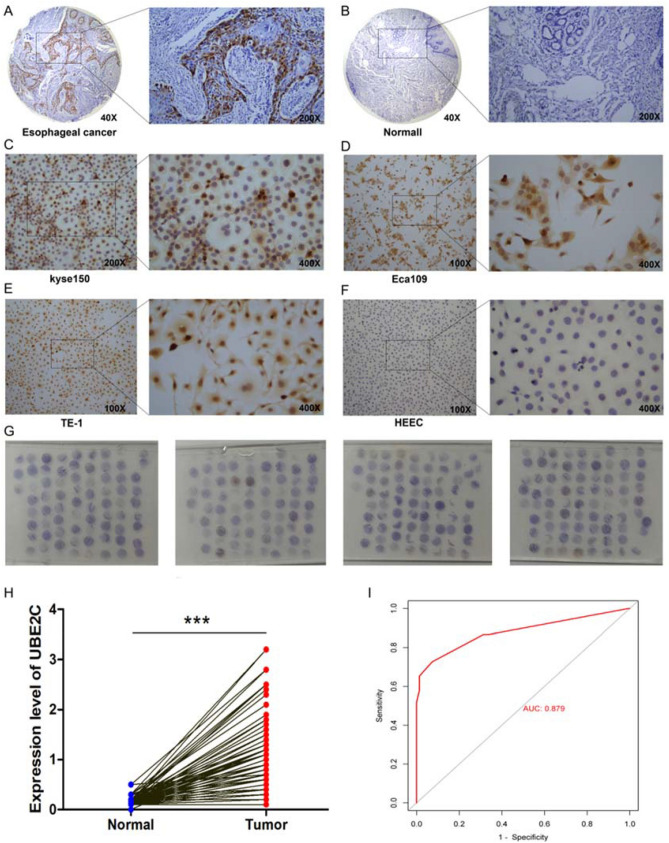
At present, the treatment of esophageal cancer (EC) is mainly surgical and drug treatment. However, due to drug resistance, these therapies can not effectively improve the prognosis of patients with the EC. Therefore, a multigene prognostic risk scoring system was constructed by bioinformatics analysis method to provide a theoretical basis for the prognosis and treatment decision of EC. The gene expression profiles and clinical data of esophageal cancer patients were gathered from the Cancer Genome Atlas TCGA database, and the differentially expressed genes (DEGs) were screened by R software. Genes with prognostic value were screened by Kaplan Meier analysis, followed by functional enrichment analysis. A cox regression model was used to construct the prognostic risk score model of DEGs. ROC curve and survival curve were utilized to evaluate the performance of the model. Univariate and multivariate Cox regression analysis was used to evaluate whether the model has an independent prognostic value. Network tool mirdip was used to find miRNAs that may regulate risk genes, and Cytoscape software was used to construct gene miRNA regulatory network. GSCA platform is used to analyze the relationship between gene expression and drug sensitivity. 41 DEGs related to prognosis were pre-liminarily screened by survival analysis. A prognostic risk scoring model composed of 8 DEGs (APOA2, COX6A2, CLCNKB, BHLHA15, HIST1H1E, FABP3, UBE2C and ERO1B) was built by Cox regression analysis. In this model, the prognosis of the high-risk score group was poor (P < 0.001). The ROC curve showed that (AUC = 0.862) the model had a good performance in predicting prognosis. In Cox regression analysis, the comprehensive risk score can be employed as an independent prognostic factor of the EC. HIST1H1E, UBE2C and ERO1B interacted with differentially expressed miRNAs. High expression of HIST1H1E was resistant to trametinib, selumetinib, RDEA119, docetaxel and 17-AAG, High expression of UBE2C was resistant to masitinib, and Low expression of ERO1B made the EC more sensitive to FK866. We constructed an EC risk score model composed of 8 DEGs and gene resistance analysis, which can provide reference for prognosis prediction, diagnosis and treatment of the EC patients.
目前,食管癌(EC)的治疗主要是手术和药物治疗。然而,由于耐药性,这些疗法不能有效地改善 EC 患者的预后。因此,本研究通过生物信息学分析方法构建了多基因预后风险评分系统,为 EC 的预后和治疗决策提供了理论依据。从癌症基因组图谱 TCGA 数据库中收集了食管癌患者的基因表达谱和临床数据,通过 R 软件筛选差异表达基因(DEGs)。通过 Kaplan-Meier 分析筛选具有预后价值的基因,然后进行功能富集分析。使用 COX 回归模型构建 DEGs 的预后风险评分模型。ROC 曲线和生存曲线用于评估模型的性能。单因素和多因素 COX 回归分析用于评估模型是否具有独立的预后价值。使用网络工具 mirdip 寻找可能调节风险基因的 miRNAs,使用 Cytoscape 软件构建基因 miRNA 调控网络。使用 GSCA 平台分析基因表达与药物敏感性的关系。通过生存分析初步筛选出与预后相关的 41 个 DEGs。通过 COX 回归分析构建了由 8 个 DEGs(APOA2、COX6A2、CLCNKB、BHLHA15、HIST1H1E、FABP3、UBE2C 和 ERO1B)组成的预后风险评分模型。在该模型中,高风险评分组的预后较差(P < 0.001)。ROC 曲线显示(AUC = 0.862)该模型在预测预后方面具有良好的性能。在 COX 回归分析中,综合风险评分可作为 EC 的独立预后因素。HIST1H1E、UBE2C 和 ERO1B 与差异表达的 miRNAs 相互作用。HIST1H1E 高表达对 trametinib、selumetinib、RDEA119、docetaxel 和 17-AAG 耐药,UBE2C 高表达对 masitinib 耐药,ERO1B 低表达使 EC 对 FK866 更敏感。本研究构建了一个由 8 个 DEGs 组成的 EC 风险评分模型和基因耐药性分析,可为 EC 患者的预后预测、诊断和治疗提供参考。