Ahuja Maninder
Director Ahuja Hospital and Infertility Centre, Faridabad, Haryana, India.
J Midlife Health. 2016 Jul-Sep;7(3):126-131. doi: 10.4103/0976-7800.191012.
Age of menopause is a very important biomarker of not only the loss of fertility but also an increased risk for various mid-life diseases and problems. Many of these diseases can be prevented by timely intervention of lifestyle modification, menopausal hormone therapy, or other supplementations such as calcium, Vitamin D, and micronutrients. In India age of menopause is less than our counterparts in the Western world. This means that the fertility potential of Indian women starts compromising early, so we need to start with the preventive measures much early. Earlier studies in India have been done on a limited population, and small sample size and not all the determinants of menopause age were considered.
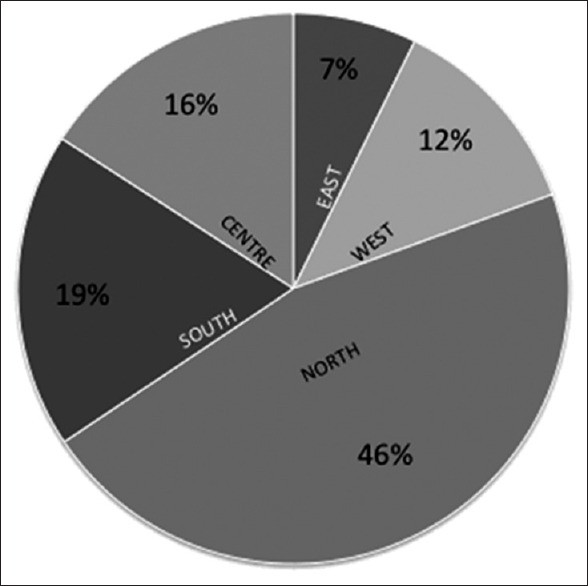
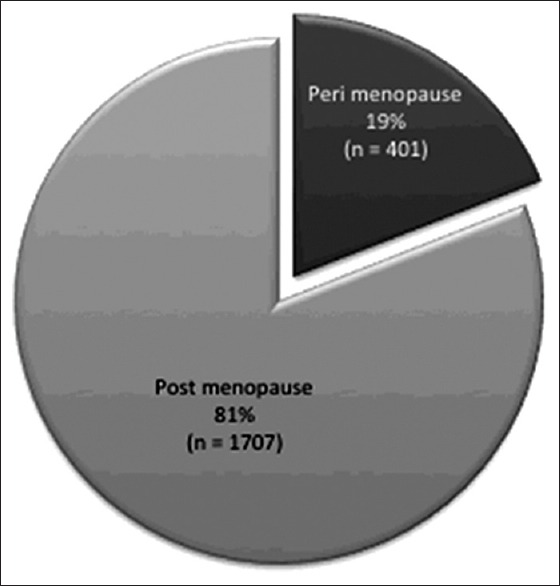
Survey was conducted in 21 chapters of Indian Menopause Society and all regions South, West, East and North were covered. There were 23 Medical practitioners who participated. Consent was taken and inclusion and exclusion criteria was set. Set questions were asked The questionnaire comprised of identification of the participants' religion, education, and various socioeconomic parameters. They were also inquired about their marital and parity status, abortion, or contraceptive use. The menopausal women were asked their menopause age and whether it was natural or surgical. The perimenopausal women were asked to enlist the date of their last period. All women with <1 year to menopause were classified as perimenopausal. The height, weight, and waist circumference were noted for all the women, and body mass index (BMI) was calculated. The women were also inquired about their food habits and social habits including alcohol consumption or smoking. Hence, this study was planned as a PAN India study.
Average age of menopause of an Indian woman is 46.2 years much less than their Western counter parts (51 years). A definite rural and urban division was also seen. There was a correlation between the age of menopause and social and economic status, married status, and parity status.
绝经年龄不仅是生育能力丧失的重要生物标志物,也是各种中年疾病和问题风险增加的重要标志。通过及时采取生活方式改变、绝经激素治疗或其他补充剂(如钙、维生素D和微量营养素)进行干预,可以预防许多此类疾病。在印度,女性的绝经年龄低于西方同龄人。这意味着印度女性的生育潜力更早开始受到影响,因此我们需要更早地开始采取预防措施。印度早期的研究针对的人群有限,样本量较小,且未考虑绝经年龄的所有决定因素。
在印度更年期协会的21个分会进行了调查,覆盖了南部、西部、东部和北部所有地区。有23名医学从业者参与。获得了知情同意,并设定了纳入和排除标准。提出了既定问题。问卷包括参与者的宗教、教育程度和各种社会经济参数。还询问了他们的婚姻和生育状况、流产或避孕措施的使用情况。询问绝经女性的绝经年龄以及绝经是自然绝经还是手术绝经。询问围绝经期女性列出她们最后一次月经的日期。所有距绝经不到1年的女性被归类为围绝经期女性。记录了所有女性的身高、体重和腰围,并计算了体重指数(BMI)。还询问了女性的饮食习惯和社会习惯,包括饮酒或吸烟情况。因此,本研究计划作为一项全印度范围的研究。
印度女性的平均绝经年龄为46.2岁,远低于西方女性(51岁)。还观察到了明显的城乡差异。绝经年龄与社会经济地位、婚姻状况和生育状况之间存在相关性。