Marcoux Geneviève, Duchez Anne-Claire, Cloutier Nathalie, Provost Patrick, Nigrovic Peter A, Boilard Eric
Centre de Recherche du Centre Hospitalier Universitaire de Québec, Faculté de Médecine de l'Université Laval, Département de microbiologie et immunologie, Québec, QC, Canada.
Department of Medicine, Division of Rheumatology Immunology and Allergy, Brigham and Women's Hospital and Harvard Medical School, Boston, MA, USA.
Sci Rep. 2016 Oct 27;6:35928. doi: 10.1038/srep35928.
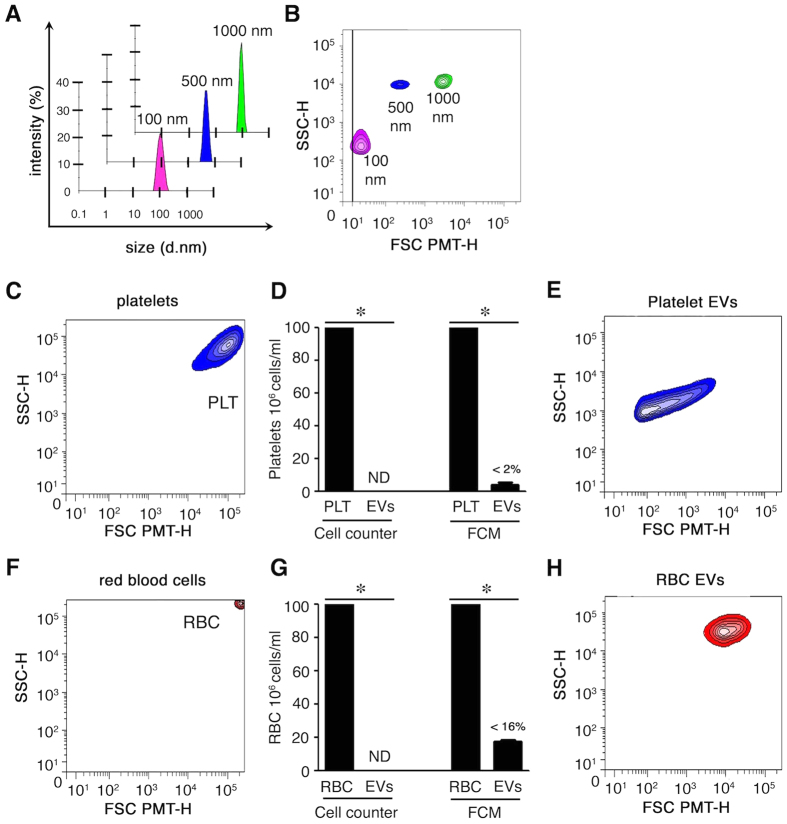
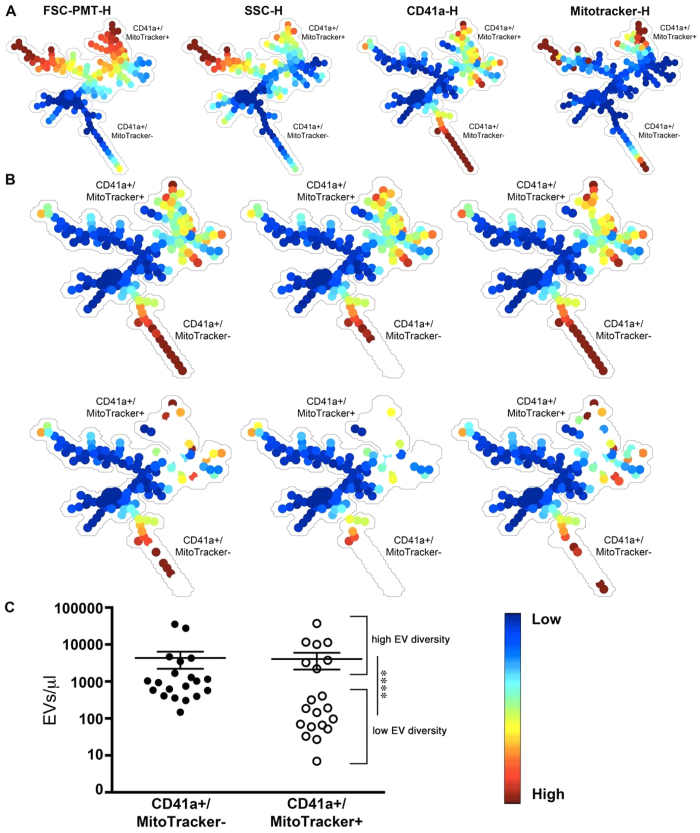
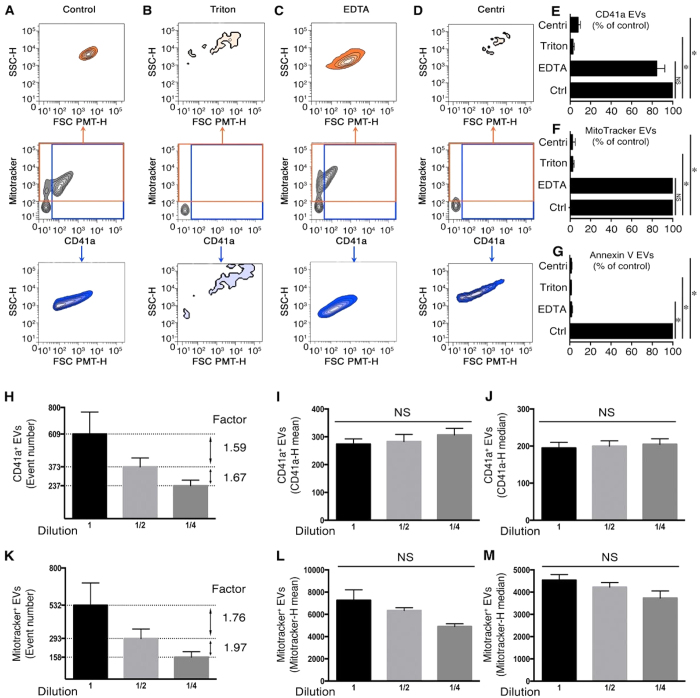
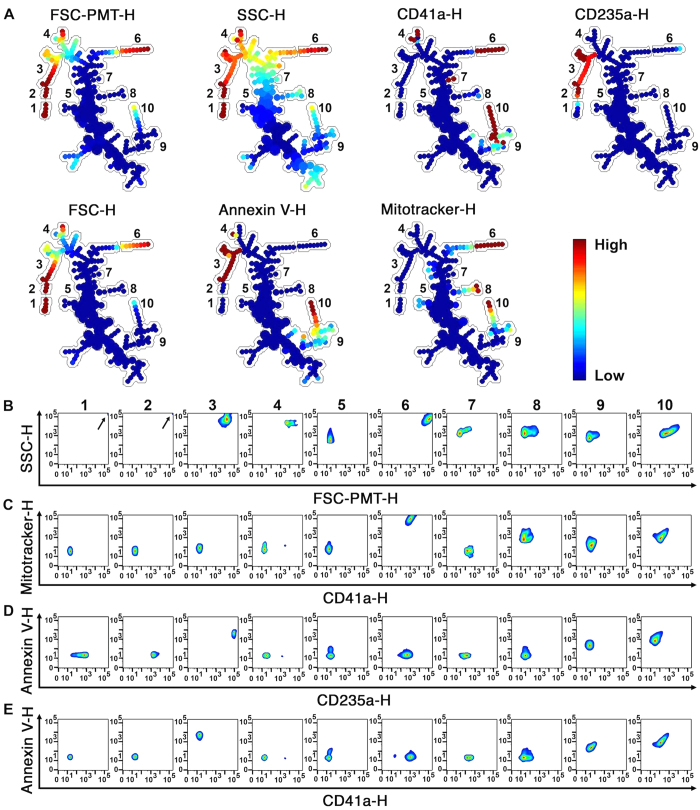
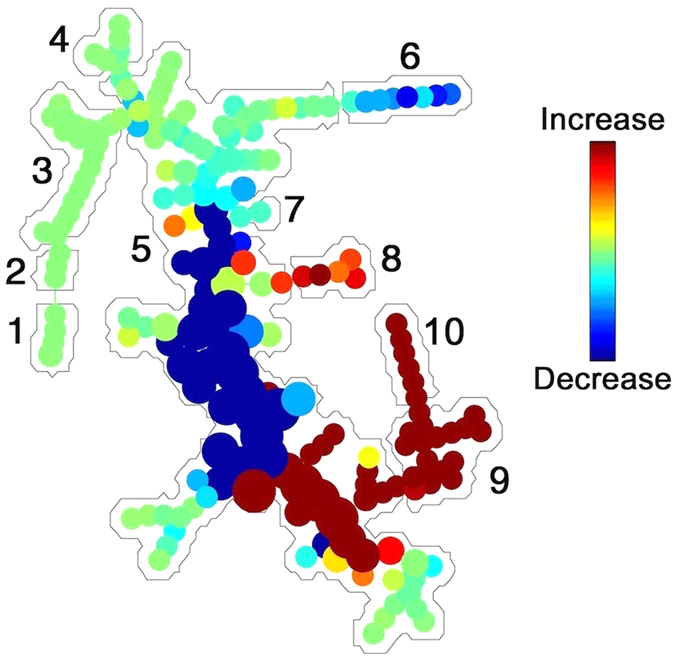
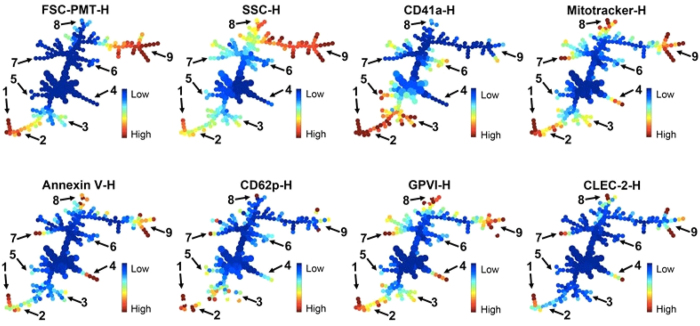
Extracellular vesicles (EV) are small membrane vesicles produced by cells upon activation and apoptosis. EVs are heterogeneous according to their origin, mode of release, membrane composition, organelle and biochemical content, and other factors. Whereas it is apparent that EVs are implicated in intercellular communication, they can also be used as biomarkers. Continuous improvements in pre-analytical parameters and flow cytometry permit more efficient assessment of EVs; however, methods to more objectively distinguish EVs from cells and background, and to interpret multiple single-EV parameters are lacking. We used spanning-tree progression analysis of density-normalized events (SPADE) as a computational approach for the organization of EV subpopulations released by platelets and erythrocytes. SPADE distinguished EVs, and logically organized EVs detected by high-sensitivity flow cytofluorometry based on size estimation, granularity, mitochondrial content, and phosphatidylserine and protein receptor surface expression. Plasma EVs were organized by hierarchy, permitting appreciation of their heterogeneity. Furthermore, SPADE was used to analyze EVs present in the synovial fluid of patients with inflammatory arthritis. Its algorithm efficiently revealed subtypes of arthritic patients based on EV heterogeneity patterns. Our study reveals that computational algorithms are useful for the analysis of high-dimensional single EV data, thereby facilitating comprehension of EV functions and biomarker development.
细胞外囊泡(EV)是细胞在激活和凋亡时产生的小膜囊泡。根据其起源、释放方式、膜组成、细胞器和生化内容以及其他因素,EV是异质性的。虽然很明显EV参与细胞间通讯,但它们也可以用作生物标志物。分析前参数和流式细胞术的不断改进使得对EV的评估更加有效;然而,缺乏更客观地区分EV与细胞和背景以及解释多个单个EV参数的方法。我们使用密度归一化事件的生成树进展分析(SPADE)作为一种计算方法,用于组织血小板和红细胞释放的EV亚群。SPADE区分了EV,并根据大小估计、粒度、线粒体含量、磷脂酰丝氨酸和蛋白质受体表面表达,对通过高灵敏度流式细胞荧光术检测到的EV进行了逻辑组织。血浆EV按层次结构进行组织,从而能够了解它们的异质性。此外,SPADE用于分析炎症性关节炎患者滑液中的EV。其算法基于EV异质性模式有效地揭示了关节炎患者的亚型。我们的研究表明,计算算法对于分析高维单个EV数据很有用,从而有助于理解EV功能和生物标志物开发。