Dimidschstein Jordane, Chen Qian, Tremblay Robin, Rogers Stephanie L, Saldi Giuseppe-Antonio, Guo Lihua, Xu Qing, Liu Runpeng, Lu Congyi, Chu Jianhua, Grimley Joshua S, Krostag Anne-Rachel, Kaykas Ajamete, Avery Michael C, Rashid Mohammad S, Baek Myungin, Jacob Amanda L, Smith Gordon B, Wilson Daniel E, Kosche Georg, Kruglikov Illya, Rusielewicz Tomasz, Kotak Vibhakar C, Mowery Todd M, Anderson Stewart A, Callaway Edward M, Dasen Jeremy S, Fitzpatrick David, Fossati Valentina, Long Michael A, Noggle Scott, Reynolds John H, Sanes Dan H, Rudy Bernardo, Feng Guoping, Fishell Gord
NYU Neuroscience Institute, New York University Langone Medical Center, New York, New York, USA.
Department of Neuroscience and Physiology, Smilow Research Center, New York University Langone Medical Center, New York, New York, USA.
Nat Neurosci. 2016 Dec;19(12):1743-1749. doi: 10.1038/nn.4430. Epub 2016 Oct 31.
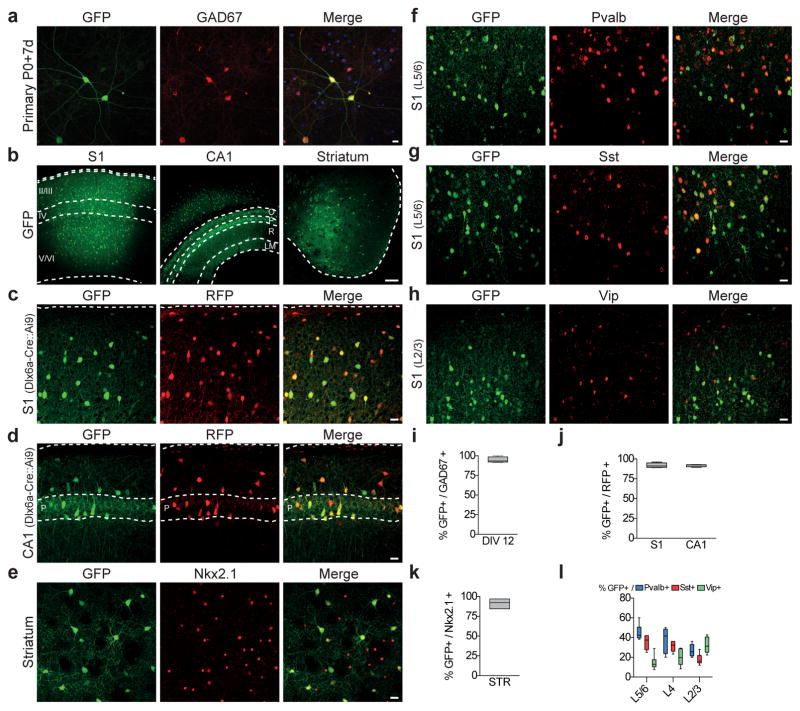
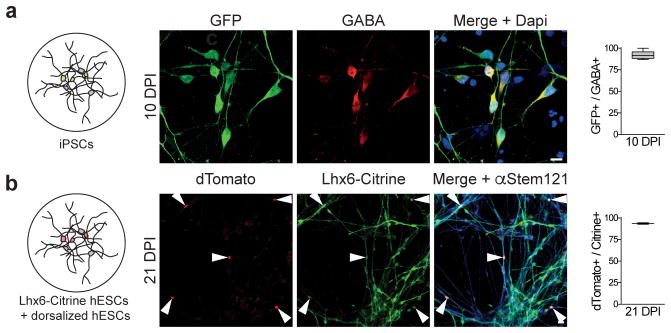
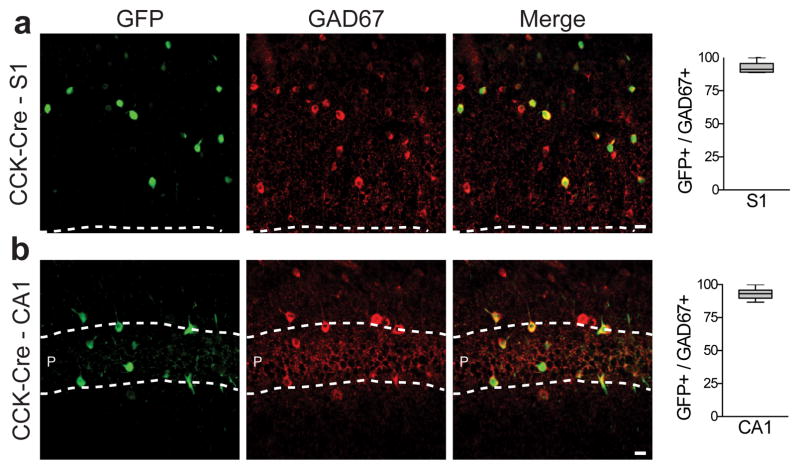
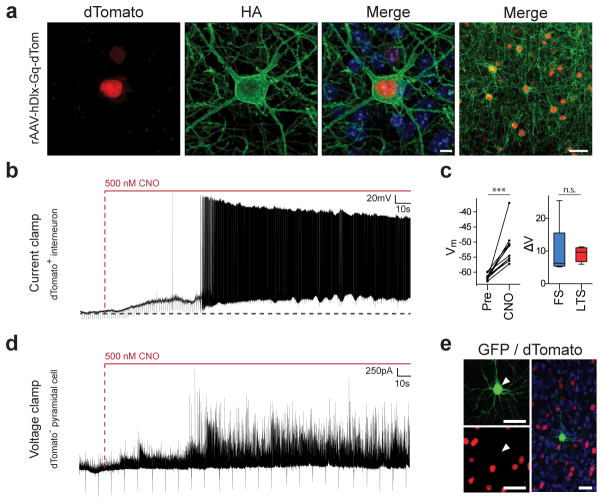
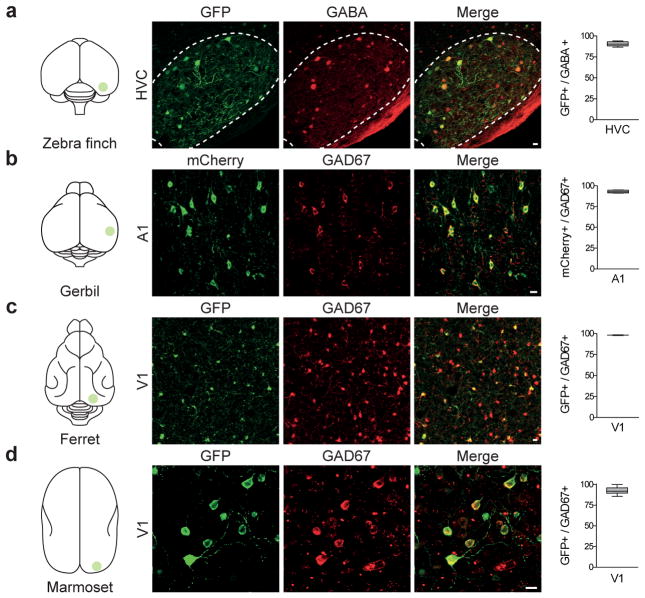
A fundamental impediment to understanding the brain is the availability of inexpensive and robust methods for targeting and manipulating specific neuronal populations. The need to overcome this barrier is pressing because there are considerable anatomical, physiological, cognitive and behavioral differences between mice and higher mammalian species in which it is difficult to specifically target and manipulate genetically defined functional cell types. In particular, it is unclear the degree to which insights from mouse models can shed light on the neural mechanisms that mediate cognitive functions in higher species, including humans. Here we describe a novel recombinant adeno-associated virus that restricts gene expression to GABAergic interneurons within the telencephalon. We demonstrate that the viral expression is specific and robust, allowing for morphological visualization, activity monitoring and functional manipulation of interneurons in both mice and non-genetically tractable species, thus opening the possibility to study GABAergic function in virtually any vertebrate species.
理解大脑的一个基本障碍是缺乏用于靶向和操纵特定神经元群体的廉价且可靠的方法。克服这一障碍的需求十分迫切,因为小鼠与高等哺乳动物物种之间在解剖学、生理学、认知和行为方面存在相当大的差异,在这些高等物种中很难特异性地靶向和操纵基因定义的功能细胞类型。特别是,目前尚不清楚小鼠模型中的见解能在多大程度上揭示介导包括人类在内的高等物种认知功能的神经机制。在此,我们描述了一种新型重组腺相关病毒,它将基因表达限制在端脑内的GABA能中间神经元。我们证明病毒表达具有特异性且强劲有力,能够对小鼠和非基因易处理物种中的中间神经元进行形态学可视化、活动监测和功能操纵,从而开启了在几乎任何脊椎动物物种中研究GABA能功能的可能性。