Buck Kenneth B, Schaefer Andrew W, Schoonderwoert Vincent T, Creamer Matthew S, Dufresne Eric R, Forscher Paul
Department of Molecular, Cellular and Developmental Biology, Yale University, New Haven, CT 06520.
Interdepartmental Neuroscience Program, Yale University, New Haven, CT 06520.
Mol Biol Cell. 2017 Jan 1;28(1):98-110. doi: 10.1091/mbc.E16-04-0228. Epub 2016 Nov 16.
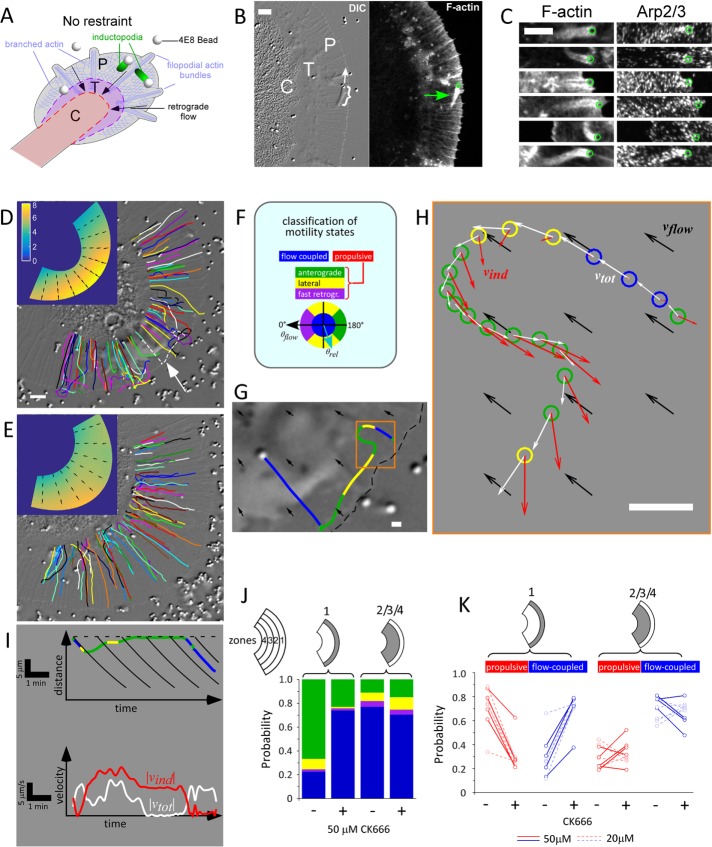
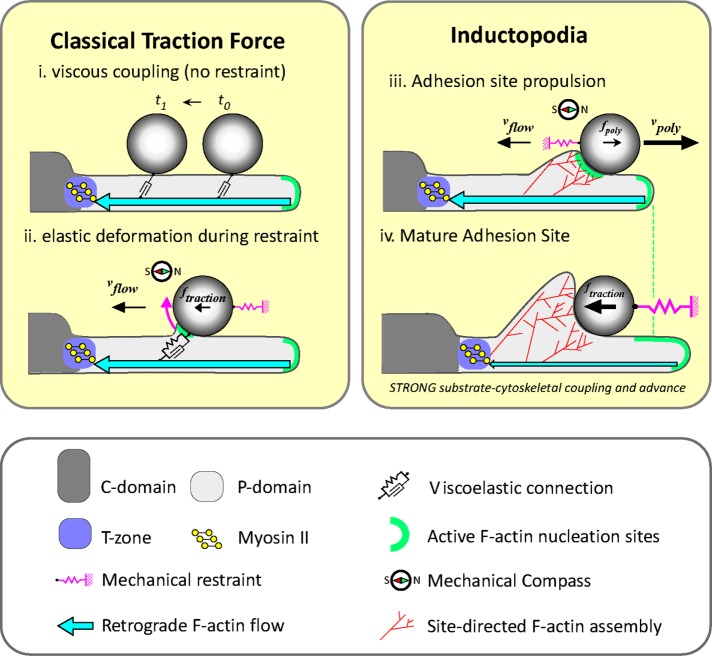
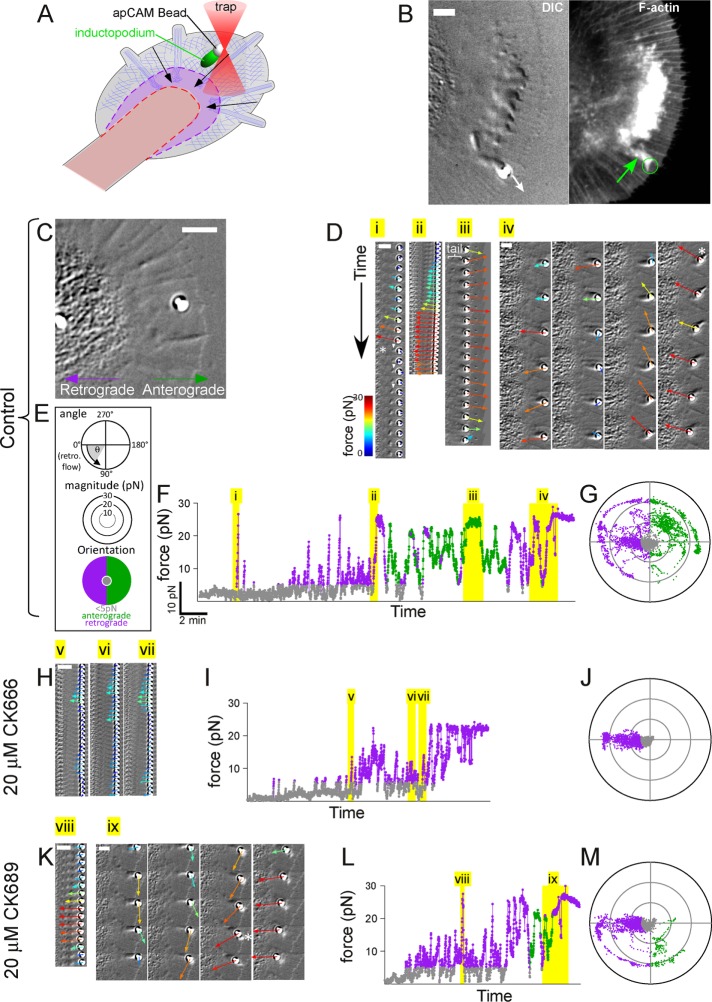
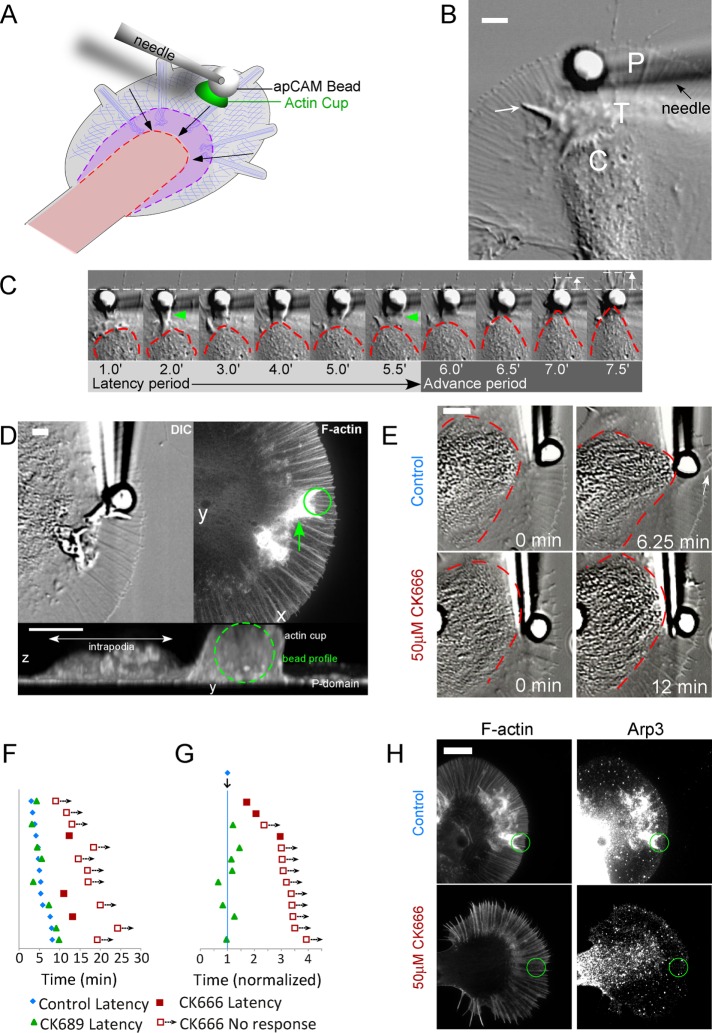
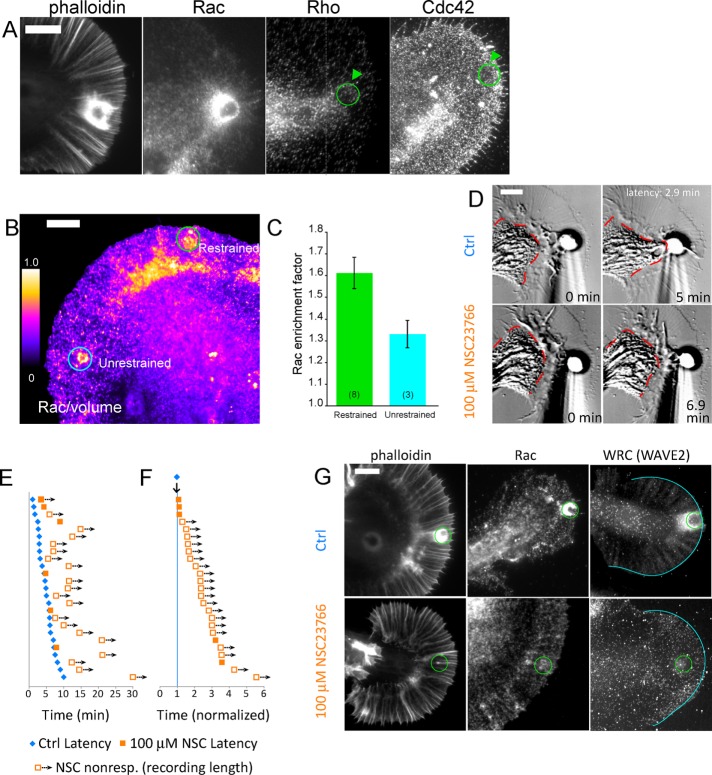
Homophilic binding of immunoglobulin superfamily molecules such as the Aplysia cell adhesion molecule (apCAM) leads to actin filament assembly near nascent adhesion sites. Such actin assembly can generate significant localized forces that have not been characterized in the larger context of axon growth and guidance. We used apCAM-coated bead substrates applied to the surface of neuronal growth cones to characterize the development of forces evoked by varying stiffness of mechanical restraint. Unrestrained bead propulsion matched or exceeded rates of retrograde network flow and was dependent on Arp2/3 complex activity. Analysis of growth cone forces applied to beads at low stiffness of restraint revealed switching between two states: frictional coupling to retrograde flow and Arp2/3-dependent propulsion. Stiff mechanical restraint led to formation of an extensive actin cup matching the geometric profile of the bead target and forward growth cone translocation; pharmacological inhibition of the Arp2/3 complex or Rac attenuated F-actin assembly near bead binding sites, decreased the efficacy of growth responses, and blocked accumulation of signaling molecules associated with nascent adhesions. These studies introduce a new model for regulation of traction force in which local actin assembly forces buffer nascent adhesion sites from the mechanical effects of retrograde flow.
免疫球蛋白超家族分子(如腹足纲动物细胞黏附分子,apCAM)的同嗜性结合会导致肌动蛋白丝在新生黏附位点附近组装。这种肌动蛋白组装能够产生显著的局部力,而在轴突生长和导向的更大背景下,这些力尚未得到充分研究。我们使用涂有apCAM的珠子底物应用于神经元生长锥表面,以表征由不同机械约束刚度所引发的力的发展情况。无约束的珠子推进速度与逆行网络流速度相当或超过逆行网络流速度,并且依赖于Arp2/3复合物的活性。对在低约束刚度下施加于珠子的生长锥力的分析揭示了两种状态之间的转换:与逆行流的摩擦耦合以及Arp2/3依赖性推进。刚性机械约束导致形成一个广泛的肌动蛋白杯,其与珠子靶点的几何轮廓相匹配,并且生长锥向前移位;对Arp2/3复合物或Rac的药理学抑制减弱了珠子结合位点附近的F-肌动蛋白组装,降低了生长反应的效力,并阻断了与新生黏附相关的信号分子的积累。这些研究引入了一种新的牵引力调节模型,其中局部肌动蛋白组装力可缓冲新生黏附位点免受逆行流的机械影响。