Lotero Laura, Hurtado Rafael G, Floría Luis Mario, Gómez-Gardeñes Jesús
Facultad de Ingeniería Industrial, Universidad Pontificia Bolivariana, Medellín, Colombia; Departamento de Ciencias de la Computación y de la Decisión, Universidad Nacional de Colombia, Medellín, Colombia.
Departamento de Física , Universidad Nacional de Colombia , Bogotá, Colombia.
R Soc Open Sci. 2016 Oct 12;3(10):150654. doi: 10.1098/rsos.150654. eCollection 2016 Oct.
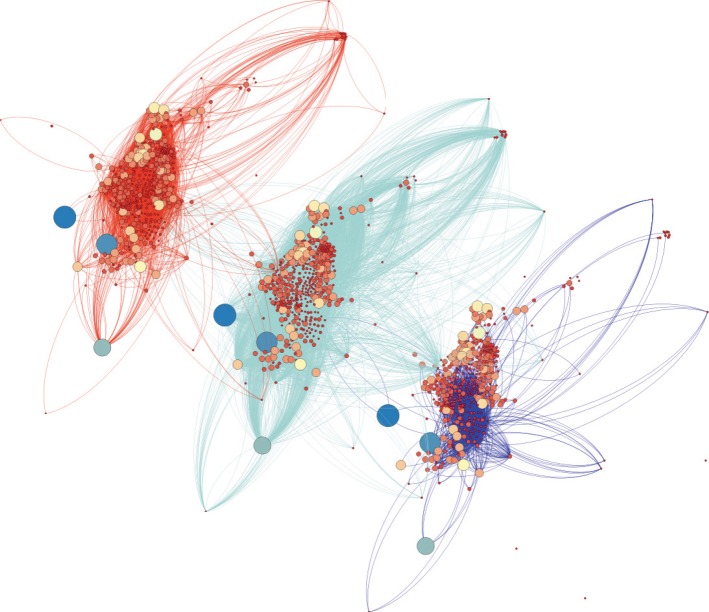
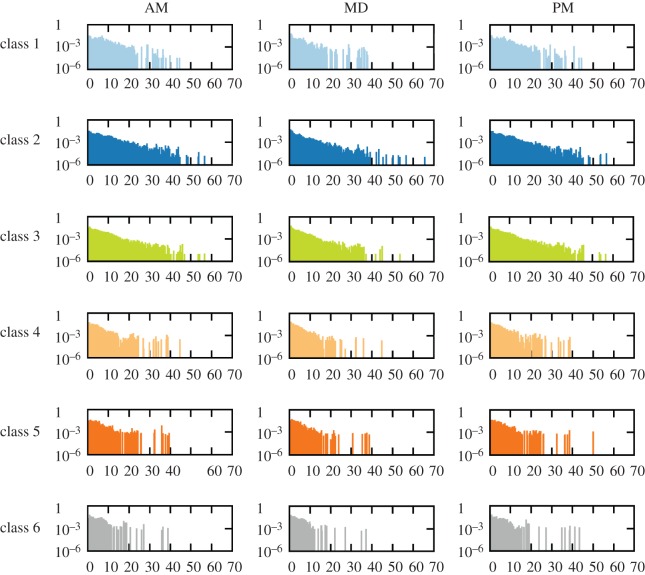
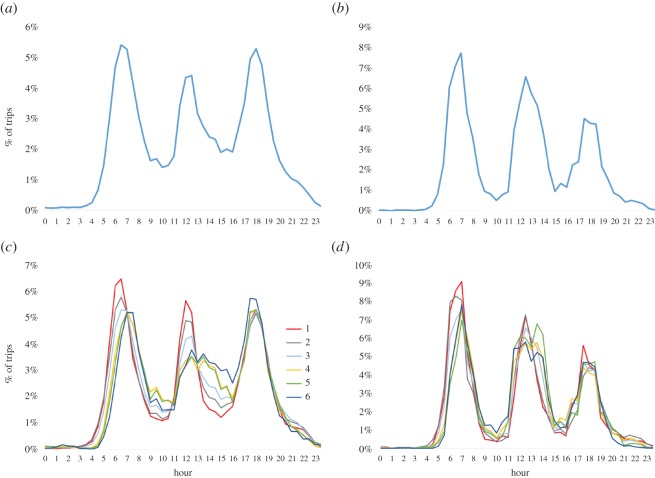
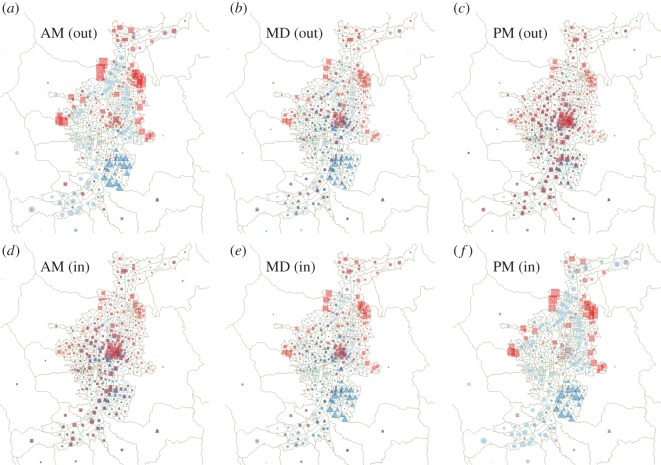
We analyse the urban mobility in the cities of Medellín and Manizales (Colombia). Each city is represented by six mobility networks, each one encoding the origin-destination trips performed by a subset of the population corresponding to a particular socio-economic status. The nodes of each network are the different urban locations whereas links account for the existence of a trip between two different areas of the city. We study the main structural properties of these mobility networks by focusing on their spatio-temporal patterns. Our goal is to relate these patterns with the partition into six socio-economic compartments of these two societies. Our results show that spatial and temporal patterns vary across these socio-economic groups. In particular, the two datasets show that as wealth increases the early-morning activity is delayed, the midday peak becomes smoother and the spatial distribution of trips becomes more localized.
我们分析了麦德林和马尼萨莱斯(哥伦比亚)这两座城市的城市交通流动性。每个城市由六个交通网络表示,每个网络对特定社会经济地位的一部分人口所进行的起讫点出行进行编码。每个网络的节点是不同的城市地点,而边表示城市两个不同区域之间存在出行。我们通过关注其时空模式来研究这些交通网络的主要结构特性。我们的目标是将这些模式与这两个社会划分为六个社会经济阶层联系起来。我们的结果表明,这些社会经济群体的时空模式各不相同。特别是,这两个数据集表明,随着财富增加,清晨活动推迟,中午高峰变得更平缓,出行的空间分布变得更集中。