Aparicio J G, Hopp H, Choi A, Mandayam Comar J, Liao V C, Harutyunyan N, Lee T C
The Vision Center, Division of Ophthalmology, and Department of Surgery, Children's Hospital Los Angeles, Los Angeles, CA, USA.
The Vision Center, Division of Ophthalmology, and Department of Surgery, Children's Hospital Los Angeles, Los Angeles, CA, USA.
Exp Eye Res. 2017 Jan;154:177-189. doi: 10.1016/j.exer.2016.11.013. Epub 2016 Nov 17.
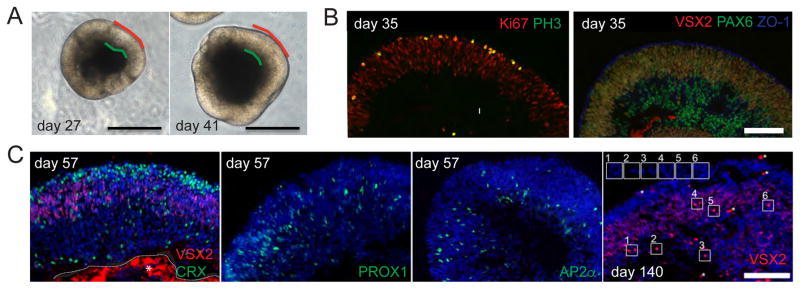
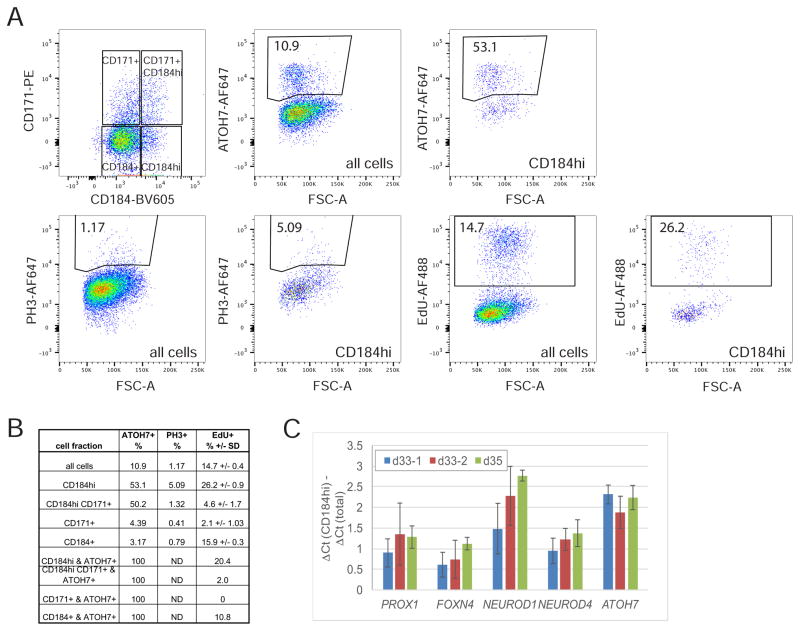
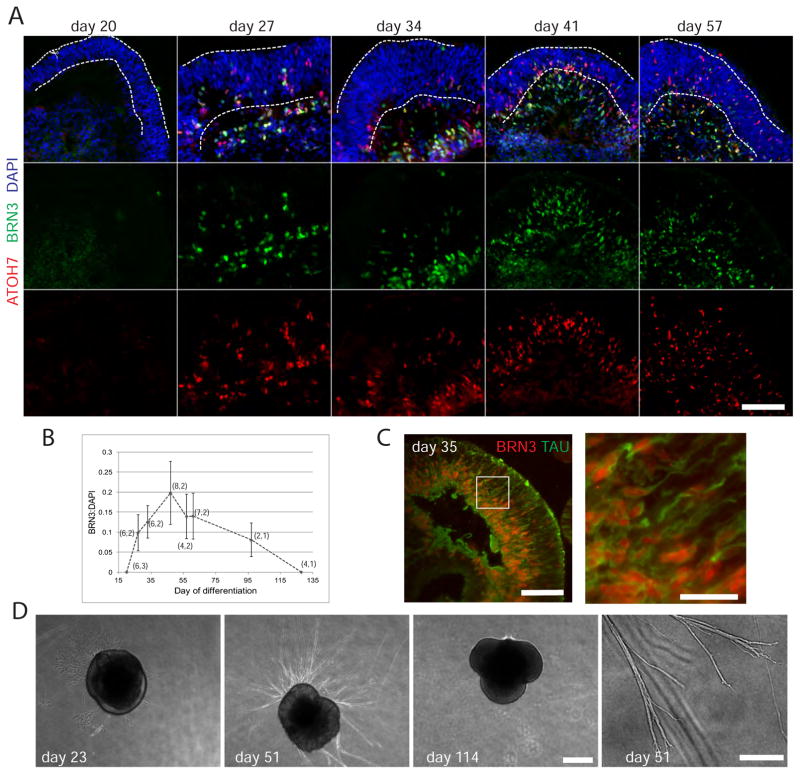
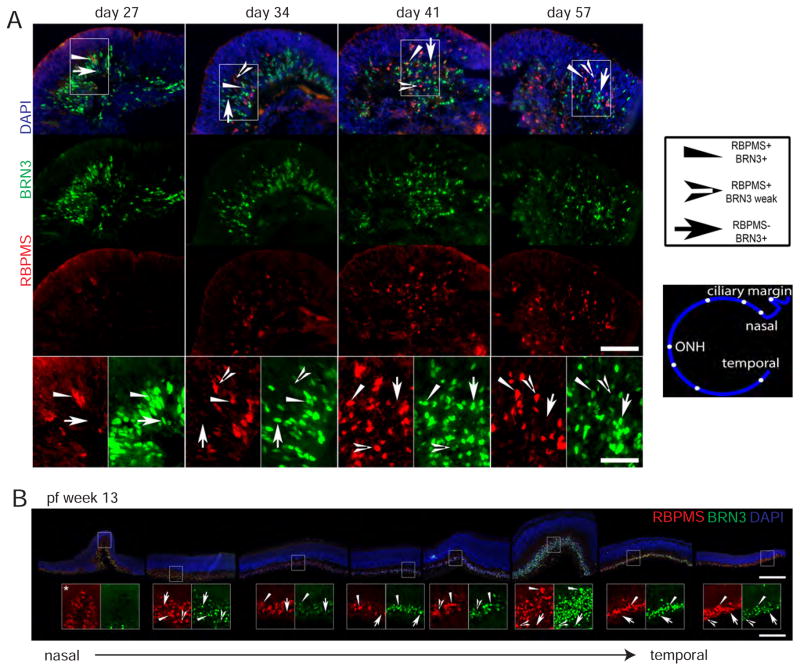
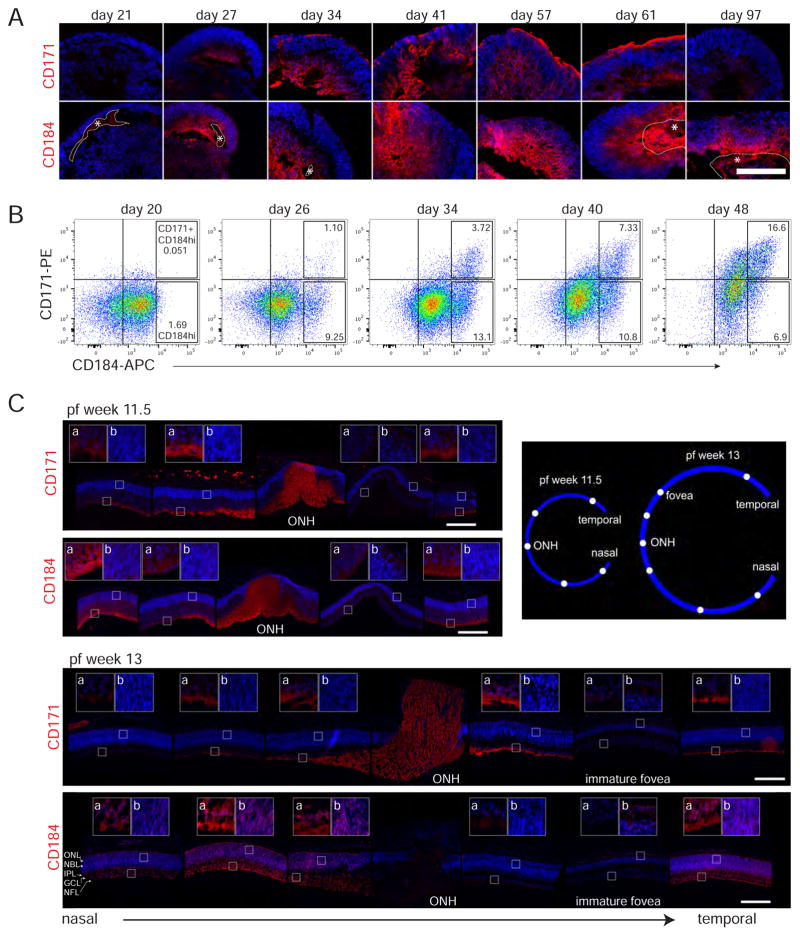
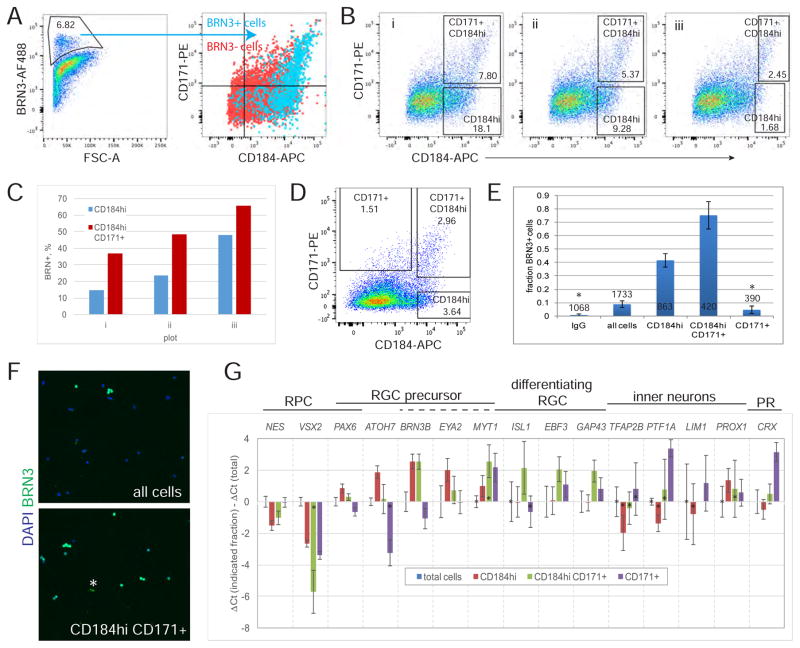
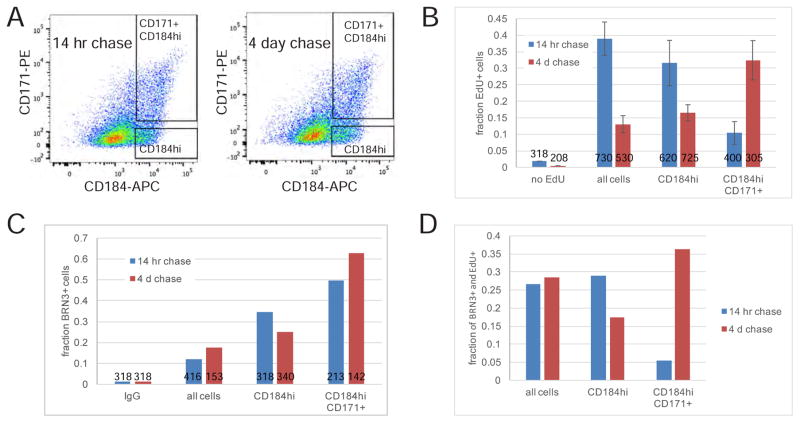
Human retinal ganglion cells (RGCs) derived from pluripotent stem cells (PSCs) have anticipated value for human disease study, drug screening, and therapeutic applications; however, their full potential remains underdeveloped. To characterize RGCs in human embryonic stem cell (hESC) derived retinal organoids we examined RGC markers and surface antigen expression and made comparisons to human fetal retina. RGCs in both tissues exhibited CD184 and CD171 expression and distinct expression patterns of the RGC markers BRN3 and RBPMS. The retinal progenitor cells (RPCs) of retinal organoids expressed CD184, consistent with its expression in the neuroblastic layer in fetal retina. In retinal organoids CD184 expression was enhanced in RGC competent RPCs and high CD184 expression was retained on post-mitotic RGC precursors; CD171 was detected on maturing RGCs. The differential expression timing of CD184 and CD171 permits identification and enrichment of RGCs from retinal organoids at differing maturation states from committed progenitors to differentiating neurons. These observations will facilitate molecular characterization of PSC-derived RGCs during differentiation, critical knowledge for establishing the veracity of these in vitro produced cells. Furthermore, observations made in the retinal organoid model closely parallel those in human fetal retina further validating use of retinal organoid to model early retinal development.
源自多能干细胞(PSC)的人类视网膜神经节细胞(RGC)在人类疾病研究、药物筛选和治疗应用方面具有潜在价值;然而,它们的全部潜力仍未得到充分开发。为了表征源自人类胚胎干细胞(hESC)的视网膜类器官中的RGC,我们检测了RGC标志物和表面抗原表达,并与人类胎儿视网膜进行了比较。两种组织中的RGC均表现出CD184和CD171表达以及RGC标志物BRN3和RBPMS的不同表达模式。视网膜类器官的视网膜祖细胞(RPC)表达CD184,这与其在胎儿视网膜神经母细胞层中的表达一致。在视网膜类器官中,CD184在具有RGC分化能力的RPC中表达增强,并且在有丝分裂后的RGC前体细胞上保留高CD184表达;在成熟的RGC上检测到CD171。CD184和CD171的差异表达时间允许从视网膜类器官中鉴定和富集处于不同成熟状态(从定向祖细胞到分化神经元)的RGC。这些观察结果将有助于在分化过程中对PSC衍生的RGC进行分子表征,这是确定这些体外产生的细胞真实性的关键知识。此外,在视网膜类器官模型中进行的观察与人类胎儿视网膜中的观察结果非常相似,进一步验证了使用视网膜类器官来模拟早期视网膜发育。