Tadić Bosiljka, Andjelković Miroslav, Boshkoska Biljana Mileva, Levnajić Zoran
Department of Theoretical Physics, Jožef Stefan Institute, 1001 Ljubljana, Slovenia.
Institute for Nuclear Sciences Vinča, University of Belgrade, Belgrade, Serbia.
PLoS One. 2016 Nov 23;11(11):e0166787. doi: 10.1371/journal.pone.0166787. eCollection 2016.
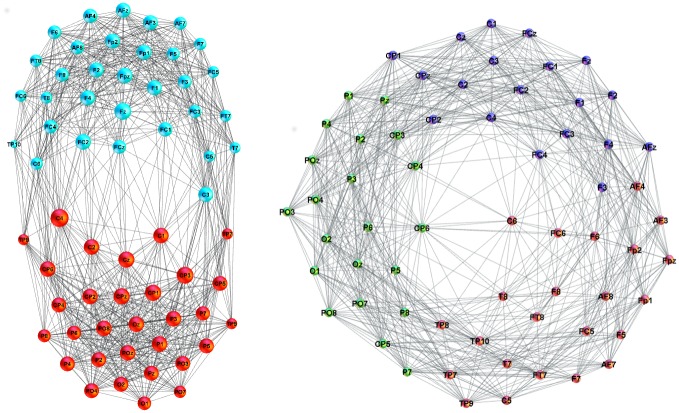
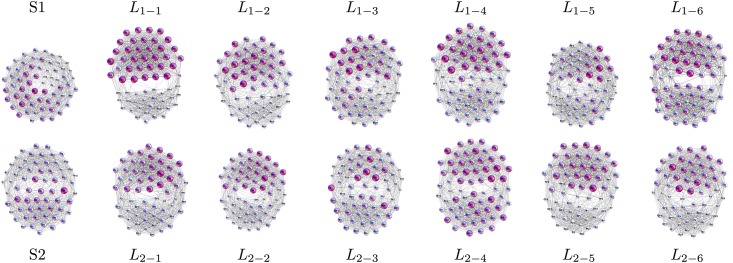
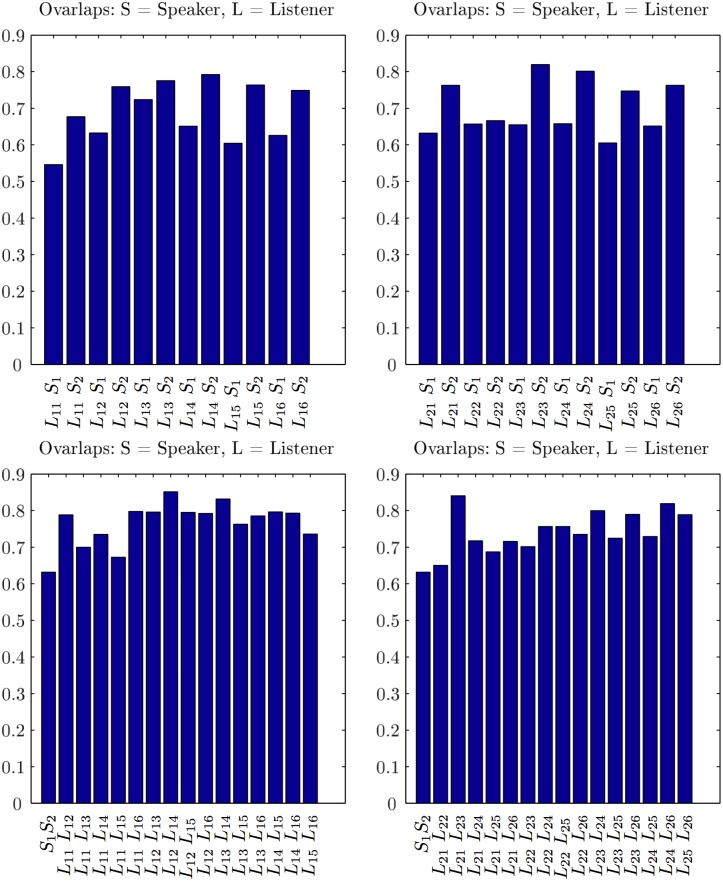
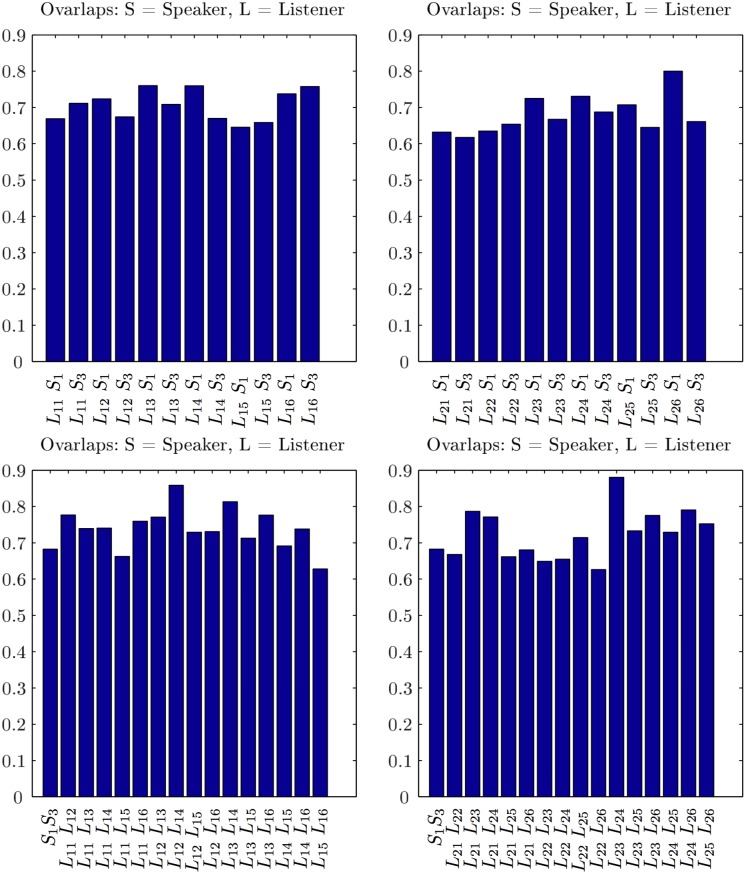
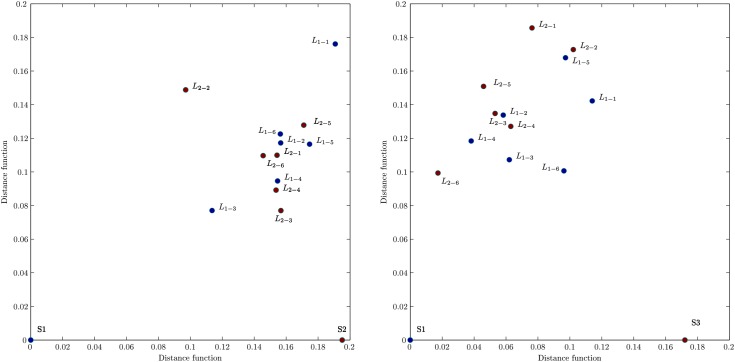
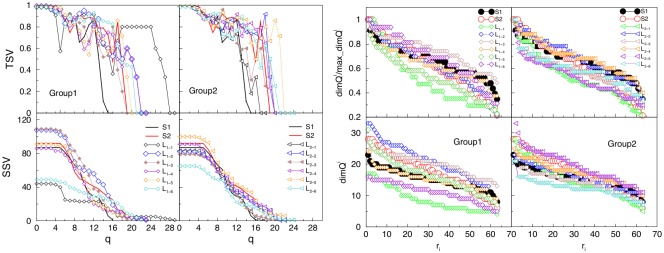
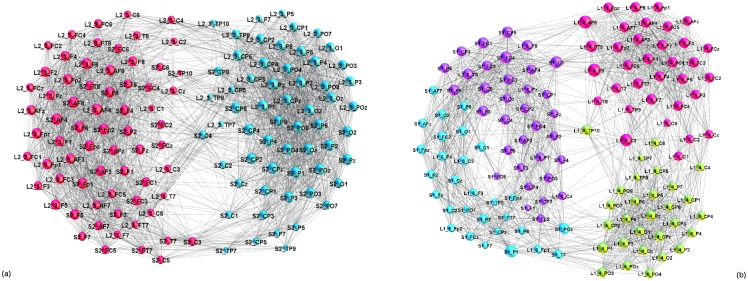
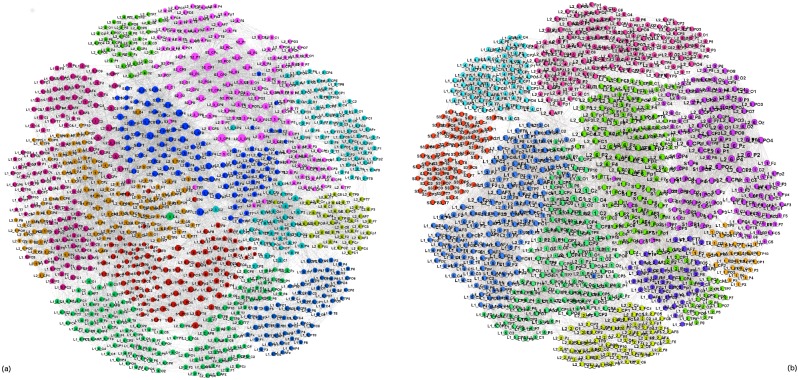
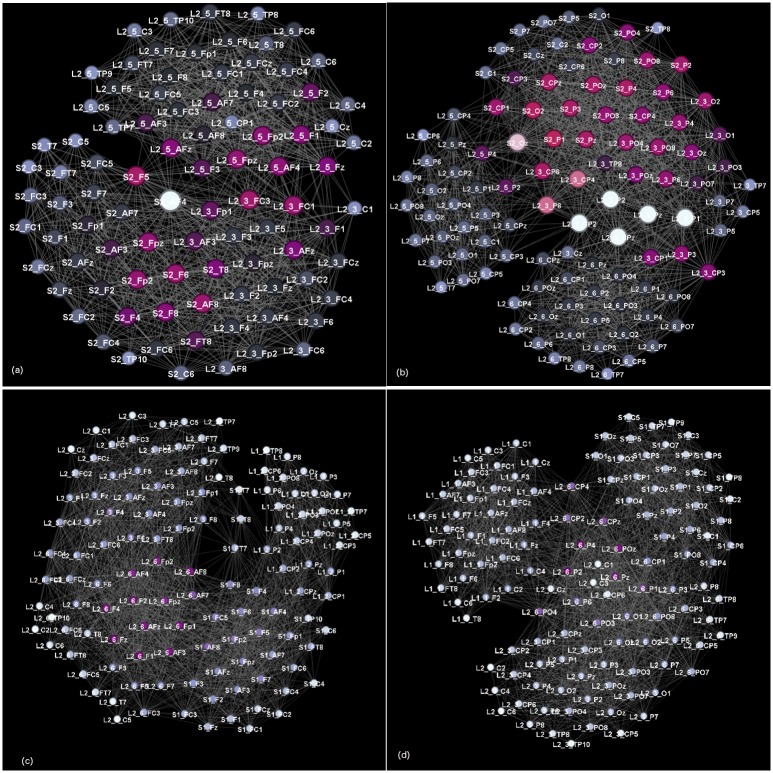
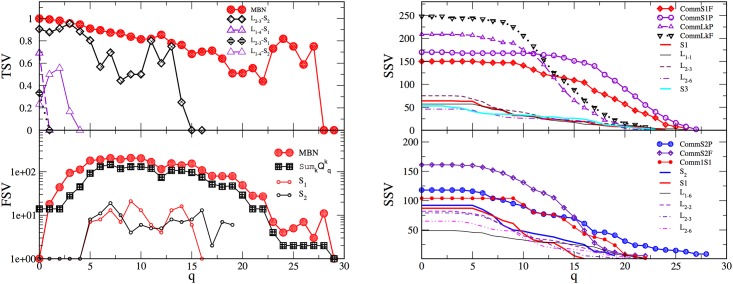
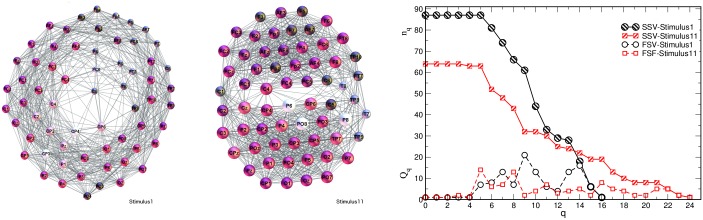
Human behaviour in various circumstances mirrors the corresponding brain connectivity patterns, which are suitably represented by functional brain networks. While the objective analysis of these networks by graph theory tools deepened our understanding of brain functions, the multi-brain structures and connections underlying human social behaviour remain largely unexplored. In this study, we analyse the aggregate graph that maps coordination of EEG signals previously recorded during spoken communications in two groups of six listeners and two speakers. Applying an innovative approach based on the algebraic topology of graphs, we analyse higher-order topological complexes consisting of mutually interwoven cliques of a high order to which the identified functional connections organise. Our results reveal that the topological quantifiers provide new suitable measures for differences in the brain activity patterns and inter-brain synchronisation between speakers and listeners. Moreover, the higher topological complexity correlates with the listener's concentration to the story, confirmed by self-rating, and closeness to the speaker's brain activity pattern, which is measured by network-to-network distance. The connectivity structures of the frontal and parietal lobe consistently constitute distinct clusters, which extend across the listener's group. Formally, the topology quantifiers of the multi-brain communities exceed the sum of those of the participating individuals and also reflect the listener's rated attributes of the speaker and the narrated subject. In the broader context, the presented study exposes the relevance of higher topological structures (besides standard graph measures) for characterising functional brain networks under different stimuli.
人类在各种情况下的行为反映了相应的大脑连接模式,这些模式可以由功能性脑网络恰当地表示。虽然通过图论工具对这些网络进行客观分析加深了我们对脑功能的理解,但人类社会行为背后的多脑结构和连接在很大程度上仍未被探索。在本研究中,我们分析了一个聚合图,该图描绘了两组六名听众和两名说话者在言语交流期间先前记录的脑电图信号的协调性。应用一种基于图的代数拓扑的创新方法,我们分析了由高阶相互交织的团组成的高阶拓扑复合体,已识别的功能连接组织到这些复合体中。我们的结果表明,拓扑量化器为说话者和听众之间大脑活动模式和脑间同步的差异提供了新的合适度量。此外,更高的拓扑复杂性与听众对故事的专注度相关,这通过自我评分得到证实,并且与通过网络到网络距离测量的与说话者大脑活动模式的接近程度相关。额叶和顶叶的连接结构始终构成不同的簇,这些簇延伸到听众群体中。形式上,多脑群落的拓扑量化器超过了参与个体的拓扑量化器之和,并且还反映了听众对说话者和叙述主题的评分属性。在更广泛的背景下,本研究揭示了更高拓扑结构(除了标准图度量)对于表征不同刺激下功能性脑网络的相关性。