Institute of Clinical Exercise Physiology and Health Science, School of Science and Sport, University of the West of Scotland, Glasgow, UK.
Human Movement and Sports Science Group, Faculty of Health, Federation University Australia, Ballarat, VIC, Australia.
Sports Med. 2017 Jun;47(6):1145-1170. doi: 10.1007/s40279-016-0644-4.
The athlete's heart is associated with physiological remodeling as a consequence of repetitive cardiac loading. The effect of exercise training on left ventricular (LV) cardiac strain and twist mechanics are equivocal, and no meta-analysis has been conducted to date.
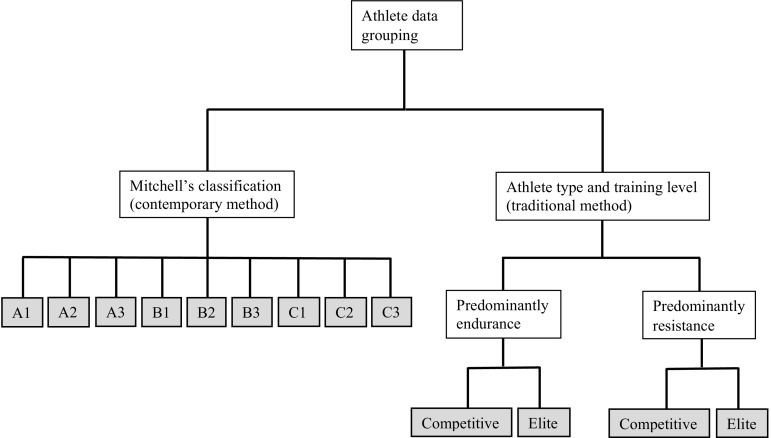
The objective of this systematic review and meta-analysis was to review the literature pertaining to the effect of different forms of athletic training on cardiac strain and twist mechanics and determine the influence of traditional and contemporary sporting classifications on cardiac strain and twist mechanics.
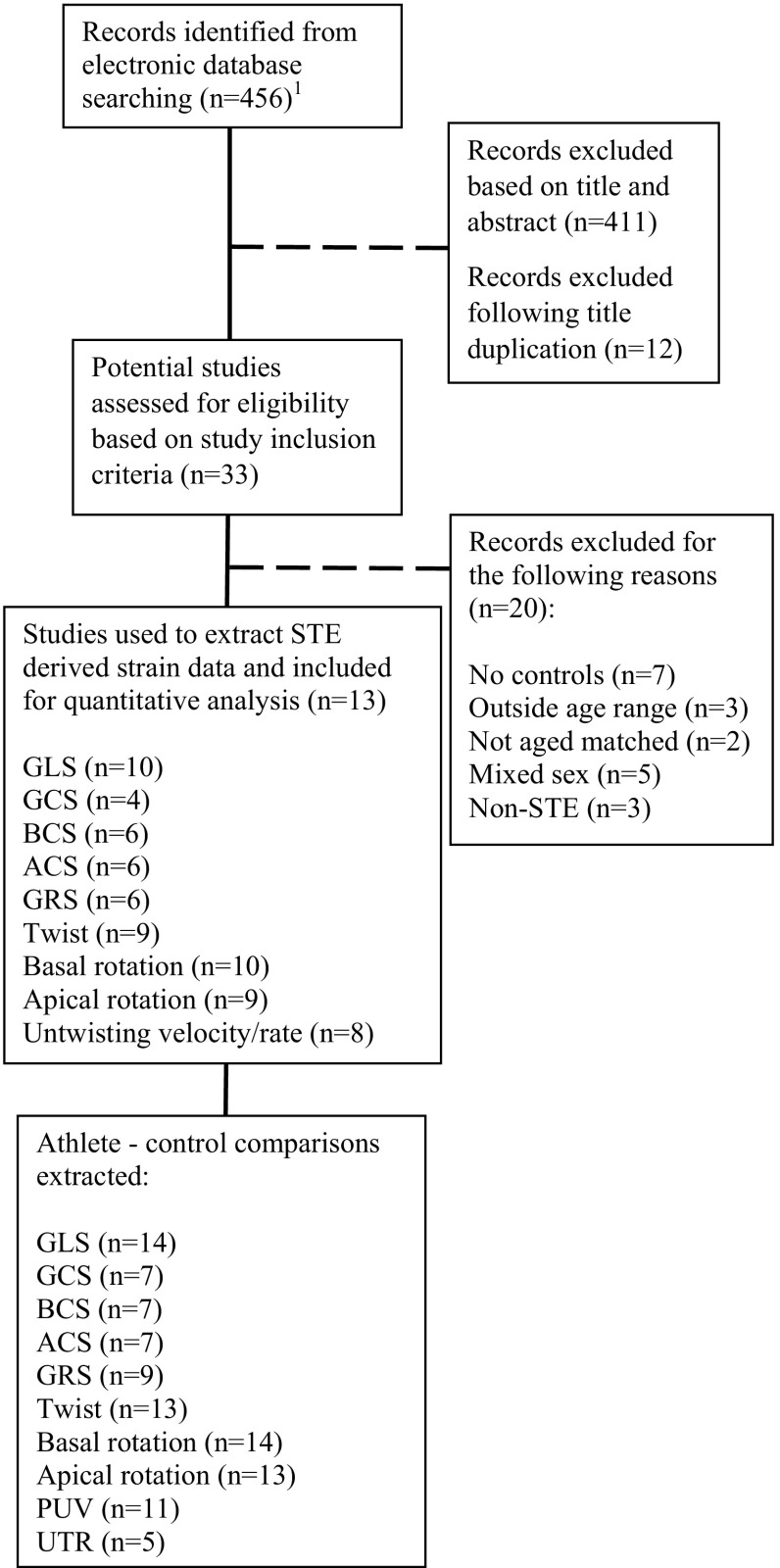
We searched PubMed/MEDLINE, Web of Science, and ScienceDirect for controlled studies of aged-matched male participants aged 18-45 years that used two-dimensional (2D) speckle tracking with a defined athlete sporting discipline and a control group not engaged in training programs. Data were extracted independently by two reviewers. Random-effects meta-analyses, subgroup analyses, and meta-regressions were conducted.
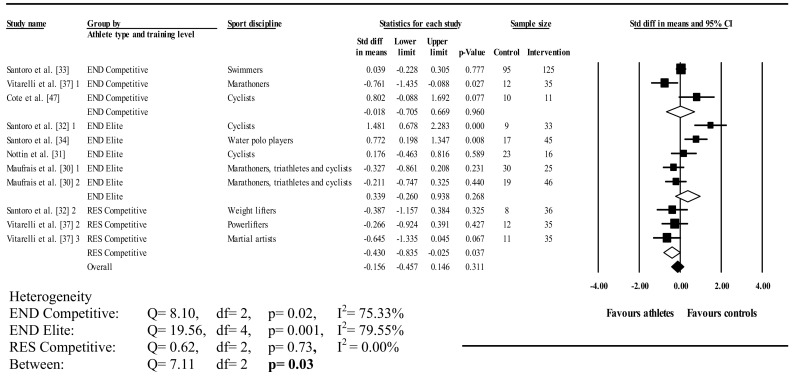
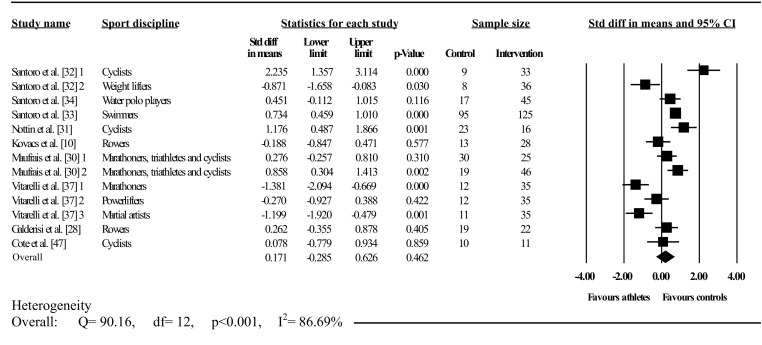
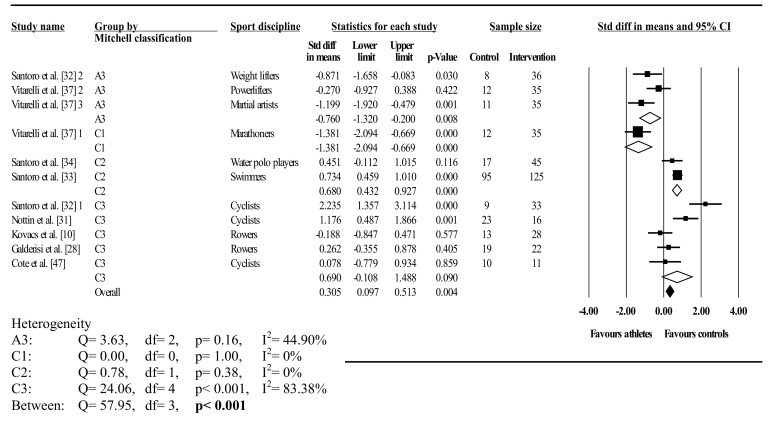
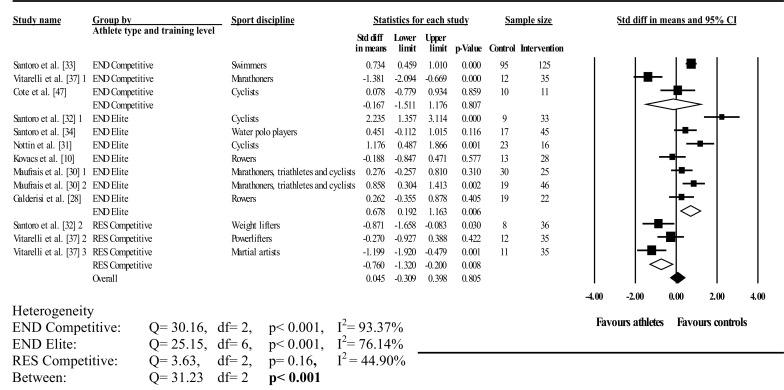
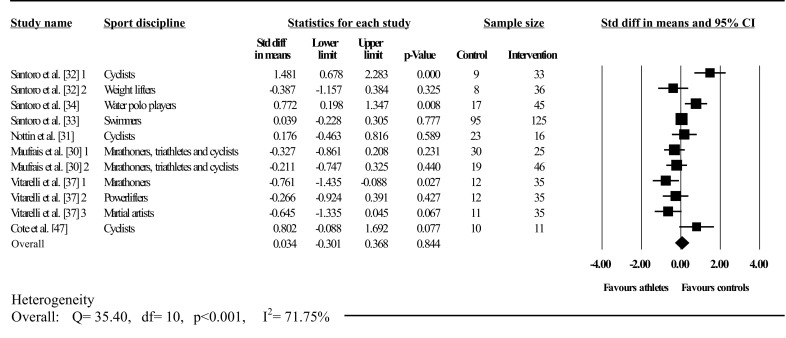
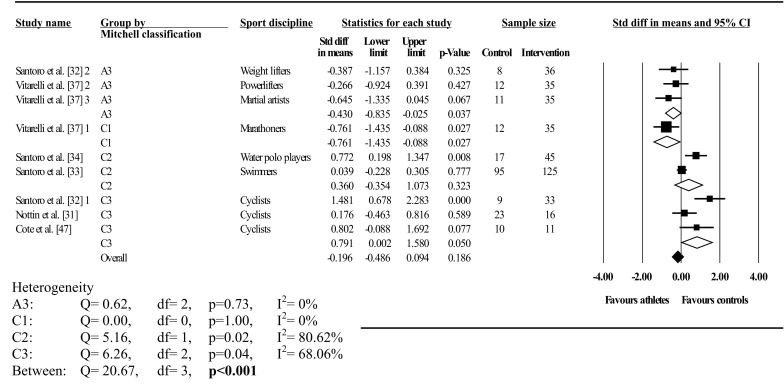
Our review included 13 studies with 945 participants (controls n = 355; athletes n = 590). Meta-analyses showed no athlete-control differences in LV strain or twist mechanics. However, moderator analyses showed greater LV twist in high-static low-dynamic athletes (d = -0.76, 95% confidence interval [CI] -1.32 to -0.20; p < 0.01) than in controls. Peak untwisting velocity (PUV) was greater in high-static low-dynamic athletes (d = -0.43, 95% CI -0.84 to -0.03; p < 0.05) but less than controls in high-static high-dynamic athletes (d = 0.79, 95% CI 0.002-1.58; p = 0.05). Elite endurance athletes had significantly less twist and apical rotation than controls (d = 0.68, 95% CI 0.19-1.16, p < 0.01; d = 0.64, 95% CI 0.27-1.00, p = 0.001, respectively) but no differences in basal rotation. Meta-regressions showed LV mass index was positively associated with global longitudinal (b = 0.01, 95% CI 0.002-0.02; p < 0.05), whereas systolic blood pressure was negatively associated with PUV (b = -0.06, 95% CI -0.13 to -0.001; p = 0.05).
Echocardiographic 2D speckle tracking can identify subtle physiological differences in adaptations to cardiac strain and twist mechanics between athletes and healthy controls. Differences in speckle tracking echocardiography-derived parameters can be identified using suitable sporting categorizations.
运动员的心脏与重复性心脏负荷导致的生理重塑有关。运动训练对左心室(LV)心肌应变和扭转力学的影响尚无定论,迄今尚无荟萃分析对此进行评估。
本系统评价和荟萃分析旨在回顾与不同形式的运动训练对心肌应变和扭转力学的影响相关的文献,并确定传统和现代运动分类对心肌应变和扭转力学的影响。
我们检索了 PubMed/MEDLINE、Web of Science 和 ScienceDirect,以获取有关年龄匹配的 18-45 岁男性参与者的对照研究,这些参与者使用二维(2D)斑点追踪技术,有明确的运动员运动学科和对照组,且对照组不参与训练计划。数据由两名评审员独立提取。进行了随机效应荟萃分析、亚组分析和荟萃回归。
我们的综述纳入了 13 项研究,共有 945 名参与者(对照组 n=355;运动员组 n=590)。荟萃分析显示,LV 应变或扭转力学在运动员和对照组之间无差异。然而,亚组分析显示,高静态低动力运动员的 LV 扭转更大(d=-0.76,95%置信区间[CI] -1.32 至 -0.20;p<0.01),而对照组的扭转更小。高静态低动力运动员的峰值解旋速度(PUV)更高(d=-0.43,95%CI -0.84 至 -0.03;p<0.05),但低于高静态高动力运动员(d=0.79,95%CI 0.002-1.58;p=0.05)。精英耐力运动员的扭转和心尖旋转明显小于对照组(d=0.68,95%CI 0.19-1.16,p<0.01;d=0.64,95%CI 0.27-1.00,p=0.001),但基底旋转无差异。荟萃回归显示,LV 质量指数与整体纵向应变呈正相关(b=0.01,95%CI 0.002-0.02;p<0.05),而收缩压与 PUV 呈负相关(b=-0.06,95%CI -0.13 至 -0.001;p=0.05)。
超声心动图 2D 斑点追踪可识别运动员和健康对照组之间心脏应变和扭转力学适应的细微生理差异。使用适当的运动分类,可以识别斑点追踪超声心动图衍生参数的差异。