Limtrakul Pornngarm, Yodkeeree Supachai, Thippraphan Pilaiporn, Punfa Wanisa, Srisomboon Jatupol
Department of Biochemistry, Faculty of Medicine, Chiang Mai University, Chiang Mai, 50200, Thailand.
Department of Obstetrics & Gynecology, Faculty of Medicine, Chiang Mai University, Chiang Mai, 50200, Thailand.
BMC Complement Altern Med. 2016 Dec 3;16(1):497. doi: 10.1186/s12906-016-1484-3.
Natural products made from plant sources have been used in a variety of cosmetic applications as a source of nutrition and as a whitening agent. The flowers of Cassia fistula L, family Fabaceae, have been used as a traditional medicine for skin diseases and wound healing and have been reported to possess anti-oxidant properties. The anti-aging effect of C. fistula flower extract on human skin fibroblast was investigated.
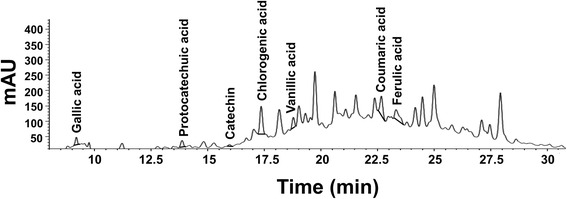
The butanolic extraction of C. fistula flowers was completed and the active compounds were classified. The cytotoxicity of fibroblasts was evaluated by SRB assay for the purposes of selecting non-toxic doses for further experiments. The collagen and hyaluronic acid (HA) synthesis was then measured using the collagen kit and ELISA, respectively. Moreover, the enzyme activity, including collagenase, matrixmelloproteinase-2 (MMP-2) and tyrosinase, were also evaluated.
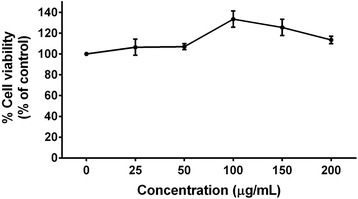
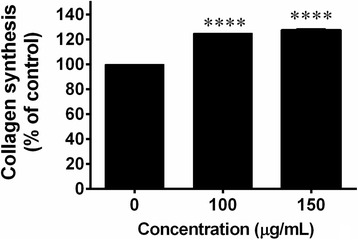
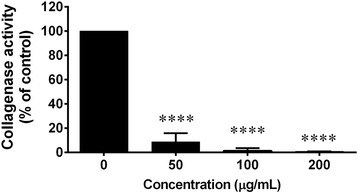
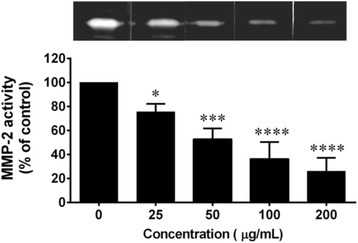
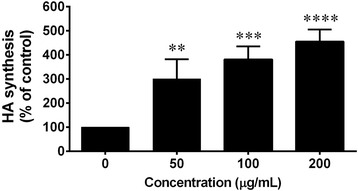
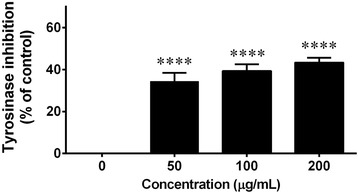
It was found that the flower extract did not affect skin fibroblast cell growth (IC > 200 μg/mL). The results did show that the flower extract significantly increased collagen and HA synthesis in a dose dependent manner. The flower extract (50-200 μg/mL) also significantly inhibited collagenase and MMP-2 activity. Furthermore, this flower extract could inhibit the tyrosinase activity that causes hyperpigmentation, which induces skin aging.
The C. fistula flower extract displayed a preventive effect when used for anti-aging purposes in human skin fibroblasts and may be an appropriate choice for cosmetic products that aim to provide whitening effects, and which are designated as anti-aging facial skin care products.
源自植物的天然产物已被用于多种化妆品应用中,作为营养来源和美白剂。豆科决明属植物腊肠树的花已被用作治疗皮肤病和伤口愈合的传统药物,并且据报道具有抗氧化特性。本研究调查了腊肠树花提取物对人皮肤成纤维细胞的抗衰老作用。
完成了腊肠树花的丁醇提取并对活性化合物进行了分类。为选择用于进一步实验的无毒剂量,通过SRB法评估成纤维细胞的细胞毒性。然后分别使用胶原蛋白试剂盒和ELISA法测量胶原蛋白和透明质酸(HA)的合成。此外,还评估了包括胶原酶、基质金属蛋白酶-2(MMP-2)和酪氨酸酶在内的酶活性。
发现花提取物不影响皮肤成纤维细胞的生长(IC>200μg/mL)。结果确实表明,花提取物以剂量依赖的方式显著增加了胶原蛋白和HA的合成。花提取物(50-200μg/mL)也显著抑制了胶原酶和MMP-2的活性。此外,这种花提取物可以抑制导致色素沉着过度从而引发皮肤衰老的酪氨酸酶活性。
腊肠树花提取物在用于人皮肤成纤维细胞的抗衰老目的时显示出预防作用,并且可能是旨在提供美白效果且被指定为抗衰老面部皮肤护理产品的化妆品的合适选择。