Botonis Petros G, Toubekis Argyris G, Platanou Theodoros I
Department of Aquatic Sports, School of Physical Education and Sports Science, University of Athens, Athens, Greece.
J Hum Kinet. 2016 Dec 15;54:135-142. doi: 10.1515/hukin-2016-0042. eCollection 2016 Dec 1.
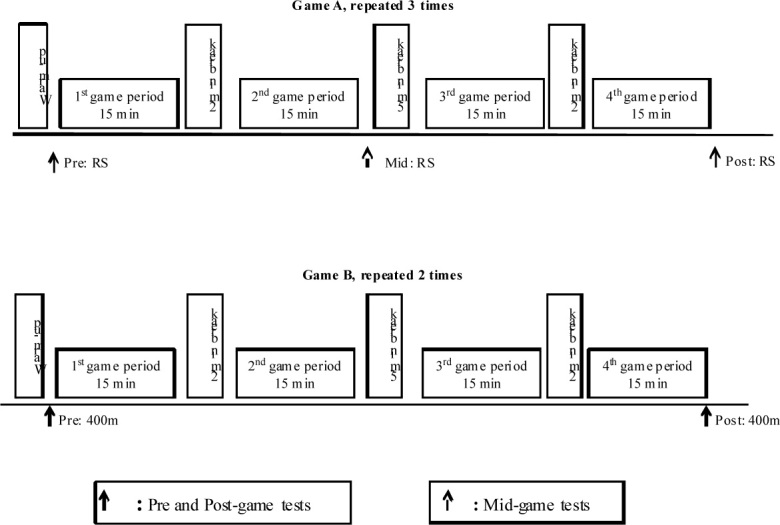
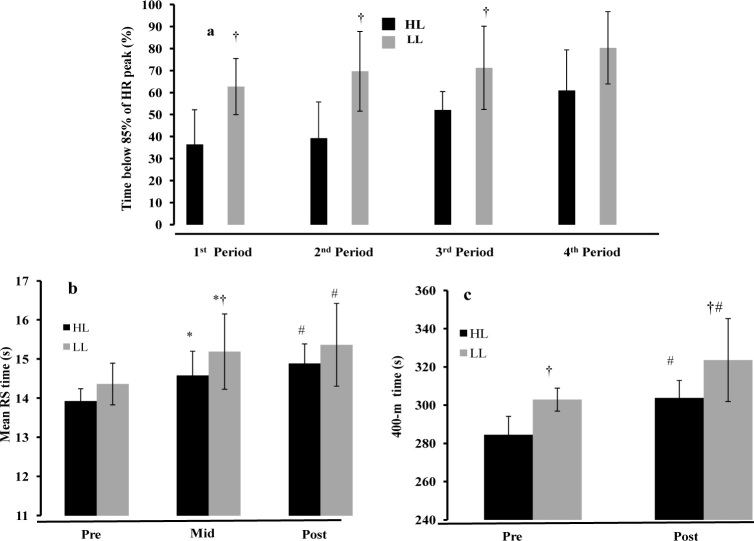
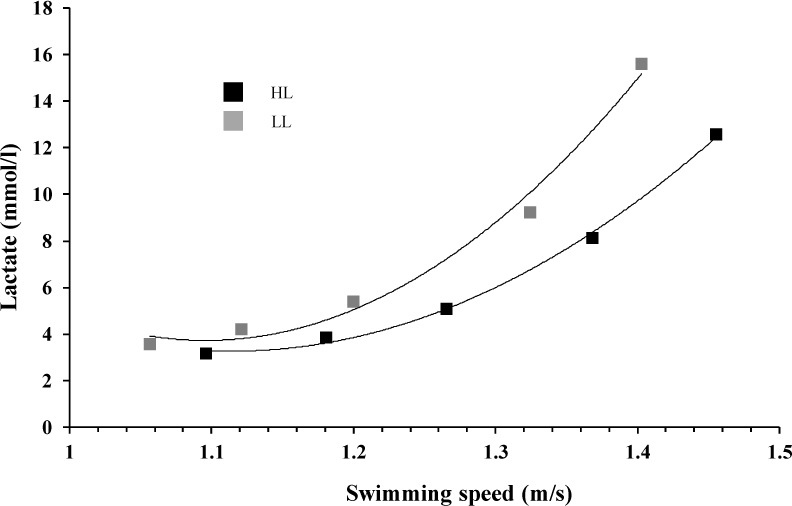
The purpose of the study was to compare playing intensity and performance changes within a water-polo match in players of different competitive levels. High-level (n = 7) and lower-level (n = 7) players performed a progressively increasing speed test of 5 x 200 m swimming and speed corresponding to lactate concentration of 4.0, 5.0 and 10.0 mmol•l-1 was calculated. Repeated sprint ability (8 x 20 m) was tested at pre-, the middle and post-match and a 400 m swimming test was completed at pre and post in five water-polo matches. A t-test and a two-way ANOVA were used for statistical analysis. High-level compared to lower-level players presented higher speed corresponding to lactate concentration of 4.0 and 5.0 mmol•l-1 (p < 0.05). Regardless of the sports level, the mean heart rate was reduced towards the end of the match. High-level players completed a shorter amount of match time with the heart rate lower than 85% of the peak heart rate (p < 0.05). However, when the speed corresponding to lactate concentration of 4.0 mmol•l-1 was used as a covariate, no differences were observed in the heart rate between groups. Both groups decreased repeated sprint and 400 m performance at post- compared to pre-match by 7 ± 3% and 7 ± 4%, respectively. High-level compared to lower-level players showed better performance in repeated sprints at the middle (p < 0.01) and in pre-, post-match 400 m tests (p < 0.01). It was concluded that high-level compared to lower-level players completed the match at a higher playing intensity and presented a lower performance decrement across the match as a result of their higher aerobic endurance.
本研究的目的是比较不同竞技水平的水球运动员在一场水球比赛中的运动强度和表现变化。高水平组(n = 7)和低水平组(n = 7)的运动员进行了5×200米游泳的渐进性速度测试,并计算了对应于乳酸浓度为4.0、5.0和10.0 mmol•l-1时的速度。在比赛前、比赛中和比赛后测试了重复冲刺能力(8×20米),并在五场水球比赛的赛前和赛后完成了400米游泳测试。采用t检验和双向方差分析进行统计分析。与低水平组运动员相比,高水平组运动员在乳酸浓度为4.0和5.0 mmol•l-1时表现出更高的速度(p < 0.05)。无论运动水平如何,比赛接近尾声时平均心率都会降低。高水平组运动员在心率低于峰值心率85%的情况下完成的比赛时间更短(p < 0.05)。然而,当将乳酸浓度为4.0 mmol•l-1时对应的速度作为协变量时,两组之间的心率没有差异。与赛前相比,两组在赛后的重复冲刺和400米表现分别下降了7±3%和7±4%。与低水平组运动员相比,高水平组运动员在比赛中期的重复冲刺(p < 0.01)以及赛前和赛后的400米测试中(p < 0.01)表现更好。研究得出结论,与低水平组运动员相比,高水平组运动员以更高的运动强度完成比赛,并且由于其更高的有氧耐力,在整个比赛中表现出更低的成绩下降。