Jung Min Kyung, Shin Eui-Cheol
Laboratory of Immunology and Infectious Diseases, Graduate School of Medical Science and Engineering, KAIST, Daejeon 34141, Korea.
Immune Netw. 2016 Dec;16(6):330-336. doi: 10.4110/in.2016.16.6.330. Epub 2016 Dec 22.
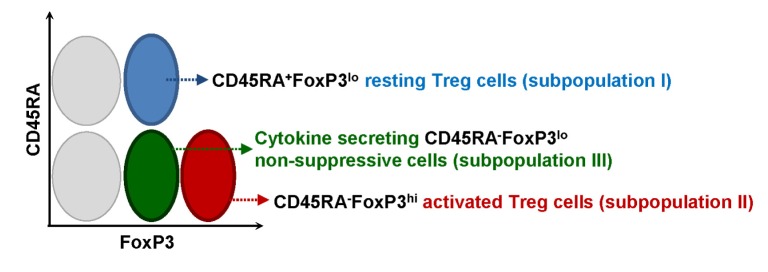
Hepatitis B virus (HBV) and hepatitis C virus (HCV) are hepatotropic viruses that establish chronic persistent infection by effectively escaping the host immune response and can cause immune-mediated liver injury. It has recently become apparent that regulatory T (Treg) cells, specifically CD4CD25Foxp3 Treg cells, modulate viral diseases by suppressing antiviral immune responses and regulating inflammatory host injury. The roles of Treg cells in HBV and HCV infections range from suppressing antiviral T cell responses to protecting the liver from immune-mediated damage. This review describes Treg cells and subpopulations and focuses on the roles of these cells in HBV and HCV infections.
乙型肝炎病毒(HBV)和丙型肝炎病毒(HCV)是嗜肝病毒,它们通过有效逃避宿主免疫反应而建立慢性持续性感染,并可导致免疫介导的肝损伤。最近已明确,调节性T(Treg)细胞,特别是CD4⁺CD25⁺Foxp3⁺ Treg细胞,通过抑制抗病毒免疫反应和调节炎症性宿主损伤来调控病毒性疾病。Treg细胞在HBV和HCV感染中的作用范围从抑制抗病毒T细胞反应到保护肝脏免受免疫介导的损伤。本综述描述了Treg细胞及其亚群,并重点关注这些细胞在HBV和HCV感染中的作用。