Jajtner Adam R, Hoffman Jay R, Townsend Jeremy R, Beyer Kyle S, Varanoske Alyssa N, Church David D, Oliveira Leonardo P, Herrlinger Kelli A, Radom-Aizik Shlomit, Fukuda David H, Stout Jeffrey R
Institute of Exercise Physiology and Wellness, University of Central Florida, Orlando, Florida.
Department of Exercise Physiology, Kent State University, Kent, Ohio.
Physiol Rep. 2016 Dec;4(24). doi: 10.14814/phy2.13058.
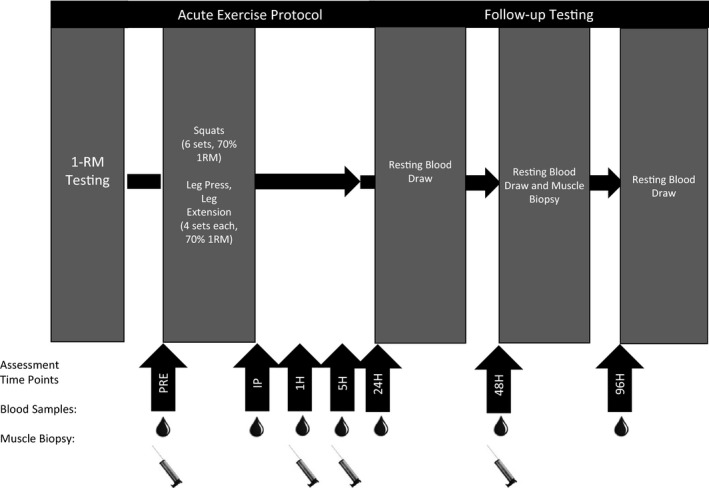
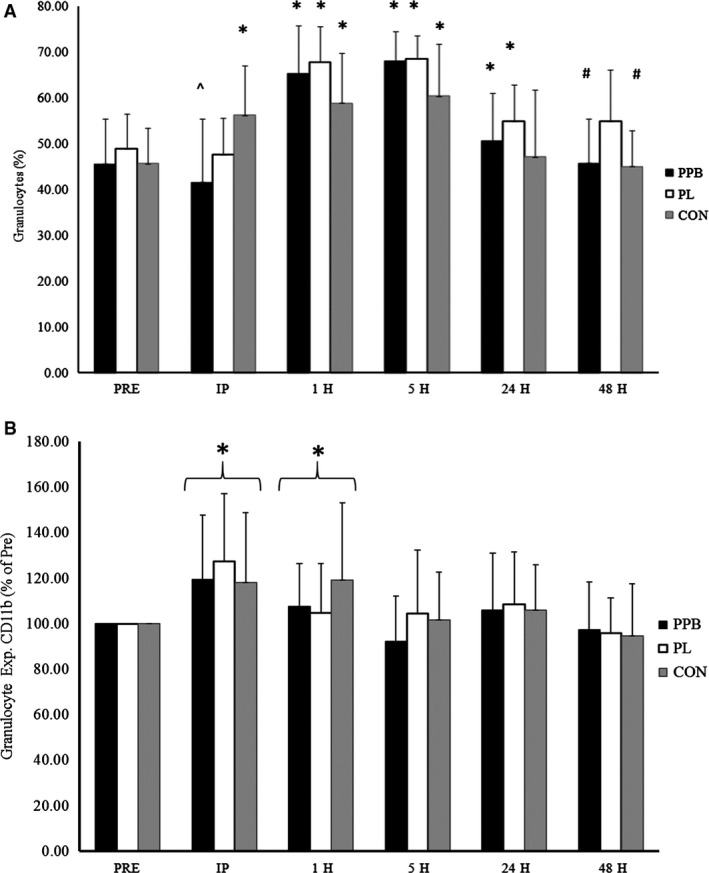
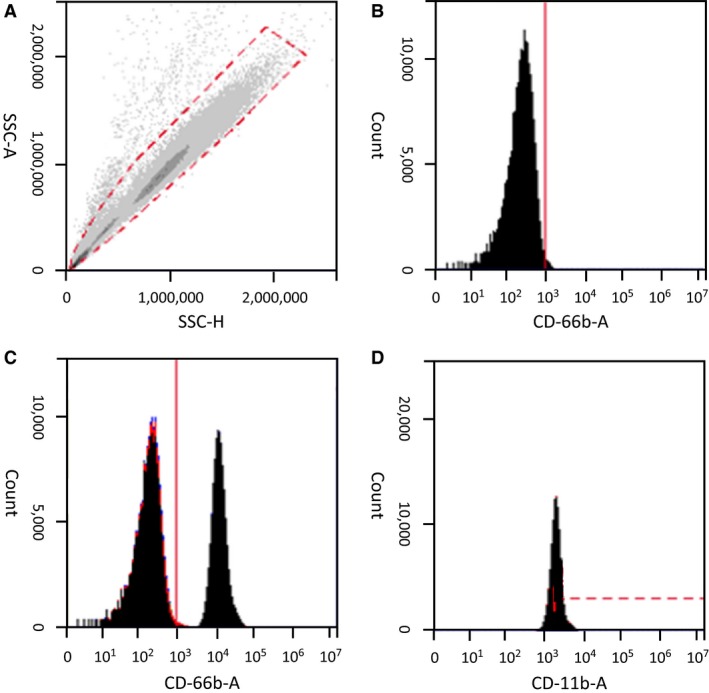
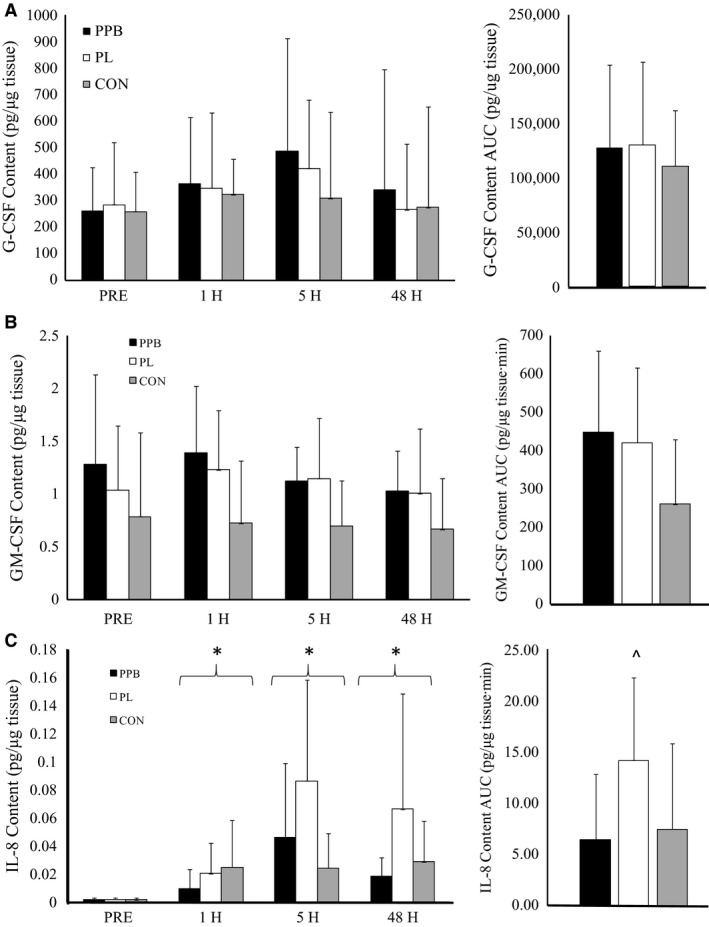
This study examined the effect of resistance exercise on the production, recruitment, percentage, and adhesion characteristics of granulocytes with and without polyphenol (PPB) supplementation. Thirty-eight untrained men were randomized into three groups: PPB (n = 13, 21.8 ± 2.5 years, 171.2 ± 5.5 cm, 71.2 ± 8.2 kg), placebo (PL; n = 15, 21.6 ± 2.5 years, 176.5 ± 4.9 cm, 84.0 ± 15.7 kg), or control (CON; n = 10, 23.3 ± 4.3 years, 173.7 ± 12.6 cm, 77.3 ± 16.3 kg). Blood samples were obtained pre (PRE), immediately (IP), 1 h (1H), 5 h (5H), 24 h (24H), 48 h (48H), and 96 h (96H) postresistance exercise (PPB/PL) or rest (CON). Fine-needle biopsies were obtained from the vastus lateralis at PRE, 1H, 5H, and 48H. Plasma concentrations and intramuscular content of interleukin-8 (IL-8), granulocyte (G-CSF), and granulocyte-macrophage colony stimulating factor (GM-CSF) were analyzed via multiplex assays. Changes in relative number of circulating granulocytes and adhesion receptor (CD11b) were assessed using flow cytometry. Intramuscular IL-8 was significantly elevated at 1H, 5H, and 48H (P < 0.001). Area under the curve analysis indicated a greater intramuscular IL-8 content in PL than PPB (P = 0.011). Across groups, circulating G-CSF was elevated from PRE at IP (P < 0.001), 1H (P = 0.011), and 5H (P = 0.025), while GM-CSF was elevated at IP (P < 0.001) and 1H (P = 0.007). Relative number of granulocytes was elevated at 1H (P < 0.001), 5H (P < 0.001), and 24H (P = 0.005, P = 0.006) in PPB and PL, respectively. Across groups, granulocyte CD11b expression was upregulated from PRE to IP (P < 0.001) and 1H (P = 0.015). Results indicated an increase in circulating CD11b on granulocytes, and IL-8 within the muscle following intense resistance exercise. Polyphenol supplementation may attenuate the IL-8 response, however, did not affect granulocyte percentage and adhesion molecule expression in peripheral blood following resistance exercise.
本研究调查了阻力训练对补充和未补充多酚(PPB)情况下粒细胞的生成、募集、百分比及黏附特性的影响。38名未经训练的男性被随机分为三组:PPB组(n = 13,年龄21.8±2.5岁,身高171.2±5.5厘米,体重71.2±8.2千克)、安慰剂组(PL;n = 15,年龄21.6±2.5岁,身高176.5±4.9厘米,体重84.0±15.7千克)或对照组(CON;n = 10,年龄23.3±4.3岁,身高173.7±12.6厘米,体重77.3±16.3千克)。在进行阻力训练(PPB/PL)或休息(CON)前(PRE)、训练后即刻(IP)、1小时(1H)、5小时(5H)、24小时(24H)、48小时(48H)和96小时(96H)采集血样。在PRE、1H、5H和48H从股外侧肌获取细针活检样本。通过多重检测分析白细胞介素-8(IL-8)、粒细胞集落刺激因子(G-CSF)和粒细胞-巨噬细胞集落刺激因子(GM-CSF)的血浆浓度和肌肉内含量。使用流式细胞术评估循环粒细胞和黏附受体(CD11b)相对数量的变化。肌肉内IL-8在1H、5H和48H显著升高(P < 0.001)。曲线下面积分析表明PL组肌肉内IL-8含量高于PPB组(P = 0.011)。在所有组中,循环G-CSF在IP(P < 0.001)、1H(P = 0.011)和5H(P = 0.025)时较PRE升高,而GM-CSF在IP(P < 0.001)和1H(P = 0.007)时升高。PPB组和PL组中粒细胞相对数量分别在1H(P < 0.001)、5H(P < 0.001)和24H(P = 0.005,P = 0.006)时升高。在所有组中,粒细胞CD11b表达从PRE到IP(P < 0.001)和1H(P = 0.015)上调。结果表明,高强度阻力训练后粒细胞表面循环CD11b增加,肌肉内IL-8增加。补充多酚可能会减弱IL-8反应,然而,对阻力训练后外周血中粒细胞百分比和黏附分子表达没有影响。