Human Performance Laboratory, Appalachian State University, North Carolina Research Campus, Kannapolis, North Carolina, United States of America.
PLoS One. 2013 Aug 15;8(8):e72215. doi: 10.1371/journal.pone.0072215. eCollection 2013.
Polyphenol supplementation was tested as a countermeasure to inflammation and oxidative stress induced by 3-d intensified training.
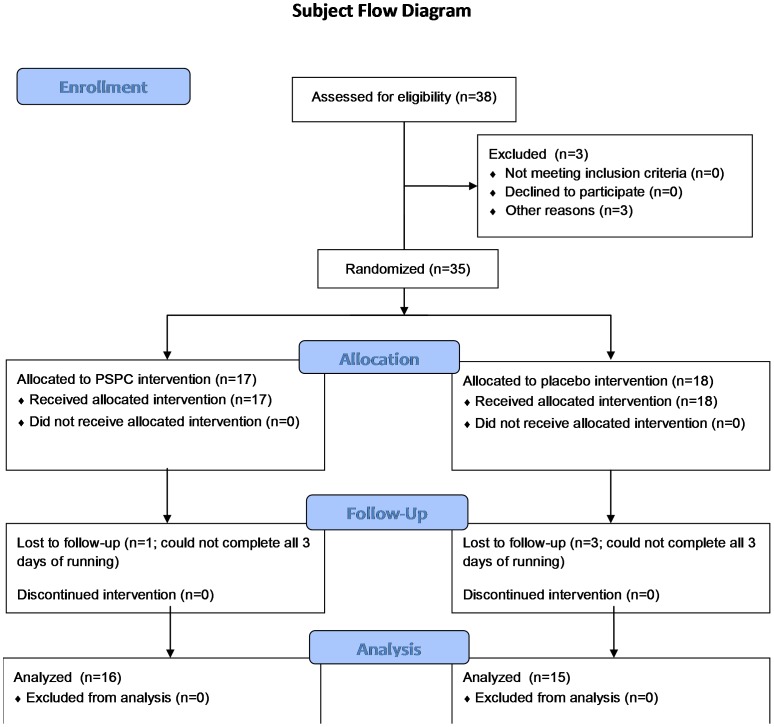
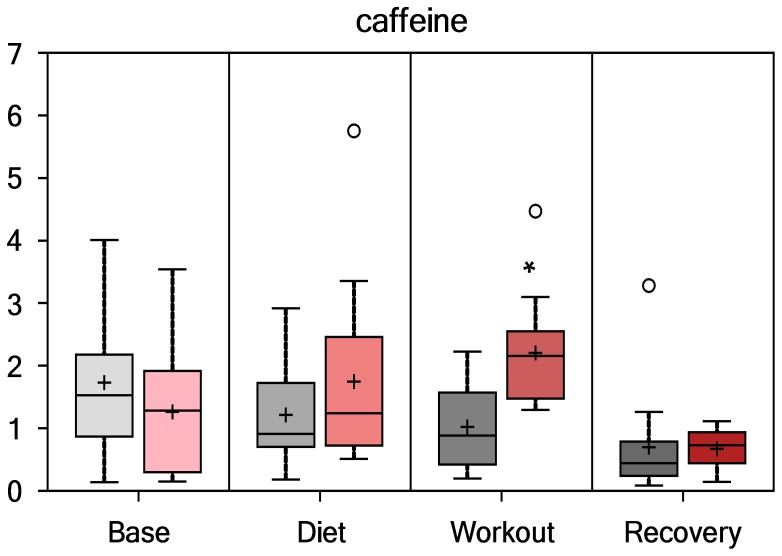
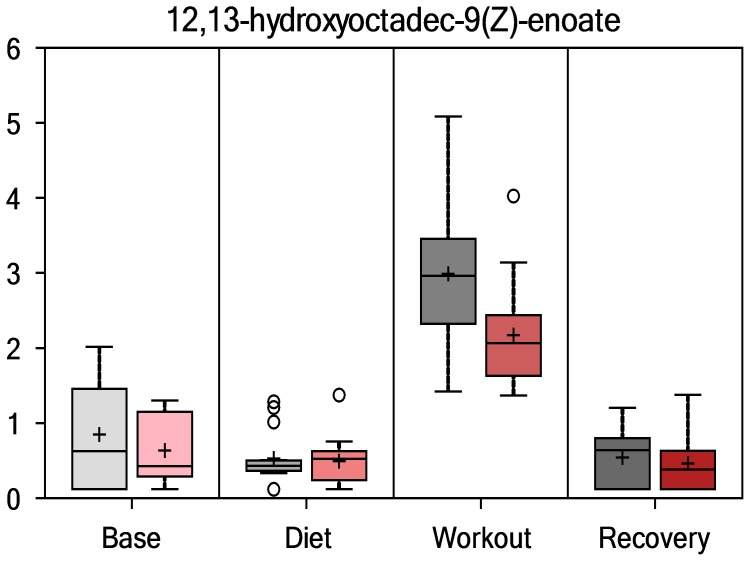
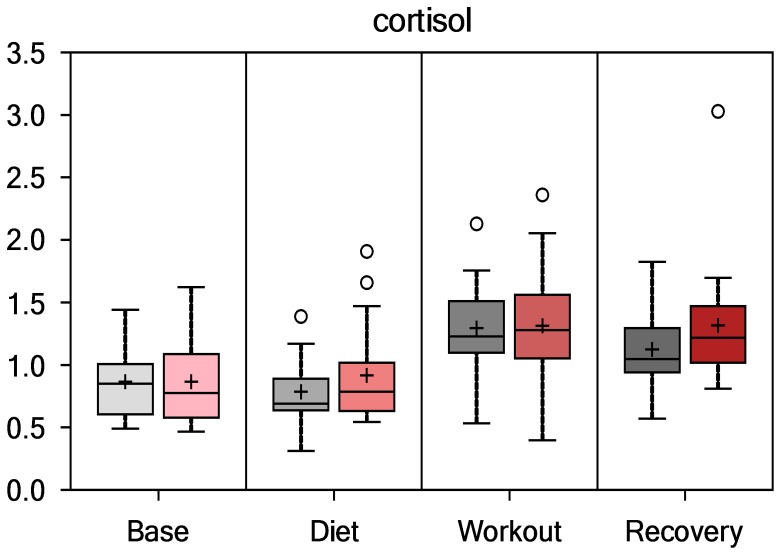
Water soluble polyphenols from blueberry and green tea extracts were captured onto a polyphenol soy protein complex (PSPC). Subjects were recruited, and included 38 long-distance runners ages 19-45 years who regularly competed in road races. Runners successfully completing orientation and baseline testing (N = 35) were randomized to 40 g/d PSPC (N = 17) (2,136 mg/d gallic acid equivalents) or placebo (N = 18) for 17 d using double-blinded methods and a parallel group design, with a 3-d running period inserted at day 14 (2.5 h/d, 70% VO2max). Blood samples were collected pre- and post-14 d supplementation, and immediately and 14 h after the third day of running in subjects completing all aspects of the study (N = 16 PSPC, N = 15 placebo), and analyzed using a metabolomics platform with GC-MS and LC-MS.
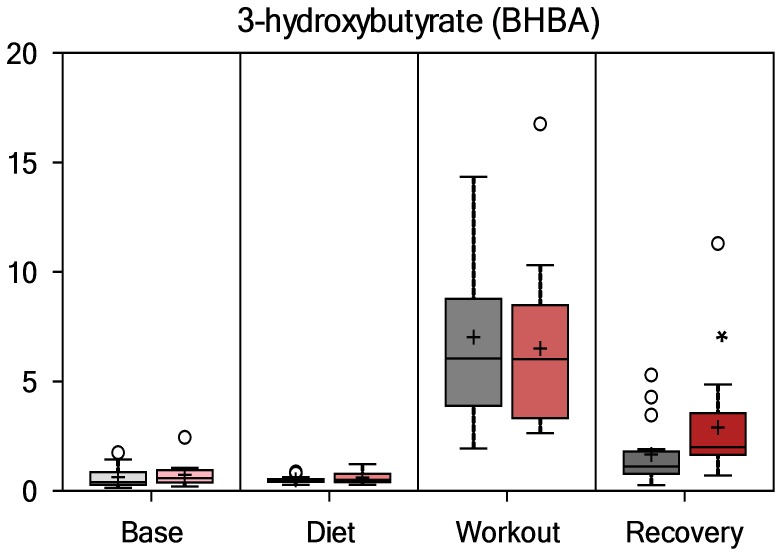
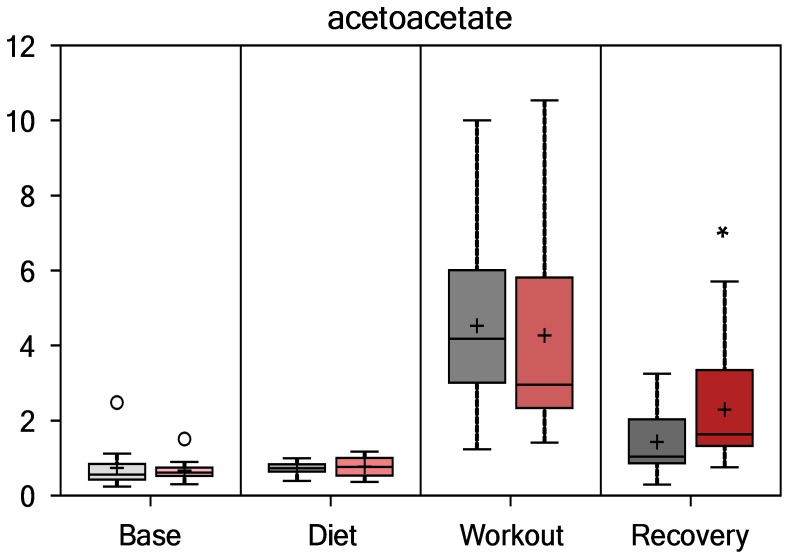
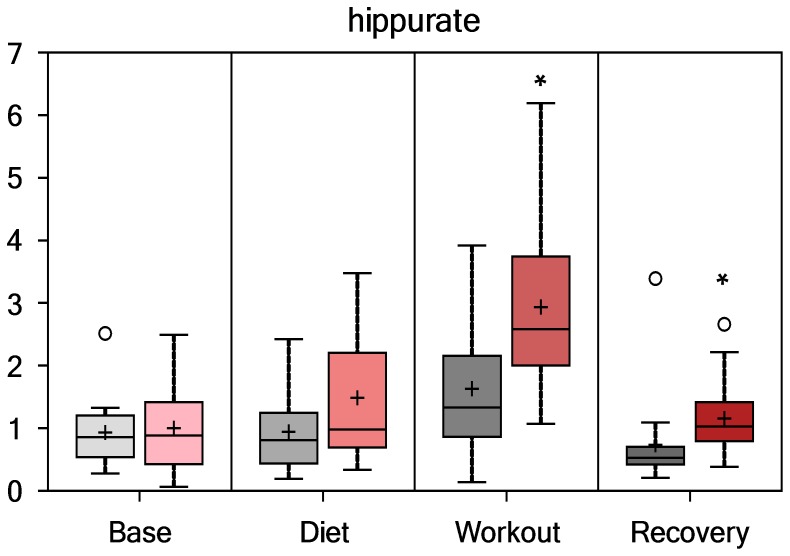
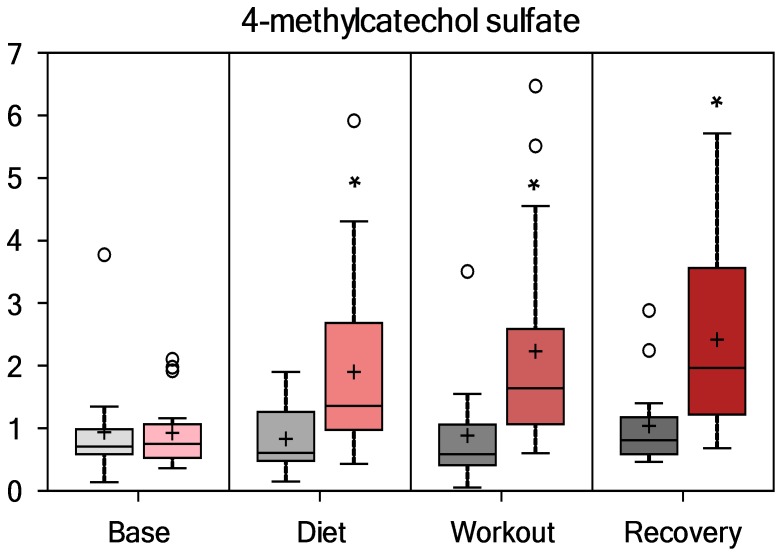
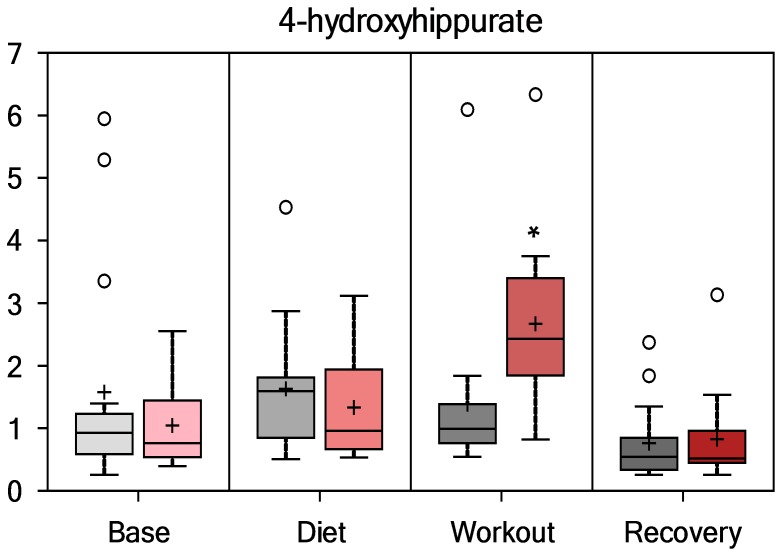
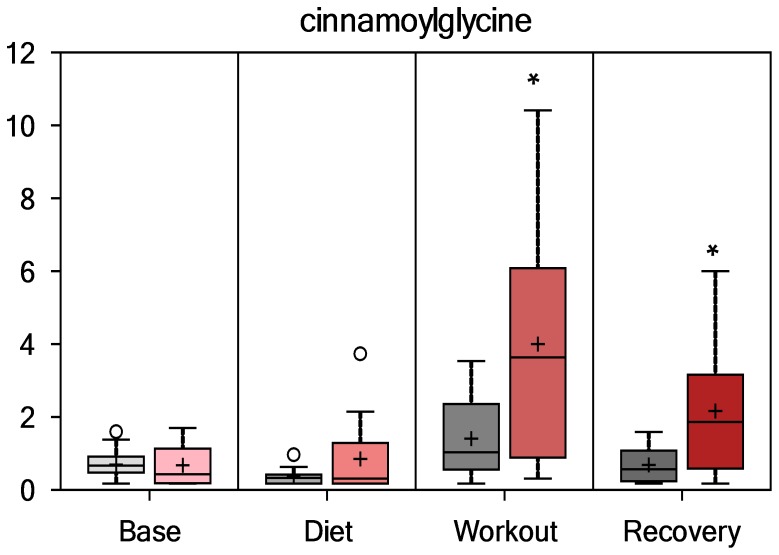
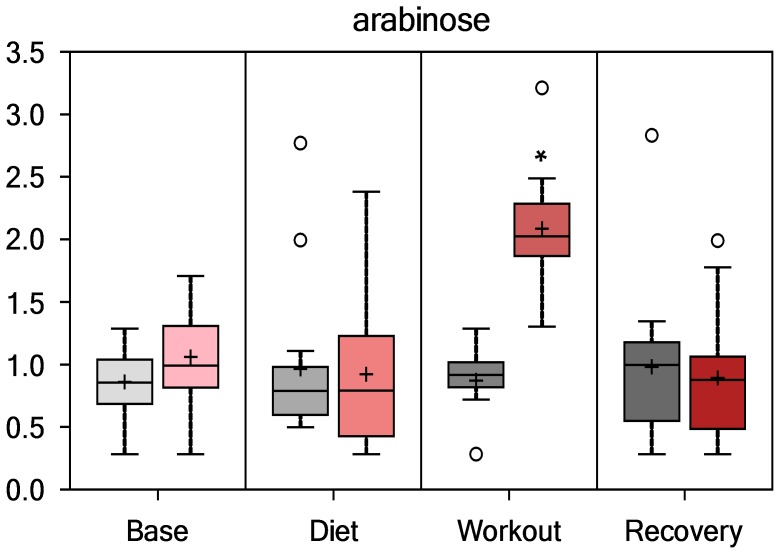
Metabolites characteristic of gut bacteria metabolism of polyphenols were increased with PSPC and 3 d running (e.g., hippurate, 4-hydroxyhippurate, 4-methylcatechol sulfate, 1.8-, 1.9-, 2.5-fold, respectively, P<0.05), an effect which persisted for 14-h post-exercise. Fatty acid oxidation and ketogenesis were induced by exercise in both groups, with more ketones at 14-h post-exercise in PSPC (3-hydroxybutyrate, 1.8-fold, P<0.05). Established biomarkers for inflammation (CRP, cytokines) and oxidative stress (protein carbonyls) did not differ between groups.
PSPC supplementation over a 17-d period did not alter established biomarkers for inflammation and oxidative stress but was linked to an enhanced gut-derived phenolic signature and ketogenesis in runners during recovery from 3-d heavy exertion.
ClinicalTrials.gov, U.S. National Institutes of Health, identifier: NCT01775384.
研究多酚补充剂作为一种对抗 3 天强化训练引起的炎症和氧化应激的对策。
从蓝莓和绿茶提取物中提取水溶性多酚,然后将其捕获到多酚大豆蛋白复合物(PSPC)中。招募了 38 名年龄在 19-45 岁之间的长跑运动员,他们经常参加公路比赛。成功完成定向和基线测试的跑步者(N=35)被随机分配到 40 克/天 PSPC(N=17)(2136 毫克/天没食子酸当量)或安慰剂(N=18),使用双盲法和平行组设计,在第 14 天插入 3 天的跑步期(2.5 小时/天,70%VO2max)。在完成研究所有方面的 16 名 PSPC 组和 15 名安慰剂组受试者中,在 14 天补充剂后和第 3 天跑步后立即和 14 小时采集血液样本,并使用 GC-MS 和 LC-MS 代谢组学平台进行分析。
PSPC 和 3 天跑步会增加与多酚肠道细菌代谢有关的代谢物(例如,马尿酸、4-羟基马尿酸、4-甲基儿茶酚硫酸酯,分别增加 1.8、1.9、2.5 倍,P<0.05),这种效应在运动后 14 小时仍然存在。两组运动都诱导了脂肪酸氧化和酮体生成,PSPC 在运动后 14 小时酮体更多(β-羟丁酸,增加 1.8 倍,P<0.05)。炎症(CRP、细胞因子)和氧化应激(蛋白质羰基)的既定生物标志物在两组之间没有差异。
在 17 天的时间内补充 PSPC 不会改变炎症和氧化应激的既定生物标志物,但与跑步者在 3 天剧烈运动恢复期间增强的肠道衍生酚类特征和酮体生成有关。
ClinicalTrials.gov,美国国立卫生研究院,标识符:NCT01775384。