Meng Jiao, Lv Zhenyu, Qiao Xinhua, Li Xiaopeng, Li Yazi, Zhang Yuying, Chen Chang
National Laboratory of Biomacromolecules, Institute of Biophysics, Chinese Academy of Sciences, 15 Datun Road, Chaoyang District, Beijing 100101, China.
National Laboratory of Biomacromolecules, Institute of Biophysics, Chinese Academy of Sciences, 15 Datun Road, Chaoyang District, Beijing 100101, China; University of Chinese Academy of Sciences, 19 Yuquan Road, Shijingshan District, Beijing 100049, China.
Redox Biol. 2017 Apr;11:365-374. doi: 10.1016/j.redox.2016.12.026. Epub 2016 Dec 28.
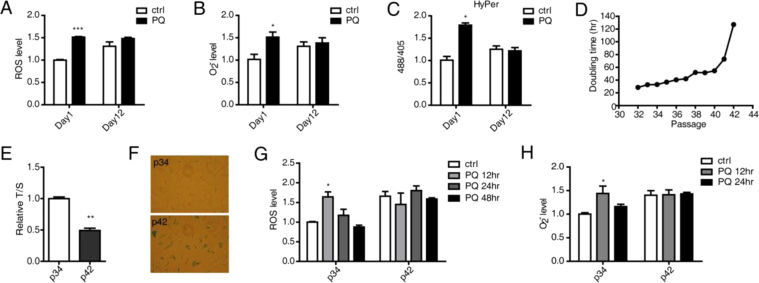
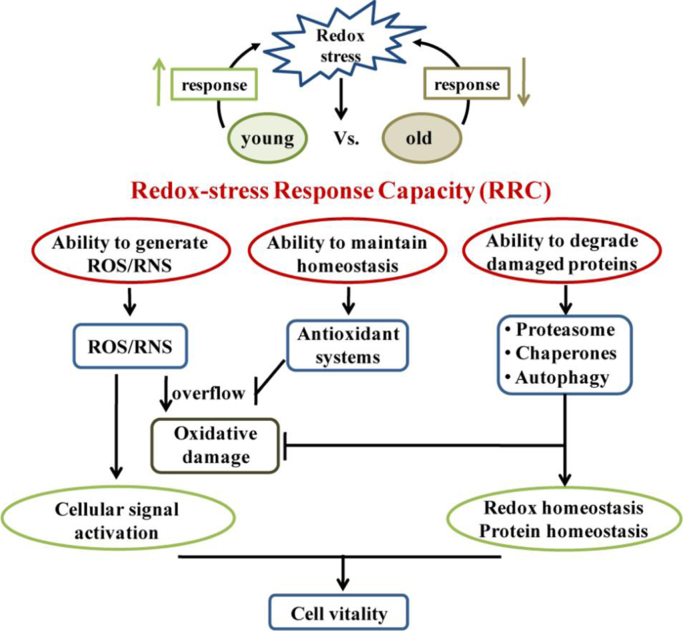
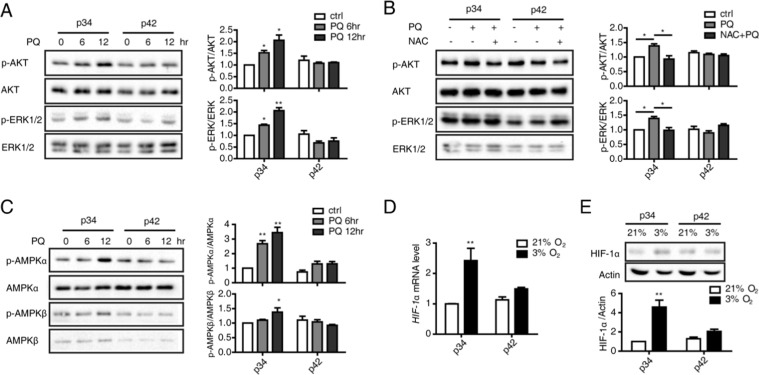
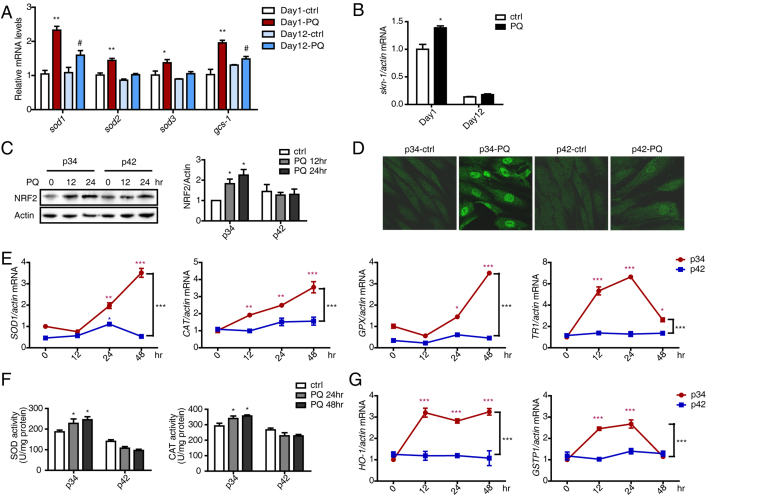
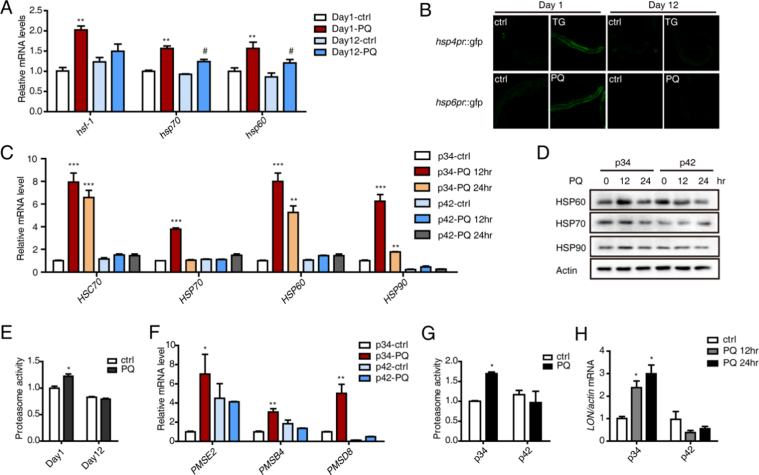
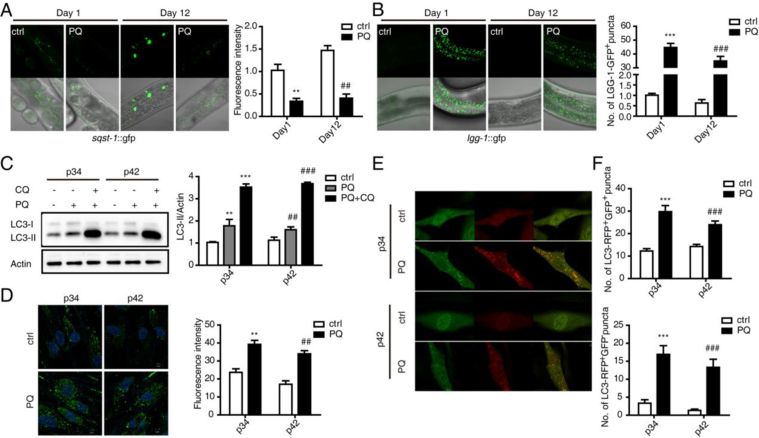
Aging is tightly associated with redox events. The free radical theory of aging indicates that redox imbalance may be an important factor in the aging process. Most studies about redox and aging focused on the static status of oxidative stress levels, there has been little research investigating differential responses to redox challenge during aging. In this study, we used Caenorhabditis elegans and human fibroblasts as models to compare differential responses to oxidative stress challenge in young and old individuals. In response to paraquat stress, young individuals generated more ROS and activated signaling pathways including p-ERK, p-AKT and p-AMPKα/β. After the initial response, young individuals then promoted NRF2 translocation and induced additional antioxidant enzymes and higher expression of phase II enzymes, including SOD, CAT, GPX, HO-1, GSTP-1and others, to maintain redox homeostasis. Moreover, young individuals also demonstrated a better ability to degrade damaged proteins by up-regulating the expression of chaperones and improving proteasome activity. Based on these data, we propose a new concept "Redox-stress Response Capacity (RRC)", which suggests cells or organisms are capable of generating dynamic redox responses to activate cellular signaling and maintain cellular homeostasis. The decay of RRC is the substantive characteristic of aging, which gives a new understand of the redox theory of aging.
衰老与氧化还原事件密切相关。衰老的自由基理论表明,氧化还原失衡可能是衰老过程中的一个重要因素。大多数关于氧化还原与衰老的研究都集中在氧化应激水平的静态状态,而很少有研究调查衰老过程中对氧化还原挑战的差异反应。在本研究中,我们以秀丽隐杆线虫和人类成纤维细胞为模型,比较年轻和年老个体对氧化应激挑战的差异反应。在百草枯应激反应中,年轻个体产生更多的活性氧,并激活包括p-ERK、p-AKT和p-AMPKα/β在内的信号通路。在初始反应后,年轻个体随后促进NRF2易位,并诱导额外的抗氧化酶和II期酶(包括SOD、CAT、GPX、HO-1、GSTP-1等)的更高表达,以维持氧化还原稳态。此外,年轻个体还通过上调伴侣蛋白的表达和提高蛋白酶体活性,表现出更好的降解受损蛋白质的能力。基于这些数据,我们提出了一个新的概念“氧化还原应激反应能力(RRC)”,这表明细胞或生物体能够产生动态氧化还原反应,以激活细胞信号并维持细胞稳态。RRC的衰退是衰老的实质特征,这为衰老的氧化还原理论提供了新的认识。