Lawrence Livermore National Laboratory, Livermore, California 94550, USA.
Department of Nuclear Engineering, Texas A&M University, College Station, Texas 77843, USA.
Sci Rep. 2017 Jan 6;7:39754. doi: 10.1038/srep39754.
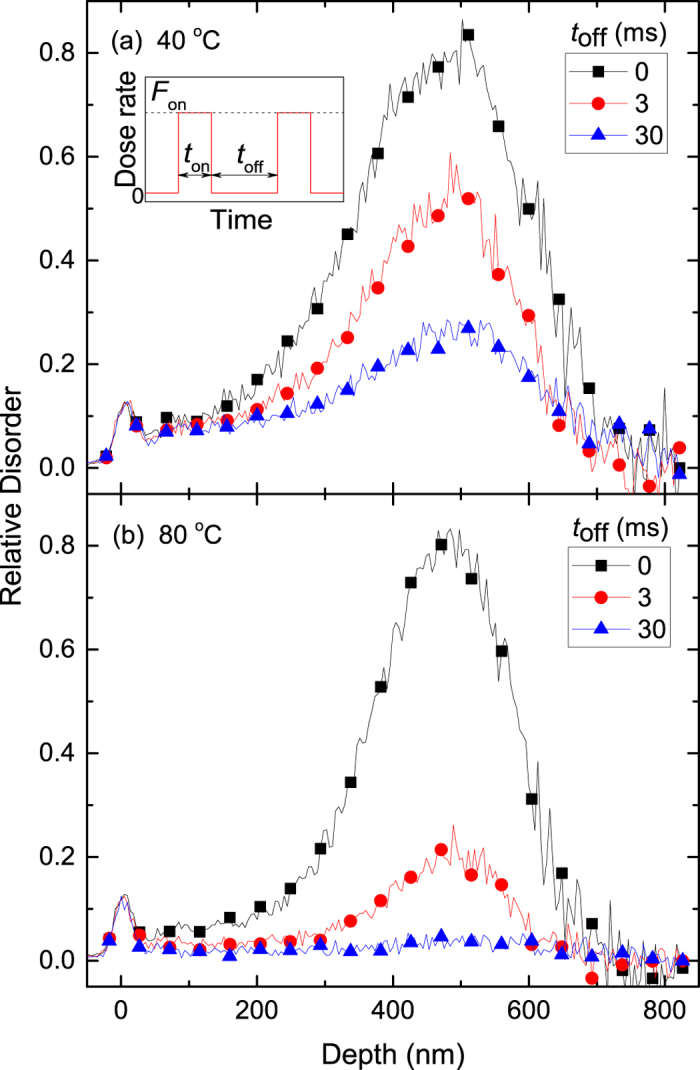
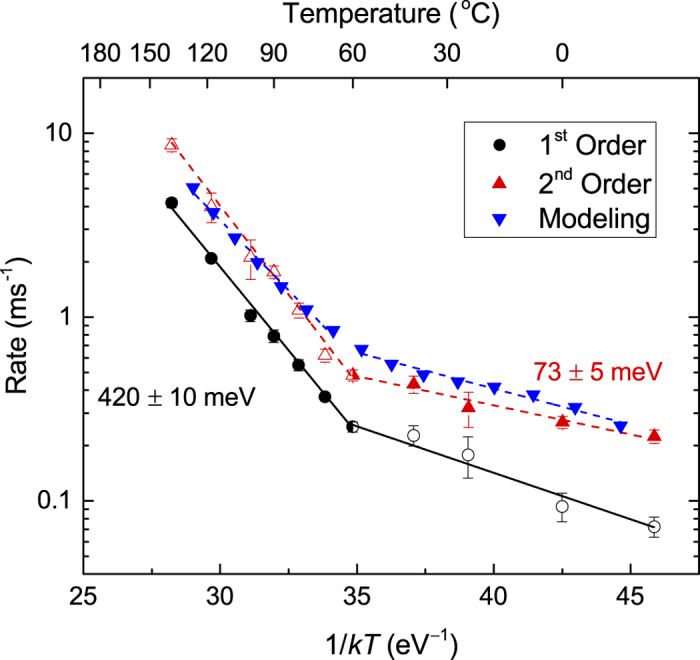
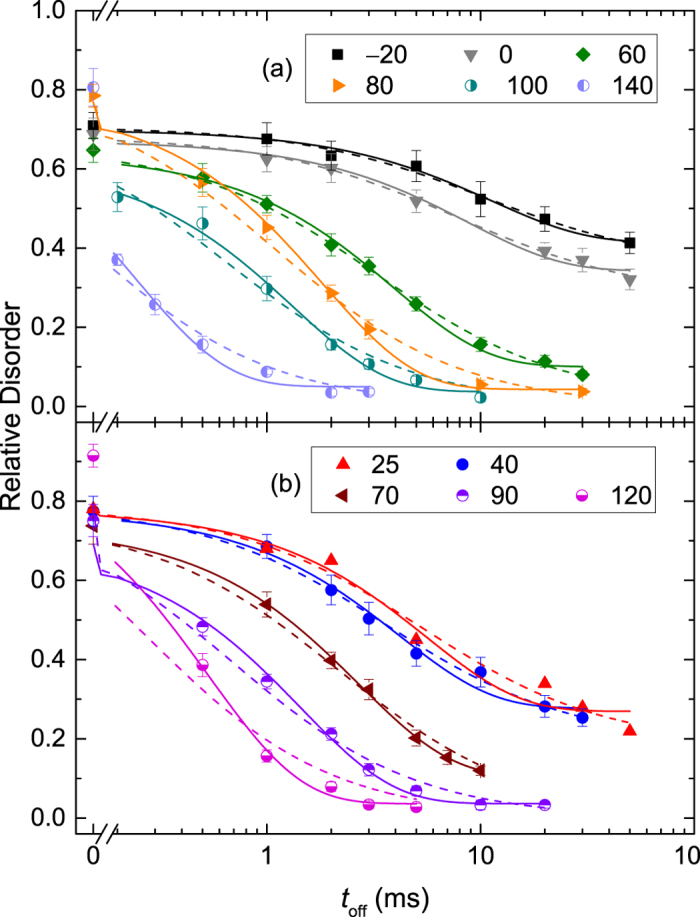
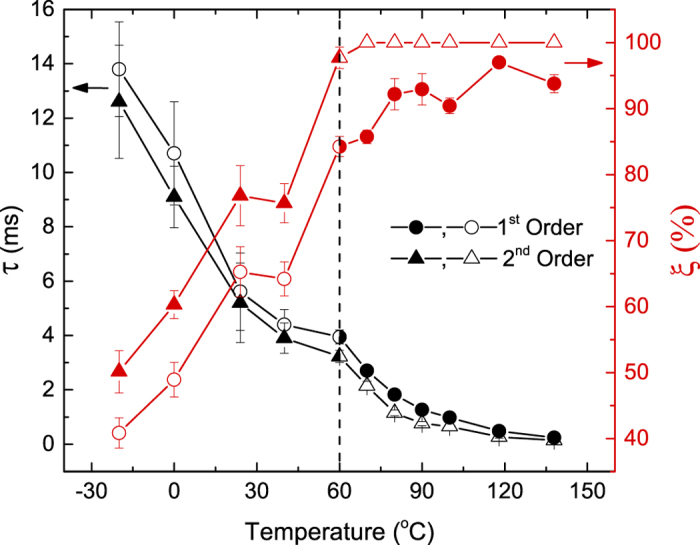
The formation of stable radiation damage in crystalline solids often proceeds via complex dynamic annealing processes, involving migration and interaction of ballistically-generated point defects. The dominant dynamic annealing processes, however, remain unknown even for crystalline Si. Here, we use a pulsed ion beam method to study defect dynamics in Si bombarded in the temperature range from -20 to 140 °C with 500 keV Ar ions. Results reveal a defect relaxation time constant of ~10-0.2 ms, which decreases monotonically with increasing temperature. The dynamic annealing rate shows an Arrhenius dependence with two well-defined activation energies of 73 ± 5 meV and 420 ± 10 meV, below and above 60 °C, respectively. Rate theory modeling, bench-marked against this data, suggests a crucial role of both vacancy and interstitial diffusion, with the dynamic annealing rate limited by the migration and interaction of vacancies.
在晶体固体中,稳定的辐射损伤的形成通常通过涉及弹道生成点缺陷的迁移和相互作用的复杂动态退火过程进行。然而,即使对于晶体硅,主导的动态退火过程仍然未知。在这里,我们使用脉冲离子束方法研究了在 -20 至 140°C 的温度范围内用 500keV Ar 离子轰击的 Si 中的缺陷动力学。结果表明,缺陷弛豫时间常数约为 10-0.2ms,随着温度的升高单调减小。动态退火速率表现出阿累尼乌斯依赖性,具有两个明确定义的激活能 73±5meV 和 420±10meV,分别低于和高于 60°C。与该数据相吻合的速率理论模型表明,空位和间隙扩散都起着至关重要的作用,动态退火速率受空位的迁移和相互作用的限制。