Hassan Samar M, Khalaf Marwa M, Sadek Sawsan A, Abo-Youssef Amira M
a Department of Pharmacology and Toxicology, Faculty of Pharmacy , Fayoum University , Fayoum , Egypt.
b Department of Pharmacology and Toxicology, Faculty of Pharmacy , Beni-Suef University , Beni-Suef , Egypt.
Pharm Biol. 2017 Dec;55(1):766-774. doi: 10.1080/13880209.2016.1275704.
Currently, the outcomes of the use of cisplatin in cancer therapy is limited by nephrotoxicity.
This study aims to investigate the nephroprotective role of apigenin and myricetin against cisplatin-induced nephrotoxicity in mice.
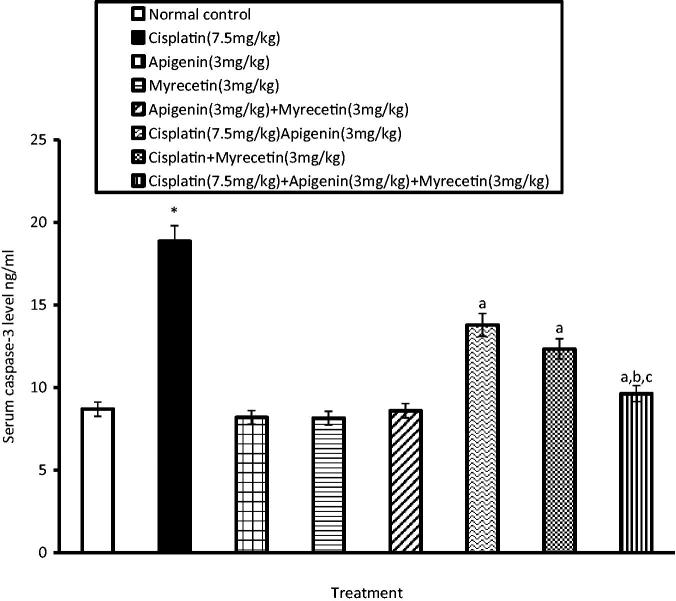
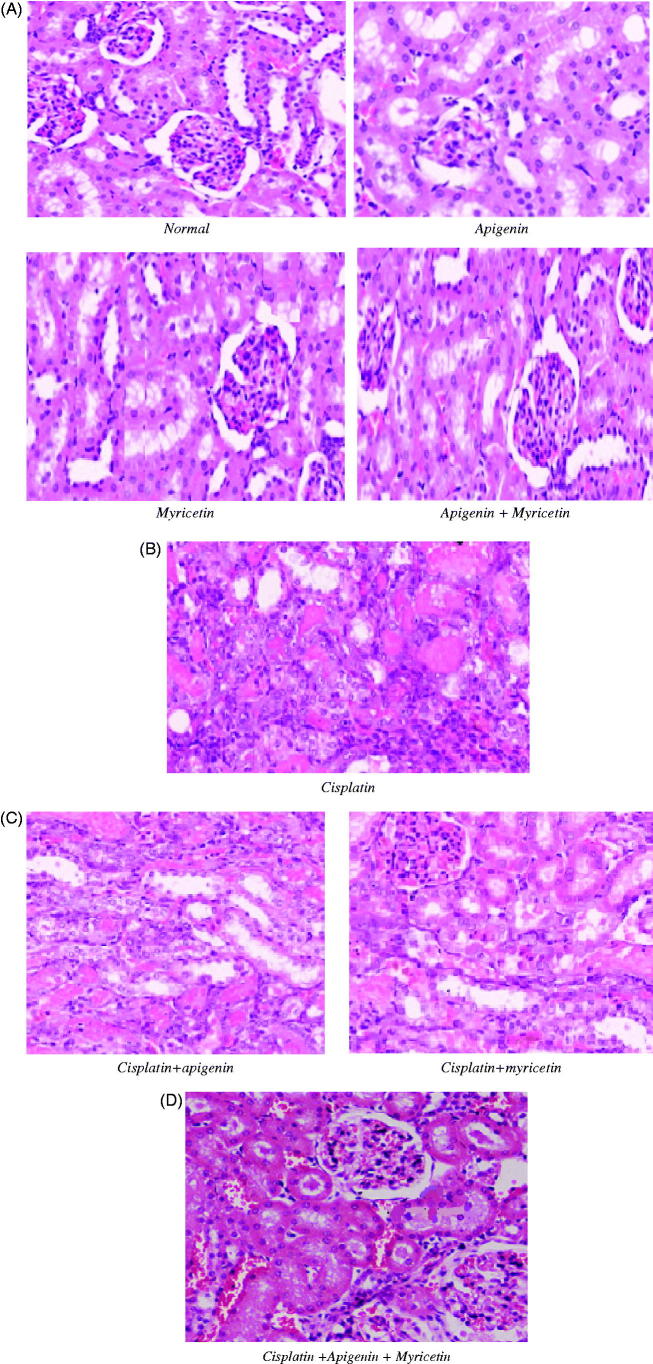
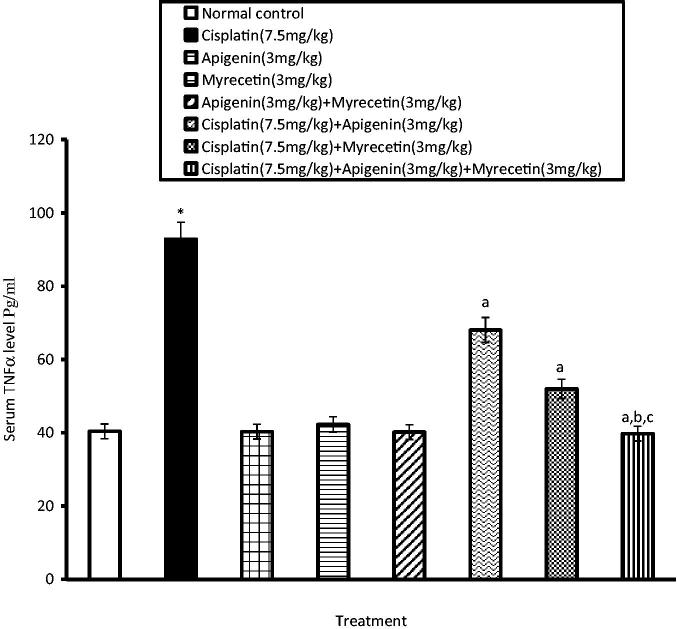
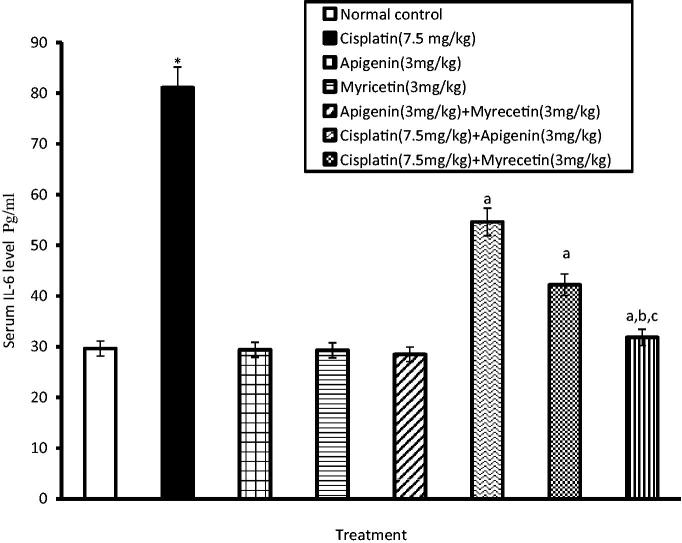
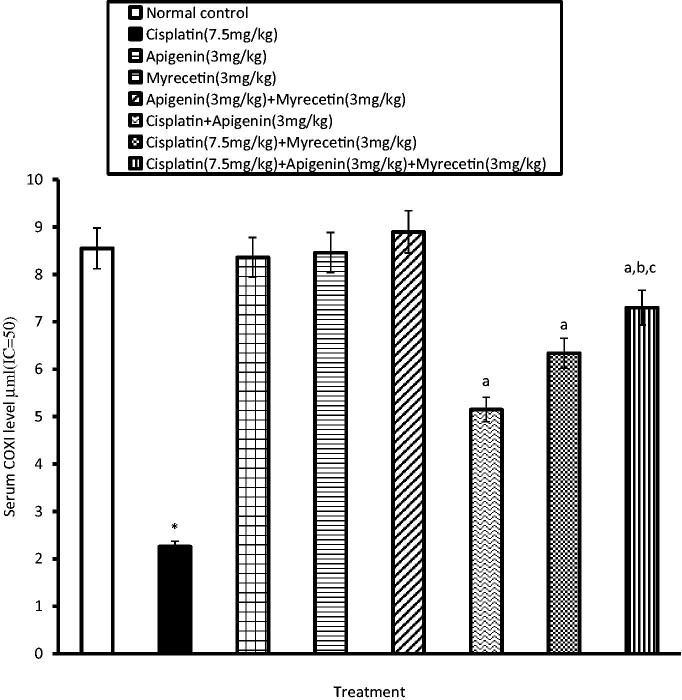
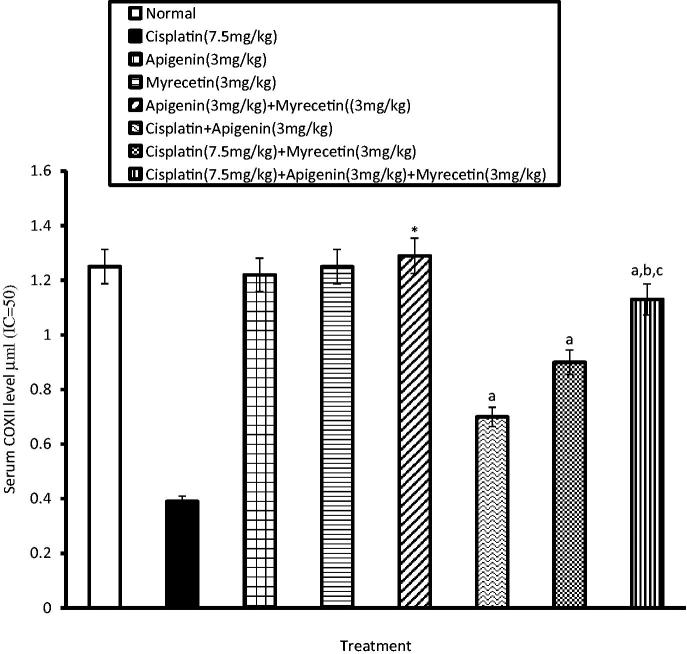
Adult female Wistar Albino mice were divided into eight groups (n = 8). Group I served as normal control. Groups II, III and IV received apigenin (3 mg/kg, i.p.), myricetin (3 mg/kg, i.p.) or their combination respectively, for seven days. Group V served as positive control group, received vehicles for seven days and cisplatin (7.5 mg/kg, i.p.) for three days starting at day five. Groups VI, VII and VIII received apigenin, myricetin or their combination, respectively for seven days as well as cisplatin injection for three days starting at day five. by the end of the experimental period, a biochemical study involving, nephrotoxicity markers [serum creatinine (Cr) and blood urea nitrogen (BUN)], apoptotic marker [caspase 3], inflammatory mediators [tumour necrosis factor alpha (TNF-α), interleukin 6 (IL-6), cyclooxygenase I and II (COXI, COXII)] and oxidative stress biomarkers [malondialdehyde (MDA), reduced glutathione (GSH) and catalase] was conducted. In addition, renal histopathological alterations were evaluated.
Apigenin, myricetin and their combination significantly reduced blood BUN, serum Cr, caspase-3TNF-α, IL-6, COXI and COXII, MDA levels and significantly increased GSH level and catalase activity parallel to, histopathological improvement in kidney tissues.
Apigenin and myricetin exhibited a protective and promising preventive strategy against cisplatin-induced nephrotoxicity due to their antioxidant and anti-inflammatory effects.
目前,顺铂在癌症治疗中的应用效果受到肾毒性的限制。
本研究旨在探讨芹菜素和杨梅素对顺铂诱导的小鼠肾毒性的肾保护作用。
成年雌性Wistar白化小鼠分为八组(n = 8)。第一组作为正常对照组。第二、三、四组分别腹腔注射芹菜素(3 mg/kg)、杨梅素(3 mg/kg)或它们的组合,持续7天。第五组作为阳性对照组,连续7天给予赋形剂,并从第5天开始连续3天腹腔注射顺铂(7.5 mg/kg)。第六、七、八组分别连续7天给予芹菜素、杨梅素或它们的组合,并从第5天开始连续3天注射顺铂。在实验期结束时,进行了一项生化研究,涉及肾毒性标志物[血清肌酐(Cr)和血尿素氮(BUN)]、凋亡标志物[半胱天冬酶3]、炎症介质[肿瘤坏死因子α(TNF-α)、白细胞介素6(IL-6)、环氧化酶I和II(COXI、COXII)]以及氧化应激生物标志物[丙二醛(MDA)、还原型谷胱甘肽(GSH)和过氧化氢酶]。此外,还评估了肾脏组织病理学改变。
芹菜素、杨梅素及其组合显著降低了血BUN、血清Cr、半胱天冬酶-3、TNF-α、IL-6、COXI和COXII、MDA水平,并显著提高了GSH水平和过氧化氢酶活性,同时肾脏组织的组织病理学得到改善。
芹菜素和杨梅素因其抗氧化和抗炎作用,对顺铂诱导的肾毒性表现出一种有保护作用且有前景的预防策略。