Lecompte François, Nicot Philippe C, Ripoll Julie, Abro Manzoor A, Raimbault Astrid K, Lopez-Lauri Félicie, Bertin Nadia
PSH unit, INRA, F-84914 Avignon, France.
Plant pathology unit, INRA, F-84140 Montfavet, France.
Ann Bot. 2017 Mar 1;119(5):931-943. doi: 10.1093/aob/mcw240.
Plant soluble sugars, as main components of primary metabolism, are thought to be implicated in defence against pathogenic fungi. However, the function of sucrose and hexoses remains unclear. This study aimed to identify robust patterns in the dynamics of soluble sugars in sink tissues of tomato plants during the course of infection by the necrotrophic fungus Botrytis cinerea . Distinct roles for glucose and fructose in defence against B. cinerea were hypothesized.
We examined sugar contents and defence hormonal markers in tomato stem tissues before and after infection by B. cinerea , in a range of abiotic environments created by various nitrogen and water supplies.
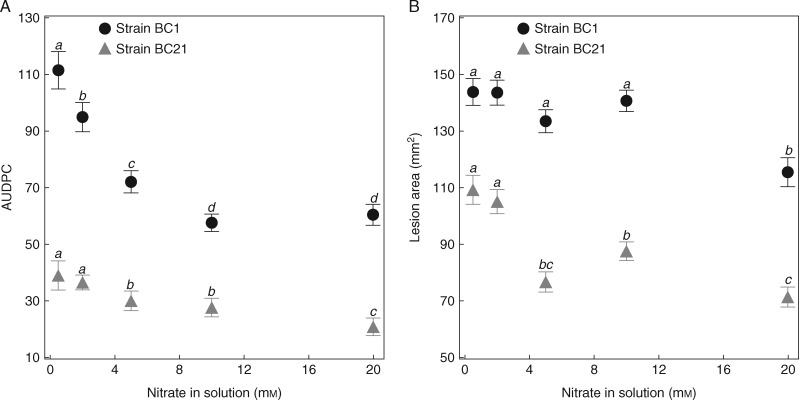
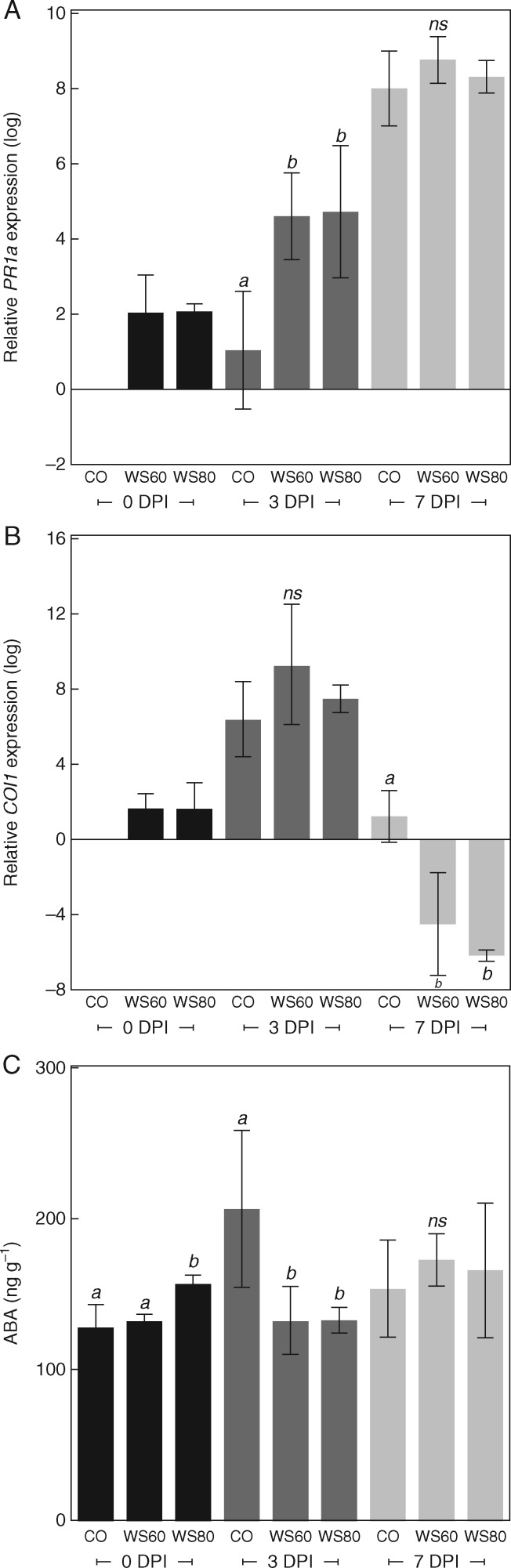
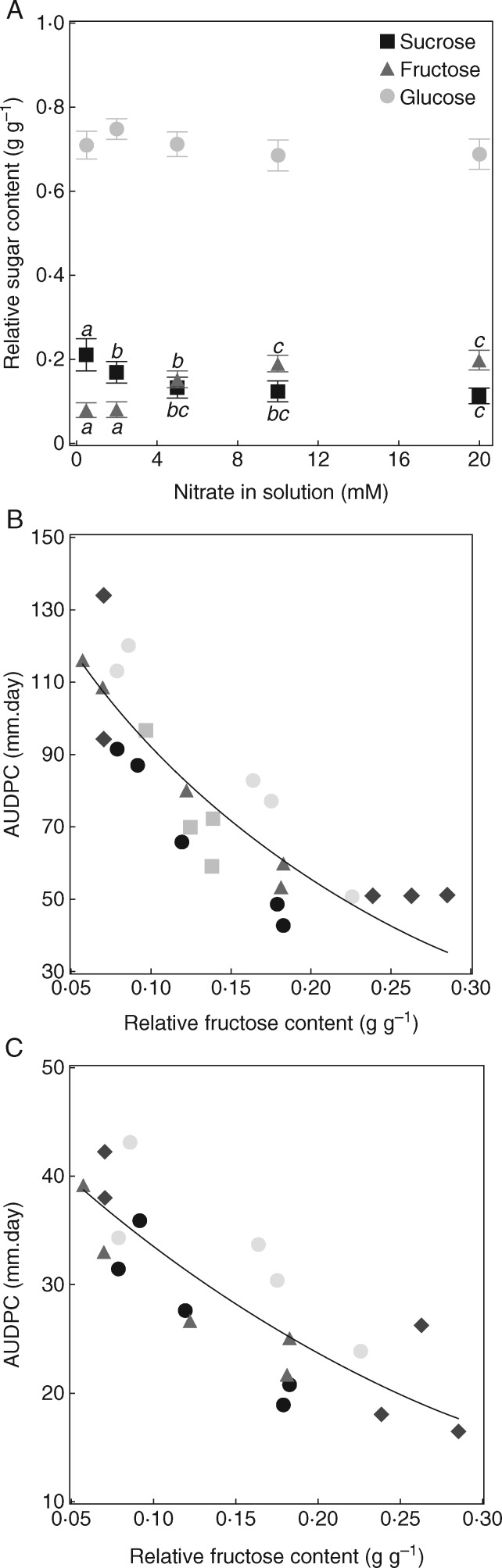
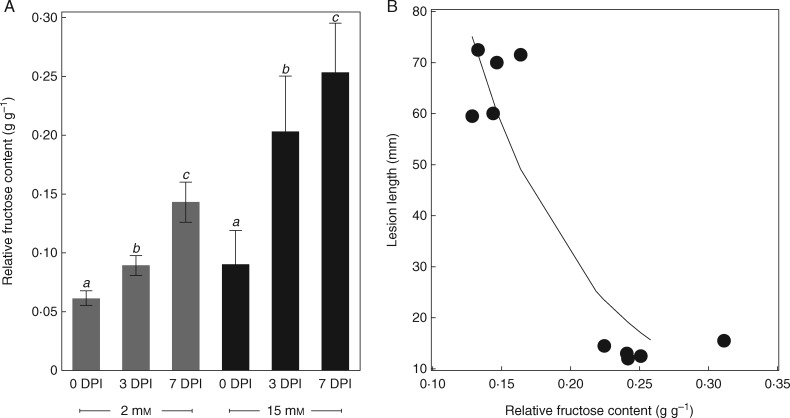
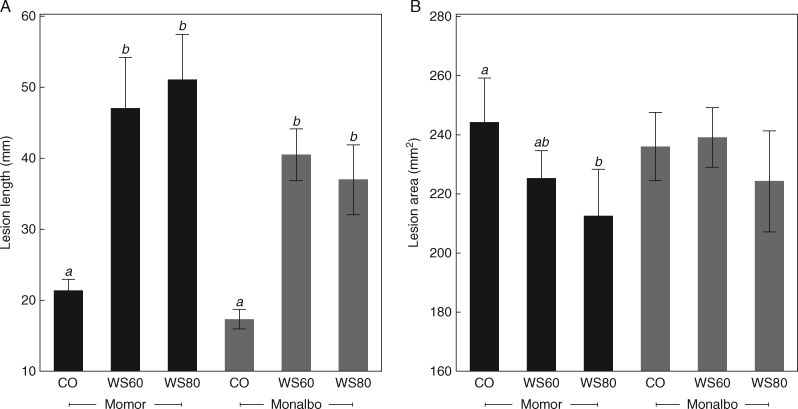
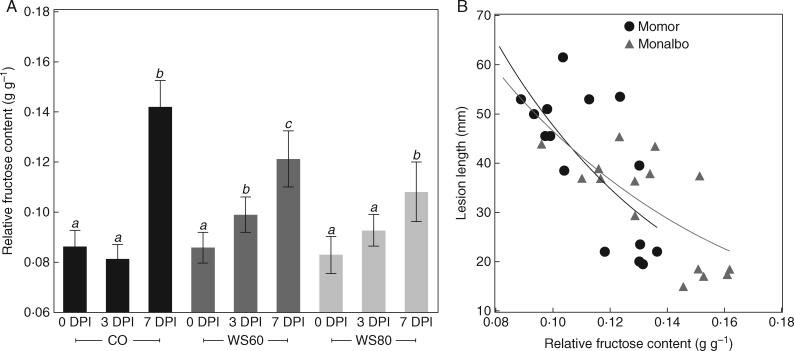
Limited nitrogen or water supplies increased tomato stem susceptibility to B. cinerea . Glucose and fructose contents of tissues surrounding infection sites evolved differently after inoculation. The fructose content never decreased after inoculation with B. cinerea , while that of glucose showed either positive or negative variation, depending on the abiotic environment. An increase in the relative fructose content (defined as the proportion of fructose in the soluble sugar pool) was observed in the absence of glucose accumulation and was associated with lower susceptibility. A lower expression of the salicylic acid marker PR1a , and a lower repression of a jasmonate marker COI1 were associated with reduced susceptibility. Accordingly, COI1 expression was positively correlated with the relative fructose contents 7 d after infection.
Small variations of fructose content among the sugar pool are unlikely to affect intrinsic pathogen growth. Our results highlight distinct use of host glucose and fructose after infection by B. cinerea and suggest strongly that adjustment of the relative fructose content is required for enhanced plant defence.
植物可溶性糖作为初级代谢的主要成分,被认为与抵御病原真菌有关。然而,蔗糖和己糖的功能仍不清楚。本研究旨在确定番茄植株库组织在被坏死营养型真菌灰葡萄孢感染过程中可溶性糖动态变化的稳健模式。推测葡萄糖和果糖在抵御灰葡萄孢方面具有不同作用。
我们在由不同氮素和水分供应创造的一系列非生物环境中,检测了番茄茎组织在被灰葡萄孢感染前后的糖含量和防御激素标记物。
有限的氮素或水分供应增加了番茄茎对灰葡萄孢的易感性。接种后,感染部位周围组织的葡萄糖和果糖含量变化不同。接种灰葡萄孢后,果糖含量从未降低,而葡萄糖含量则根据非生物环境表现出正向或负向变化。在没有葡萄糖积累的情况下,观察到相对果糖含量(定义为果糖在可溶性糖库中的比例)增加,且与较低的易感性相关。水杨酸标记物PR1a的较低表达以及茉莉酸标记物COI1的较低抑制与易感性降低相关。因此,COI1表达与感染后7天的相对果糖含量呈正相关。
糖库中果糖含量的微小变化不太可能影响病原菌的内在生长。我们的结果突出了灰葡萄孢感染后宿主葡萄糖和果糖的不同利用情况,并强烈表明调整相对果糖含量对于增强植物防御是必要的。