Hang Saiyu, Gergen J Peter
Department of Biochemistry and Cell Biology and Center for Developmental Genetics and.
Graduate Program in Biochemistry and Structural Biology, Stony Brook University, Stony Brook, NY 11794.
Mol Biol Cell. 2017 Mar 1;28(5):681-691. doi: 10.1091/mbc.E16-09-0630. Epub 2017 Jan 11.
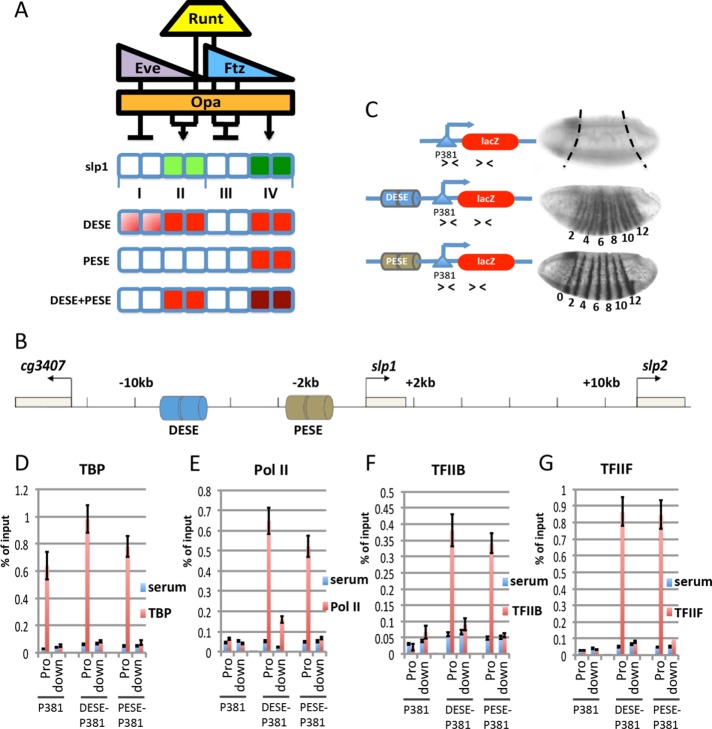
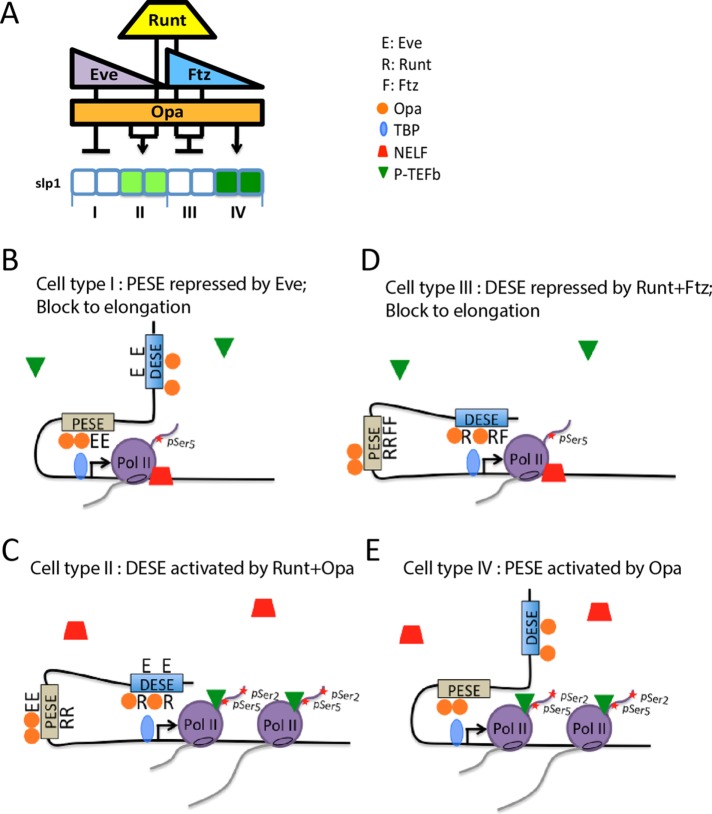
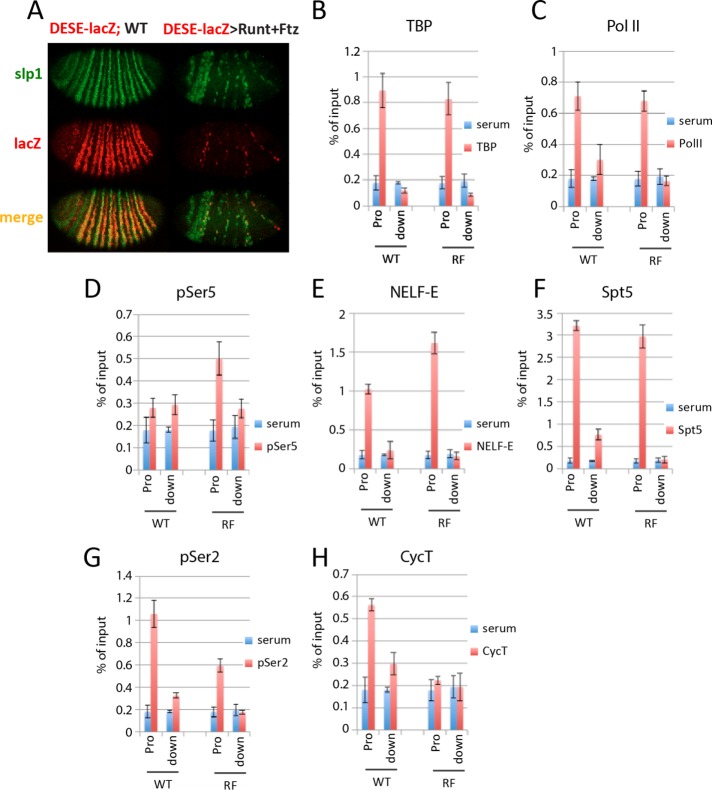
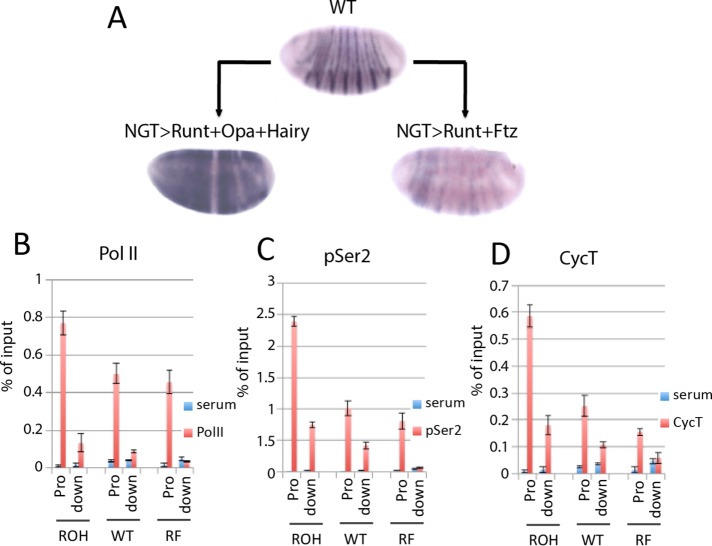
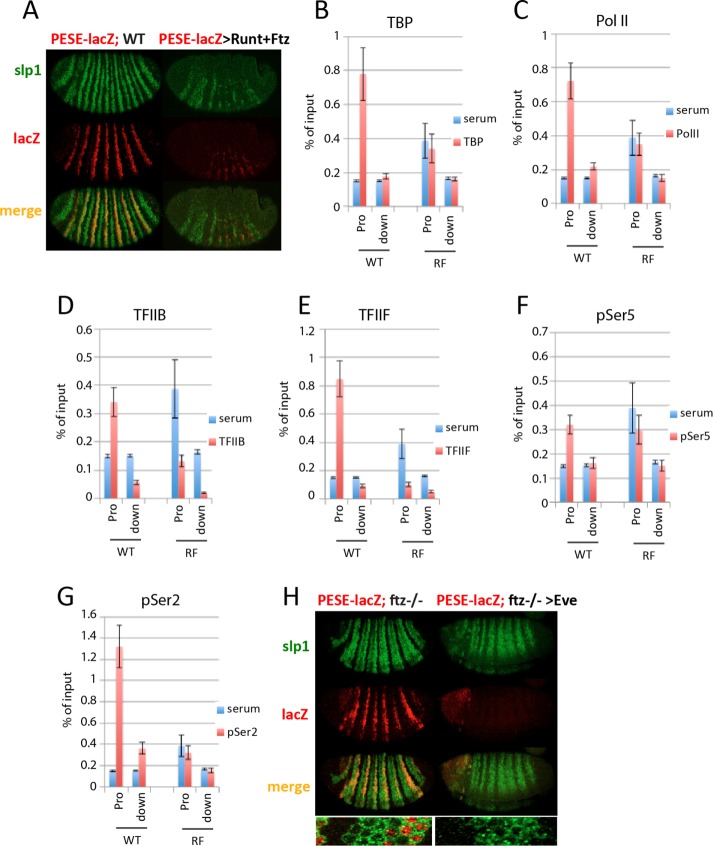
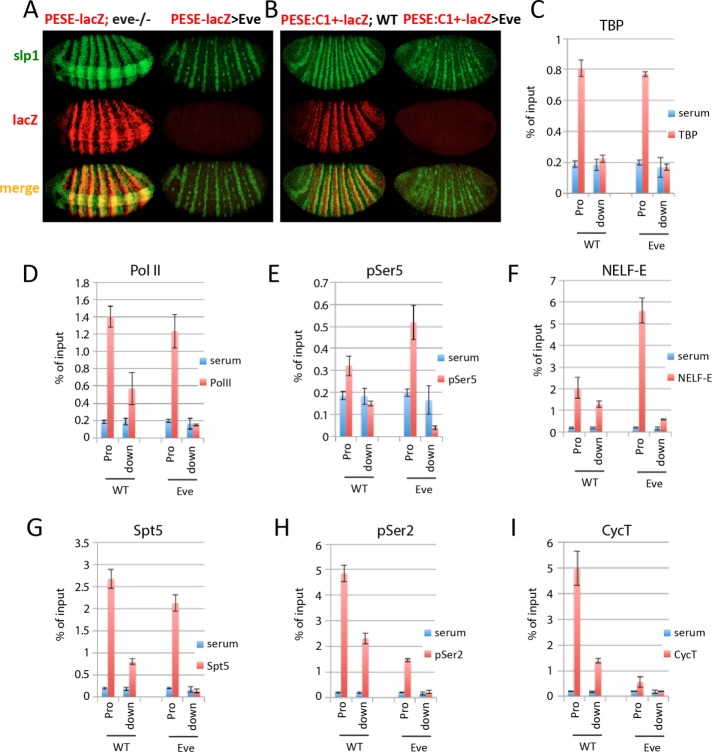
The initial metameric expression of the () gene is controlled by two distinct -regulatory DNA elements that interact in a nonadditive manner to integrate inputs from transcription factors encoded by the pair-rule segmentation genes. We performed chromatin immunoprecipitation on reporter genes containing these elements in different embryonic genotypes to investigate the mechanism of their regulation. The distal early stripe element (DESE) mediates both activation and repression by Runt. We find that the differential response of DESE to Runt is due to an inhibitory effect of Fushi tarazu (Ftz) on P-TEFb recruitment and the regulation of RNA polymerase II (Pol II) pausing. The proximal early stripe element (PESE) is also repressed by Runt, but in this case, Runt prevents PESE-dependent Pol II recruitment and preinitiation complex (PIC) assembly. PESE is also repressed by Even-skipped (Eve), but, of interest, this repression involves regulation of P-TEFb recruitment and promoter-proximal Pol II pausing. These results demonstrate that the mode of repression by Runt is enhancer specific, whereas the mode of repression of the PESE enhancer is transcription factor specific. We propose a model based on these differential regulatory interactions that accounts for the nonadditive interactions between the PESE and DESE enhancers during segmentation.
()基因最初的节段性表达由两个不同的调控DNA元件控制,这两个元件以非加性方式相互作用,整合来自成对规则分割基因编码的转录因子的输入信号。我们对不同胚胎基因型中包含这些元件的报告基因进行了染色质免疫沉淀,以研究它们的调控机制。远端早期条纹元件(DESE)介导Runt的激活和抑制作用。我们发现DESE对Runt的差异反应是由于腹侧板(Ftz)对P-TEFb募集的抑制作用以及RNA聚合酶II(Pol II)暂停的调控。近端早期条纹元件(PESE)也被Runt抑制,但在这种情况下,Runt阻止了PESE依赖的Pol II募集和起始前复合物(PIC)组装。PESE也被间断翅脉(Eve)抑制,但有趣的是,这种抑制涉及P-TEFb募集和启动子近端Pol II暂停的调控。这些结果表明,Runt的抑制模式是增强子特异性的,而PESE增强子的抑制模式是转录因子特异性的。我们基于这些差异调控相互作用提出了一个模型,该模型解释了在分割过程中PESE和DESE增强子之间的非加性相互作用。