Sinha Rakesh K, Pospíšil Pavel, Maheshwari Priti, Eudes François
Cereal Biotechnology, Agriculture and Agri-Food Canada, LethbridgeAB, Canada; Department of Plant Anatomy and Cytology, Faculty of Biology and Environmental Protection, University of SilesiaKatowice, Poland.
Department of Biophysics, Centre of the Region Haná for Biotechnological and Agricultural Research, Faculty of Science, Palacký University Olomouc, Czechia.
Front Plant Sci. 2016 Dec 26;7:1931. doi: 10.3389/fpls.2016.01931. eCollection 2016.
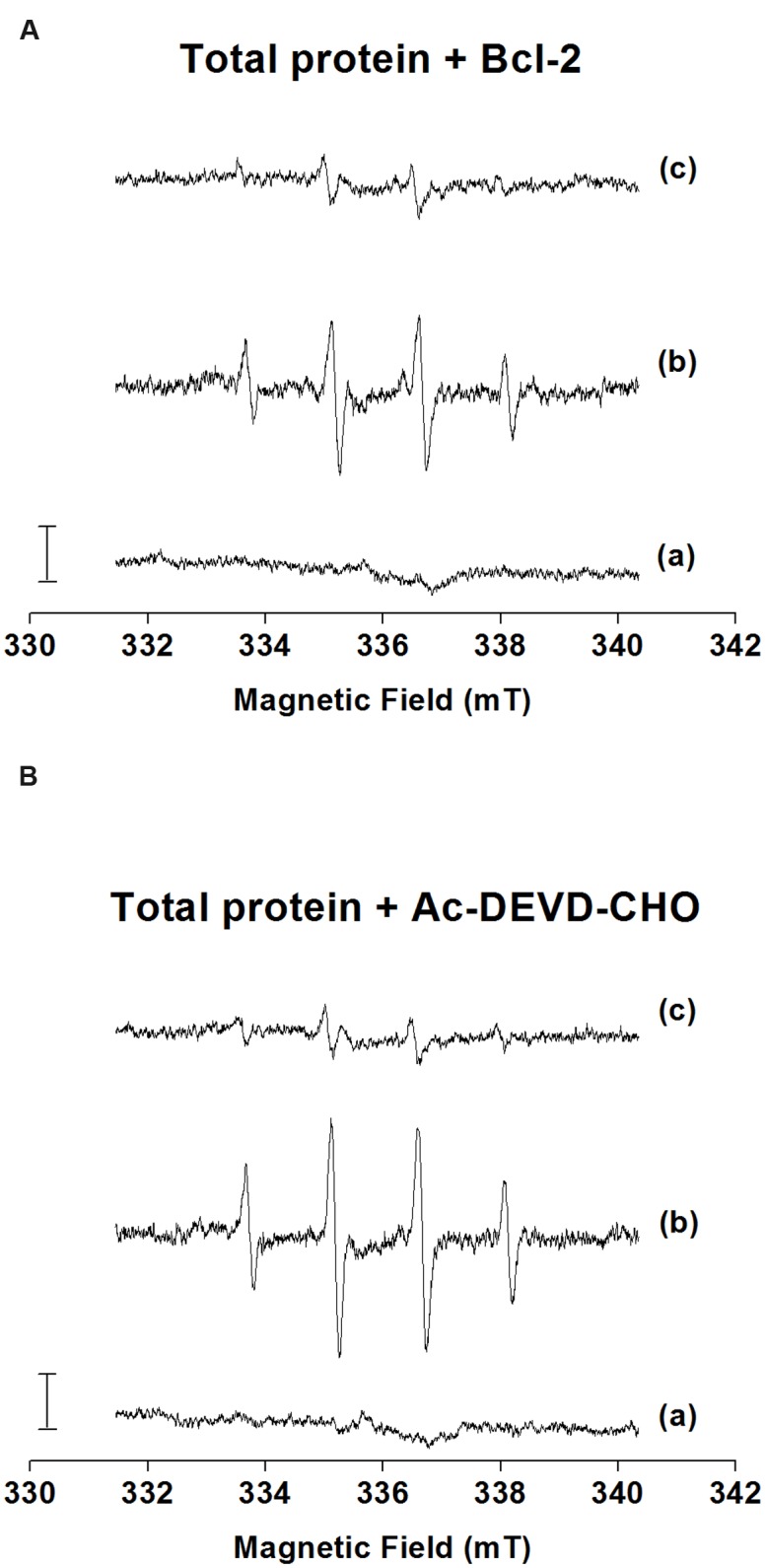
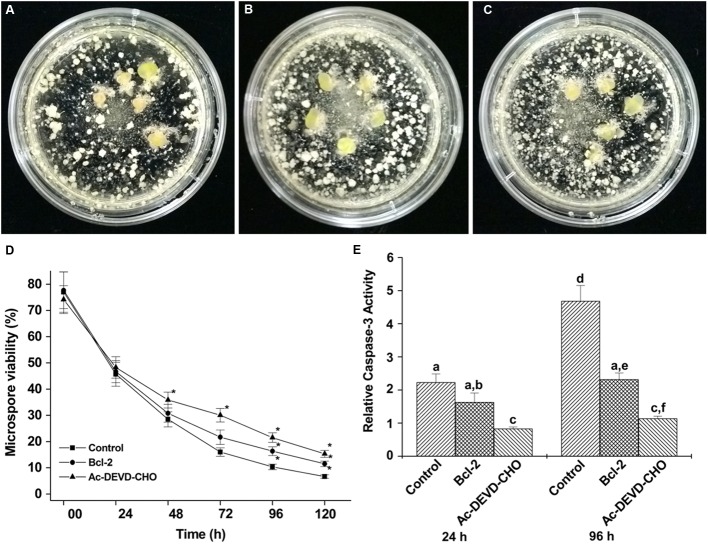
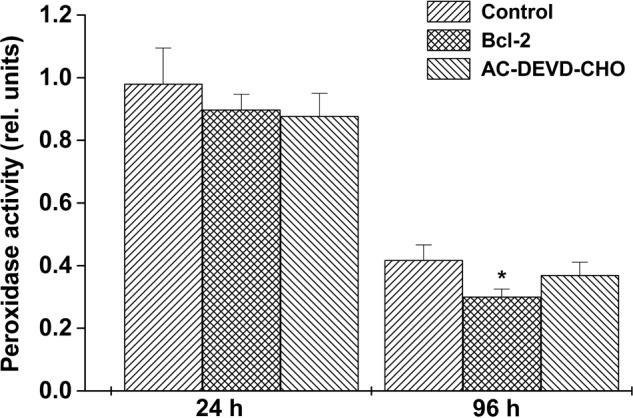
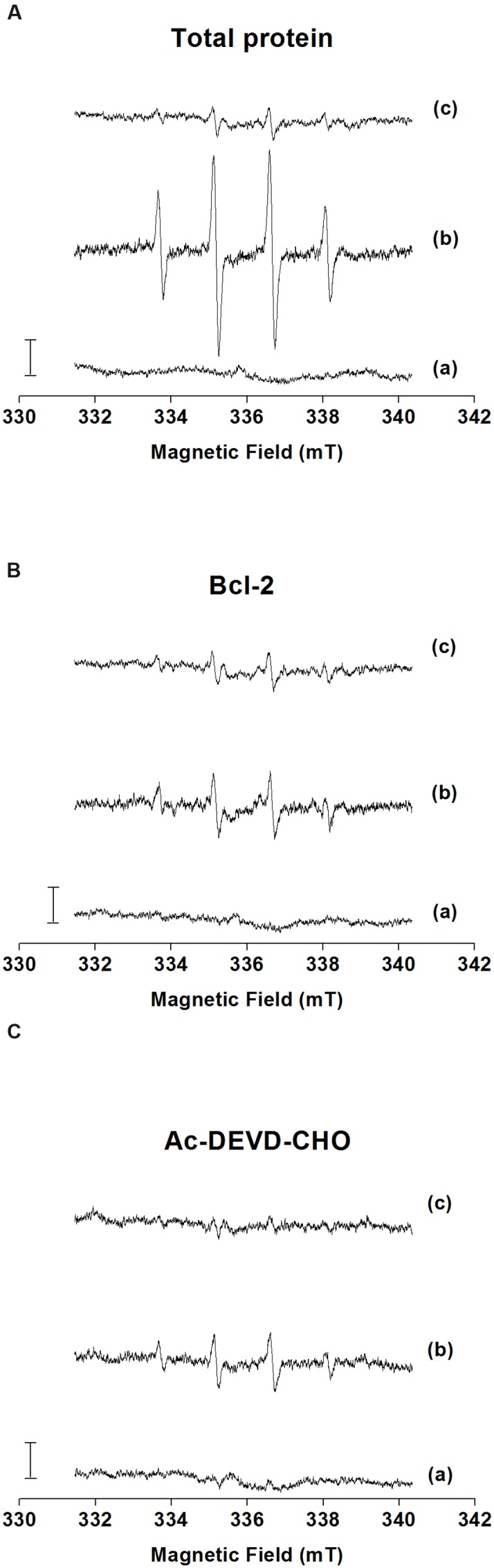
Microspore cell death and low green plant production efficiency are an integral obstacle in the development of doubled haploid production in wheat. The aim of the current study was to determine the effect of anti-apoptotic recombinant human B-cell lymphoma-2 (Bcl-2△21) and caspase-3-inhibitor (Ac-DEVD-CHO) in microspore cell death in bread wheat cultivars AC Fielder and AC Andrew. Induction medium containing Bcl-2△21 and Ac-DEVD-CHO yielded a significantly higher number of viable microspores, embryo-like structures and total green plants in wheat cultivars AC Fielder and AC Andrew. Total peroxidase activity was lower in Bcl-2△21 treated microspore cultures at 96 h of treatment compared to control and Ac-DEVD-CHO. Electron paramagnetic resonance study of total microspore protein showed a different scavenging activity for Bcl-2△21 and Ac-DEVD-CHO. Bcl-2△21 scavenged approximately 50% hydroxyl radical (HO) formed, whereas Ac-DEVD-CHO scavenged approximately 20% of HO. Conversely, reduced caspase-3-like activities were detected in the presence of Bcl-2△21 and Ac-DEVD-CHO, supporting the involvement of Bcl-2△21 and Ac-DEVD-CHO in increasing microspore viability by reducing oxidative stress and caspase-3-like activity. Our results indicate that Bcl-2△21 and Ac-DEVD-CHO protects cells from cell death following different pathways. Bcl-2△21 prevents cell damage by detoxifying HO and suppressing caspase-3-like activity, while Ac-DEVD-CHO inhibits the cell death pathways by modulating caspase-like activity.
小孢子细胞死亡和低绿苗产生效率是小麦双单倍体生产发展过程中的一个整体障碍。本研究的目的是确定抗凋亡重组人B细胞淋巴瘤-2(Bcl-2△21)和半胱天冬酶-3抑制剂(Ac-DEVD-CHO)对面包小麦品种AC Fielder和AC Andrew小孢子细胞死亡的影响。含有Bcl-2△21和Ac-DEVD-CHO的诱导培养基在小麦品种AC Fielder和AC Andrew中产生了显著更多的活小孢子、胚状体结构和总绿苗。与对照和Ac-DEVD-CHO相比,在处理96小时时,用Bcl-2△21处理的小孢子培养物中的总过氧化物酶活性较低。对总小孢子蛋白的电子顺磁共振研究表明,Bcl-2△21和Ac-DEVD-CHO具有不同的清除活性。Bcl-2△21清除了大约50%形成的羟基自由基(HO),而Ac-DEVD-CHO清除了大约20%的HO。相反,在Bcl-2△21和Ac-DEVD-CHO存在的情况下检测到半胱天冬酶-3样活性降低,这支持了Bcl-2△21和Ac-DEVD-CHO通过降低氧化应激和半胱天冬酶-3样活性来提高小孢子活力。我们的结果表明,Bcl-2△21和Ac-DEVD-CHO通过不同途径保护细胞免于细胞死亡。Bcl-2△21通过清除HO和抑制半胱天冬酶-3样活性来防止细胞损伤,而Ac-DEVD-CHO通过调节半胱天冬酶样活性来抑制细胞死亡途径。