Mello Tommaso, Materozzi Maria, Galli Andrea
Clinical Gastroenterology Unit, Department of Biomedical Clinical and Experimental Sciences "Mario Serio", University of Florence, Viale Pieraccini 6, 50129 Florence, Italy.
Clinical Gastroenterology Unit, Department of Biomedical Clinical and Experimental Sciences "Mario Serio", University of Florence, Viale Pieraccini 6, 50129 Florence, Italy; Careggi University Hospital, Florence, Italy.
PPAR Res. 2016;2016:7403230. doi: 10.1155/2016/7403230. Epub 2016 Dec 27.
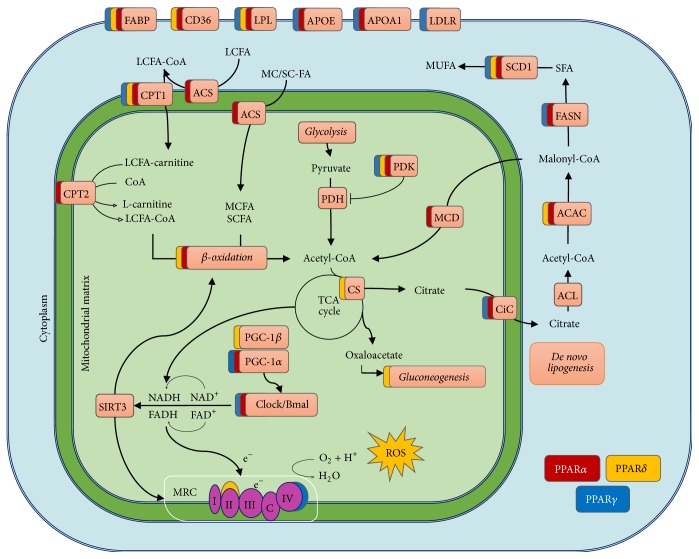
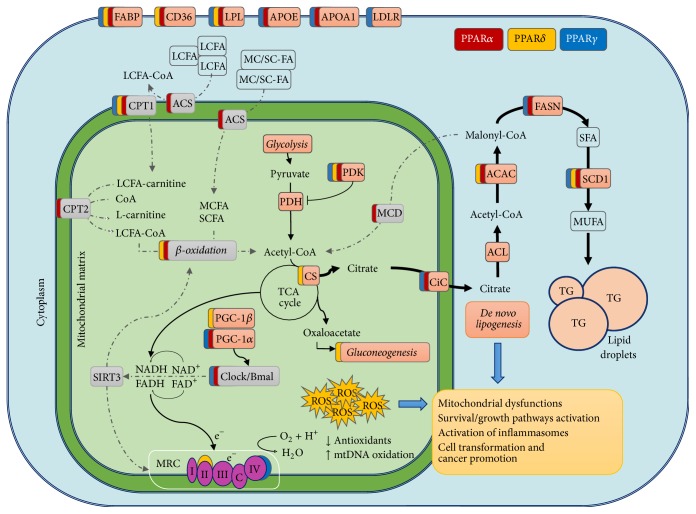
Metabolic related diseases, such as type 2 diabetes, metabolic syndrome, and nonalcoholic fatty liver disease (NAFLD), are widespread threats which bring about a significant burden of deaths worldwide, mainly due to cardiovascular events and cancer. The pathogenesis of these diseases is extremely complex, multifactorial, and only partially understood. As the main metabolic organ, the liver is central to maintain whole body energetic homeostasis. At the cellular level, mitochondria are the metabolic hub connecting and integrating all the main biochemical, hormonal, and inflammatory signaling pathways to fulfill the energetic and biosynthetic demand of the cell. In the liver, mitochondria metabolism needs to cope with the energetic regulation of the whole body. The nuclear receptors PPARs orchestrate lipid and glucose metabolism and are involved in a variety of diseases, from metabolic disorders to cancer. In this review, focus is placed on the roles of PPARs in the regulation of liver mitochondrial metabolism in physiology and pathology, from NAFLD to HCC.
代谢相关疾病,如2型糖尿病、代谢综合征和非酒精性脂肪性肝病(NAFLD),是广泛存在的威胁,在全球范围内造成了重大的死亡负担,主要是由于心血管事件和癌症。这些疾病的发病机制极其复杂,是多因素的,目前仅得到部分理解。作为主要的代谢器官,肝脏对于维持全身能量稳态至关重要。在细胞水平上,线粒体是连接和整合所有主要生化、激素和炎症信号通路的代谢枢纽,以满足细胞的能量和生物合成需求。在肝脏中,线粒体代谢需要应对全身的能量调节。核受体过氧化物酶体增殖物激活受体(PPARs)协调脂质和葡萄糖代谢,并参与从代谢紊乱到癌症等多种疾病。在本综述中,重点关注PPARs在生理和病理状态下(从NAFLD到肝癌)对肝脏线粒体代谢的调节作用。