Hausen Matheus, Soares Pedro Paulo, Araújo Marcus Paulo, Porto Flávia, Franchini Emerson, Bridge Craig Alan, Gurgel Jonas
Graduate Program on Cardiovascular Sciences, Medical Science Center, Fluminense Federal University, Niterói, Brazil.
Biomechanics Research Group, Fluminense Federal University, Niterói, Brazil.
PLoS One. 2017 Feb 3;12(2):e0171553. doi: 10.1371/journal.pone.0171553. eCollection 2017.
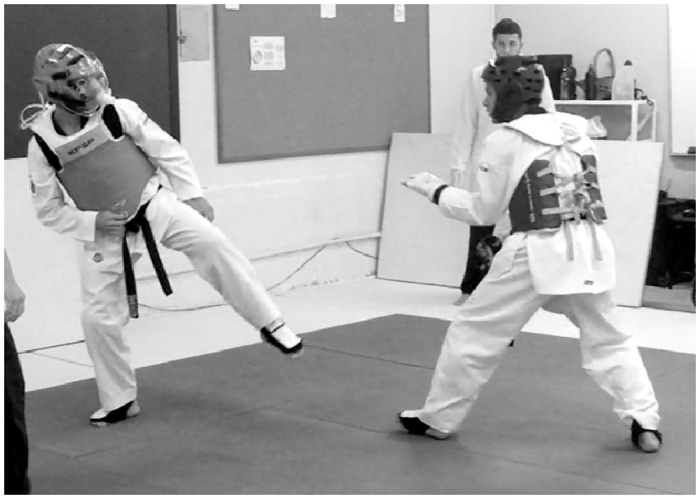
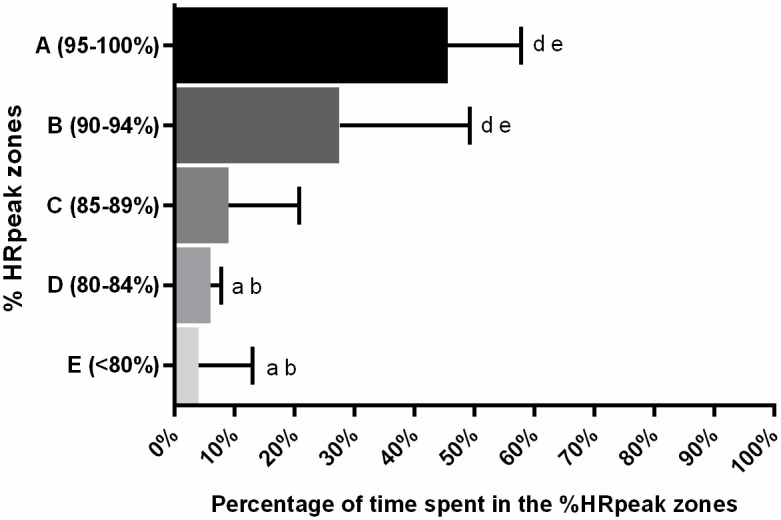
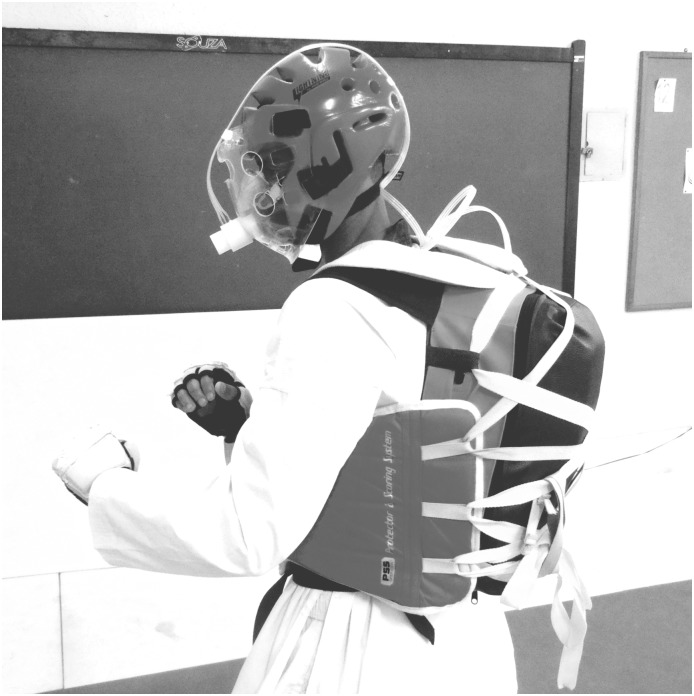
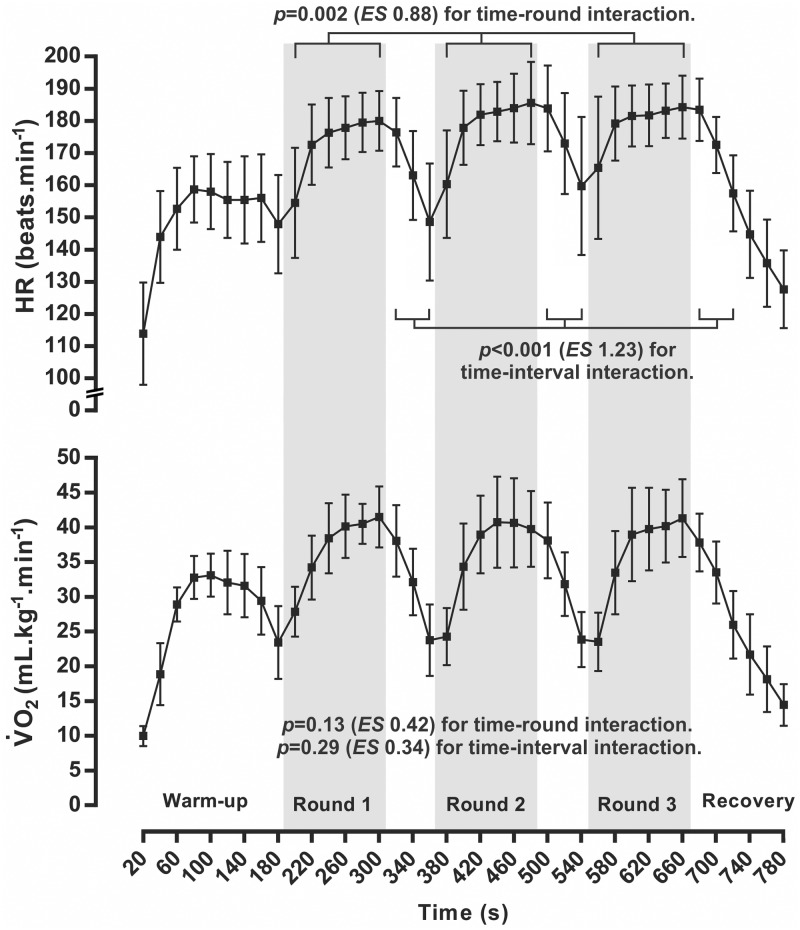
Combat simulations have served as an alternative framework to study the cardiorespiratory demands of the activity in combat sports, but this setting imposes rule-restrictions that may compromise the competitiveness of the bouts. The aim of this study was to assess the cardiorespiratory responses to a full-contact taekwondo combat simulation using a safe and externally valid competitive setting. Twelve male national level taekwondo athletes visited the laboratory on two separate occasions. On the first visit, anthropometric and running cardiopulmonary exercise assessments were performed. In the following two to seven days, participants performed a full-contact combat simulation, using a specifically designed gas analyser protector. Oxygen uptake ([Formula: see text]), heart rate (HR) and capillary blood lactate measurements ([La-]) were obtained. Time-motion analysis was performed to compare activity profile. The simulation yielded broadly comparable activity profiles to those performed in competition, a mean [Formula: see text] of 36.6 ± 3.9 ml.kg-1.min-1 (73 ± 6% [Formula: see text]) and mean HR of 177 ± 10 beats.min-1 (93 ± 5% HRPEAK). A peak [Formula: see text] of 44.8 ± 5.0 ml.kg-1.min-1 (89 ± 5% [Formula: see text]), a peak heart rate of 190 ± 13 beats.min-1 (98 ± 3% HRmax) and peak [La-] of 12.3 ± 2.9 mmol.L-1 was elicited by the bouts. Regarding time-motion analysis, combat simulation presented a similar exchange time, a shorter preparation time and a longer exchange-preparation ratio. Taekwondo combats capturing the full-contact competitive elements of a bout elicit moderate to high cardiorespiratory demands on the competitors. These data are valuable to assist preparatory strategies within the sport.
战斗模拟已成为研究格斗运动中心肺需求的替代框架,但这种环境存在规则限制,可能会影响比赛的竞争力。本研究的目的是在安全且外部有效的竞争环境下,评估全接触跆拳道战斗模拟中的心肺反应。12名国家级男子跆拳道运动员分两次前往实验室。第一次到访时,进行了人体测量和跑步心肺运动评估。在接下来的两到七天内,参与者使用专门设计的气体分析仪保护器进行了全接触战斗模拟。获取了摄氧量([公式:见正文])、心率(HR)和毛细血管血乳酸测量值([La-])。进行了时间动作分析以比较活动概况。该模拟产生的活动概况与比赛中的活动概况大致可比,平均[公式:见正文]为36.6±3.9毫升·千克-1·分钟-1(73±6%[公式:见正文]),平均心率为177±10次·分钟-1(93±5%HRPEAK)。比赛引发的峰值[公式:见正文]为44.8±5.0毫升·千克-1·分钟-1(89±5%[公式:见正文]),峰值心率为190±13次·分钟-1(98±3%HRmax),峰值[La-]为12.3±2.9毫摩尔·升-1。关于时间动作分析,战斗模拟呈现出相似的交换时间、更短的准备时间和更长的交换-准备比。捕捉比赛全接触竞争元素的跆拳道战斗对参赛者产生中度至高心肺需求。这些数据对于协助该运动中的准备策略很有价值。