Instituto de Investigación en Biomedicina de Buenos Aires, National Scientific and Technical Research Council (CONICET), Partner Institute of the Max Planck Society, Buenos Aires, Argentina.
Servicio de Cirugía Plástica, Hospital Austral, Derqui, Argentina.
Stem Cells Transl Med. 2017 Jan;6(1):161-173. doi: 10.5966/sctm.2016-0014. Epub 2016 Aug 2.
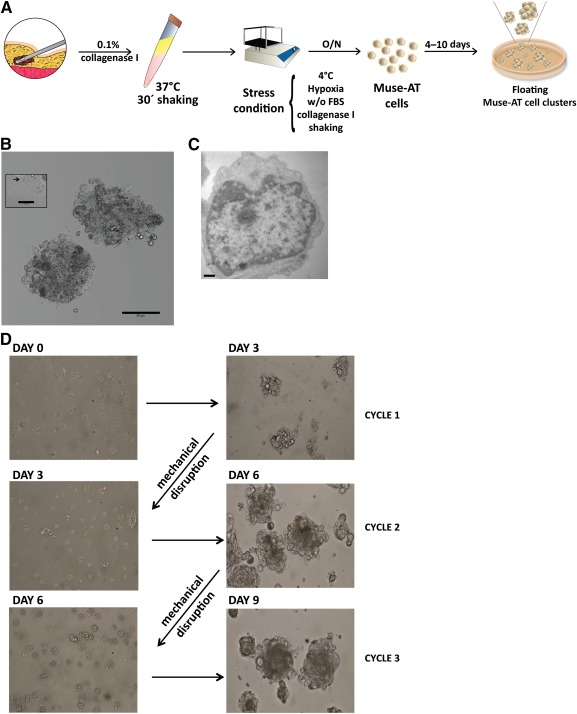
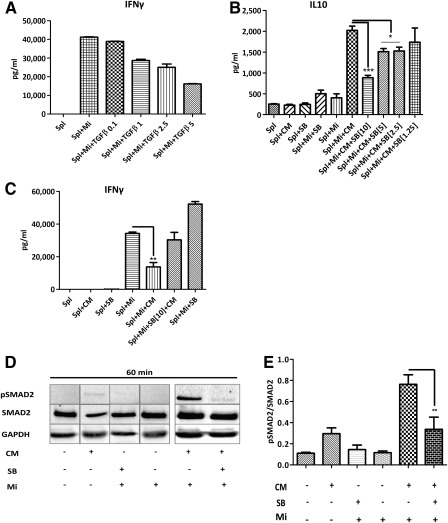
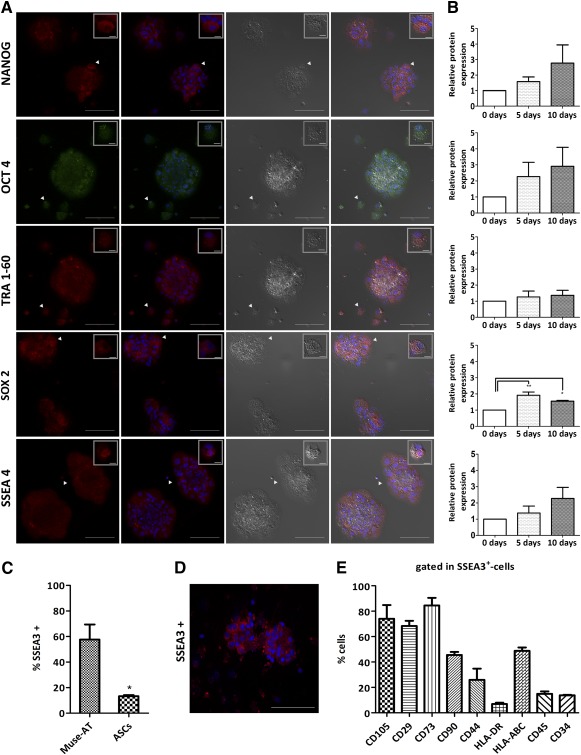
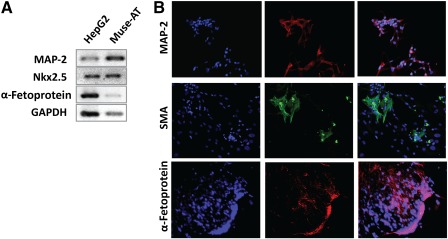
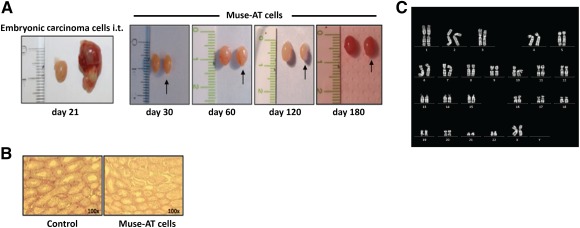
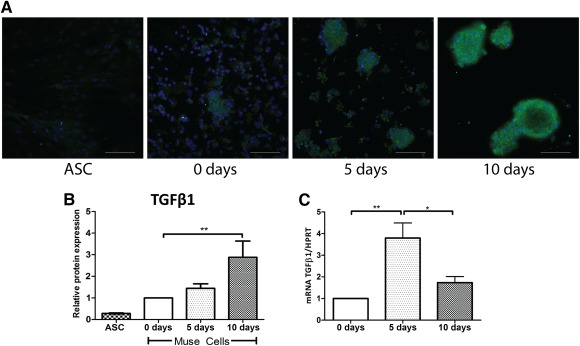
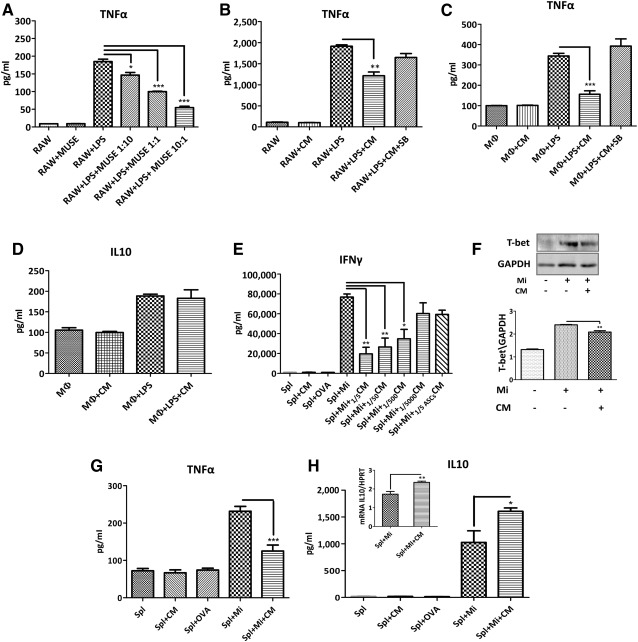
Adult mesenchymal stromal cell-based interventions have shown promising results in a broad range of diseases. However, their use has faced limited effectiveness owing to the low survival rates and susceptibility to environmental stress on transplantation. We describe the cellular and molecular characteristics of multilineage-differentiating stress-enduring (Muse) cells derived from adipose tissue (AT), a subpopulation of pluripotent stem cells isolated from human lipoaspirates. Muse-AT cells were efficiently obtained using a simple, fast, and affordable procedure, avoiding cell sorting and genetic manipulation methods. Muse-AT cells isolated under severe cellular stress, expressed pluripotency stem cell markers and spontaneously differentiated into the three germ lineages. Muse-AT cells grown as spheroids have a limited proliferation rate, a diameter of ∼15 µm, and ultrastructural organization similar to that of embryonic stem cells. Muse-AT cells evidenced high stage-specific embryonic antigen-3 (SSEA-3) expression (∼60% of cells) after 7-10 days growing in suspension and did not form teratomas when injected into immunodeficient mice. SSEA-3 -Muse-AT cells expressed CD105, CD29, CD73, human leukocyte antigen (HLA) class I, CD44, and CD90 and low levels of HLA class II, CD45, and CD34. Using lipopolysaccharide-stimulated macrophages and antigen-challenged T-cell assays, we have shown that Muse-AT cells have anti-inflammatory activities downregulating the secretion of proinflammatory cytokines, such as interferon-γ and tumor necrosis factor-α. Muse-AT cells spontaneously gained transforming growth factor-β1 expression that, in a phosphorylated SMAD2-dependent manner, might prove pivotal in their observed immunoregulatory activity through decreased expression of T-box transcription factor in T cells. Collectively, the present study has demonstrated the feasibility and efficiency of obtaining Muse-AT cells that can potentially be harnessed as immunoregulators to treat immune-related disorders. Stem Cells Translational Medicine 2017;6:161-173.
基于成人间充质基质细胞的干预措施在广泛的疾病中显示出了有前景的结果。然而,由于在移植后存活率低和易受环境压力的影响,其应用受到了限制。我们描述了从脂肪组织(AT)中分离出的多能干细胞亚群多系分化应激耐受(Muse)细胞的细胞和分子特征。Muse-AT 细胞是通过一种简单、快速且经济实惠的方法从人脂肪抽吸物中分离出来的,避免了细胞分选和基因操作方法。在严重的细胞应激下分离出来的 Muse-AT 细胞表达多能干细胞标志物,并自发分化为三个胚层。作为球体生长的 Muse-AT 细胞增殖速度有限,直径约为 15 µm,并且超微结构组织类似于胚胎干细胞。在悬浮培养 7-10 天后,Muse-AT 细胞表现出高阶段特异性胚胎抗原-3(SSEA-3)表达(约 60%的细胞),并且当注入免疫缺陷小鼠时不会形成畸胎瘤。SSEA-3 -Muse-AT 细胞表达 CD105、CD29、CD73、人白细胞抗原(HLA)I 类、CD44 和 CD90,并且低水平表达 HLA Ⅱ类、CD45 和 CD34。通过使用脂多糖刺激的巨噬细胞和抗原挑战的 T 细胞测定,我们已经表明 Muse-AT 细胞具有抗炎活性,可以下调干扰素-γ和肿瘤坏死因子-α等促炎细胞因子的分泌。Muse-AT 细胞自发获得转化生长因子-β1 的表达,以磷酸化 SMAD2 依赖性的方式,可能通过在 T 细胞中降低 T 盒转录因子的表达来证明其在观察到的免疫调节活性中的关键作用。总的来说,本研究证明了获得 Muse-AT 细胞的可行性和效率,这些细胞可能被用作免疫调节剂来治疗与免疫相关的疾病。《干细胞转化医学》2017 年;6:161-173。