Biology Education Research Lab, School of Life Sciences, Arizona State University, Tempe, AZ 85281.
Biology Education Research Lab, School of Life Sciences, Arizona State University, Tempe, AZ 85281
CBE Life Sci Educ. 2017 Spring;16(1). doi: 10.1187/cbe.16-08-0265.
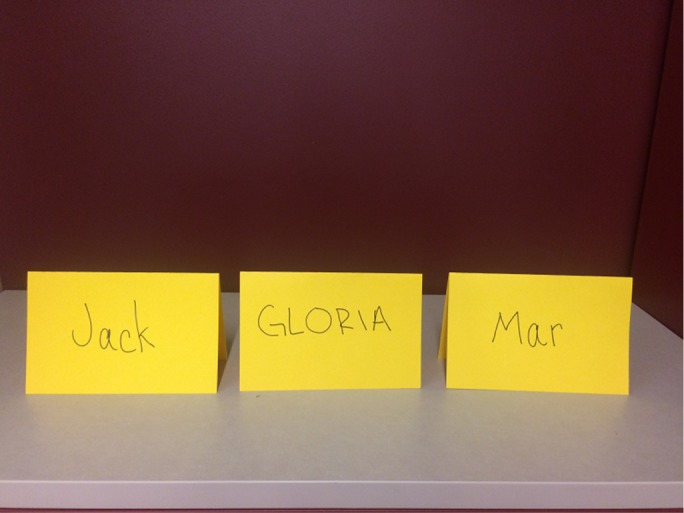
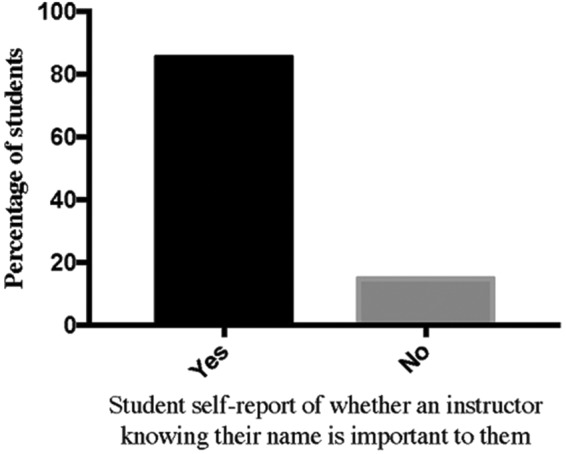
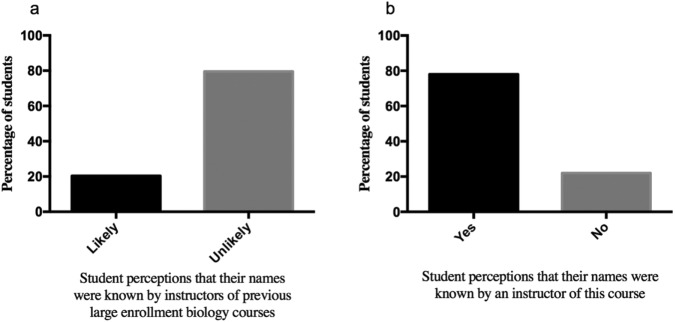
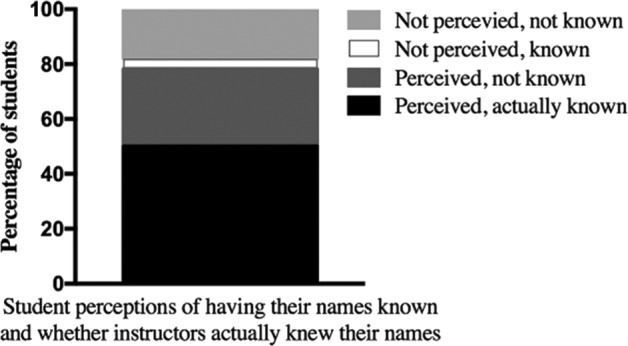
Learning student names has been promoted as an inclusive classroom practice, but it is unknown whether students value having their names known by an instructor. We explored this question in the context of a high-enrollment active-learning undergraduate biology course. Using surveys and semistructured interviews, we investigated whether students perceived that instructors know their names, the importance of instructors knowing their names, and how instructors learned their names. We found that, while only 20% of students perceived their names were known in previous high-enrollment biology classes, 78% of students perceived that an instructor of this course knew their names. However, instructors only knew 53% of names, indicating that instructors do not have to know student names in order for students to perceive that their names are known. Using grounded theory, we identified nine reasons why students feel that having their names known is important. When we asked students how they perceived instructors learned their names, the most common response was instructor use of name tents during in-class discussion. These findings suggest that students can benefit from perceiving that instructors know their names and name tents could be a relatively easy way for students to think that instructors know their names.
学习学生的名字已被推广为一种包容的课堂实践,但尚不清楚学生是否重视教师了解他们的名字。我们在一门高招生的主动学习本科生物学课程的背景下探讨了这个问题。我们通过调查和半结构化访谈,研究了学生是否认为教师知道他们的名字、教师了解他们名字的重要性,以及教师是如何了解他们的名字的。我们发现,尽管只有 20%的学生在前几节高招生的生物学课上认为教师知道他们的名字,但 78%的学生认为这门课的教师知道他们的名字。然而,教师只知道 53%的名字,这表明教师不必知道学生的名字,学生才会认为他们的名字是为人所知的。我们使用扎根理论确定了学生认为了解他们的名字很重要的九个原因。当我们询问学生他们认为教师是如何了解他们的名字时,最常见的回答是教师在课堂讨论中使用名字标签。这些发现表明,学生可以从教师了解他们的名字中受益,而名字标签可能是学生认为教师了解他们名字的一种相对简单的方式。