Yeware Amar M, Shurpali Ketaki D, Athalye Meghana C, Sarkar Dhiman
Combi Chem-Bio Resource Center, Organic Chemistry Division, CSIR-National Chemical Laboratory Pune, India.
Front Microbiol. 2017 Jan 30;8:105. doi: 10.3389/fmicb.2017.00105. eCollection 2017.
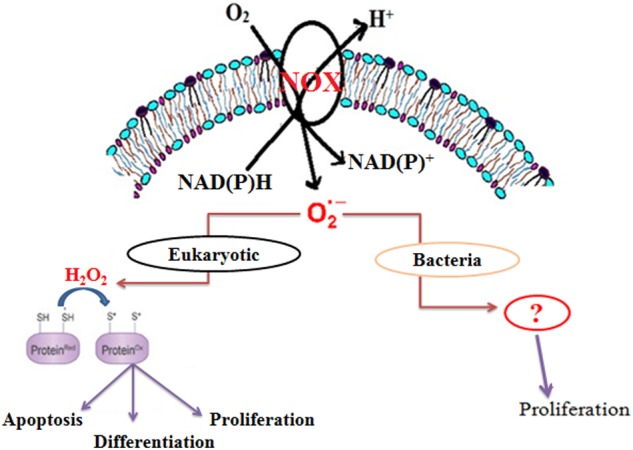
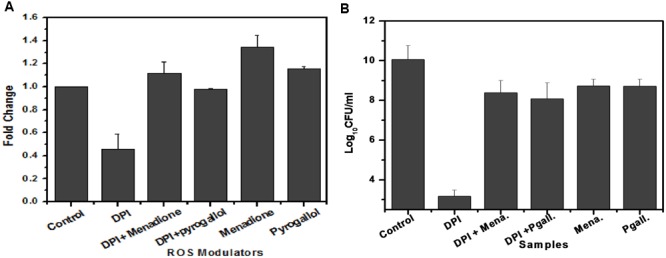
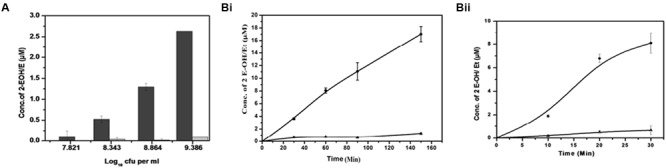
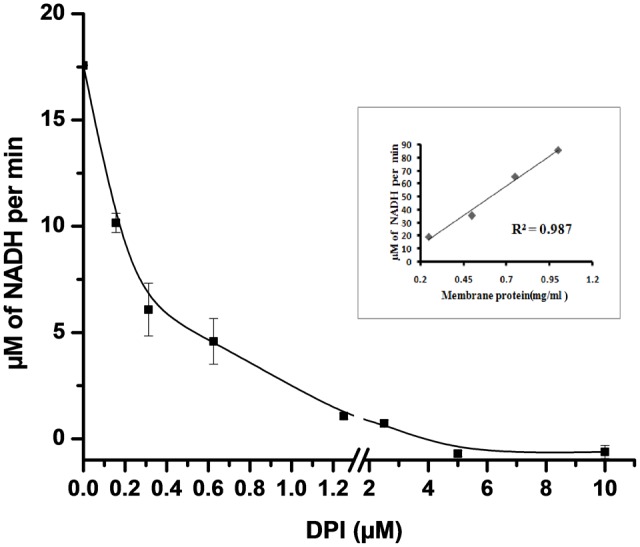
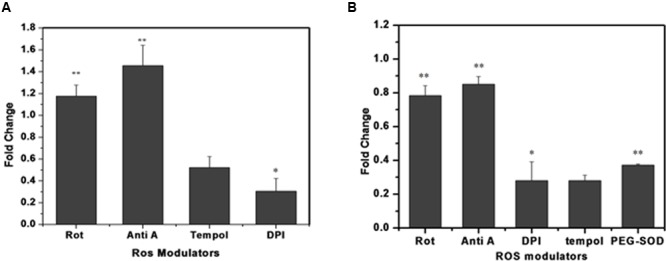
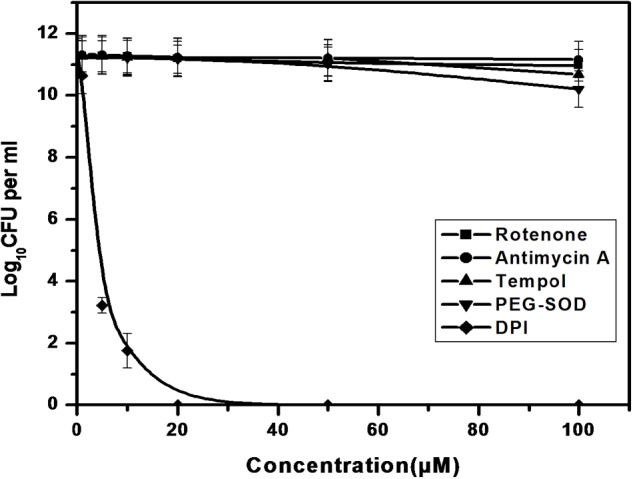
Superoxide generation is inevitable in aerobic organisms, most of which have developed mechanisms to detoxify superoxides. However, its significance has not been clearly understood in mycobacteria. This study demonstrates that NADH oxidase is the major source of superoxide in and elucidates the involvement of superoxide in growth. The maximum inhibition of superoxide generation was observed in the presence of diphenyleneiodonium chloride (DPI), an NADH oxidase inhibitor, compared to other standard inhibitors. After incubation for 24 h, the number of colony forming units (CFUs) was reduced by 6.8 log compared to the untreated culture. The inhibitory effect of DPI on was reversed when the same culture was supplemented with menadione and pyrogallol, which are superoxide generators. Thus, this study reports the source of superoxide generation and its involvement in the growth of .
在需氧生物中,超氧化物的产生是不可避免的,大多数需氧生物已经进化出了使超氧化物解毒的机制。然而,超氧化物在分枝杆菌中的重要性尚未得到明确的认识。本研究表明,NADH氧化酶是[具体分枝杆菌名称未给出]中超氧化物的主要来源,并阐明了超氧化物在[具体分枝杆菌名称未给出]生长中的作用。与其他标准抑制剂相比,在存在NADH氧化酶抑制剂二苯基碘鎓氯化物(DPI)的情况下,观察到超氧化物产生的最大抑制。孵育24小时后,与未处理的培养物相比,菌落形成单位(CFU)的数量减少了6.8个对数。当向同一培养物中添加超氧化物生成剂甲萘醌和邻苯三酚时,DPI对[具体分枝杆菌名称未给出]的抑制作用被逆转。因此,本研究报道了超氧化物产生的来源及其在[具体分枝杆菌名称未给出]生长中的作用。