Wang Xifan, Hui Yan, Zhao Liang, Hao Yanling, Guo Huiyuan, Ren Fazheng
Beijing Advanced Innovation Center for Food Nutrition and Human Health, China Agricultural University, Beijing, China.
Key Laboratory of Functional Dairy, Co-constructed by ministry of Education and Beijing Government, College of Food Science & Nutritional Engineering, China Agricultural University, Beijing, China.
PLoS One. 2017 Feb 15;12(2):e0171721. doi: 10.1371/journal.pone.0171721. eCollection 2017.
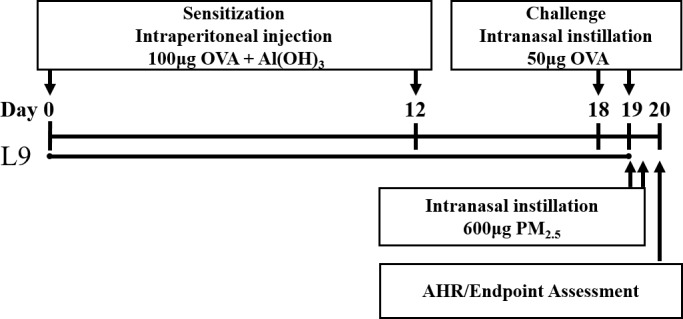
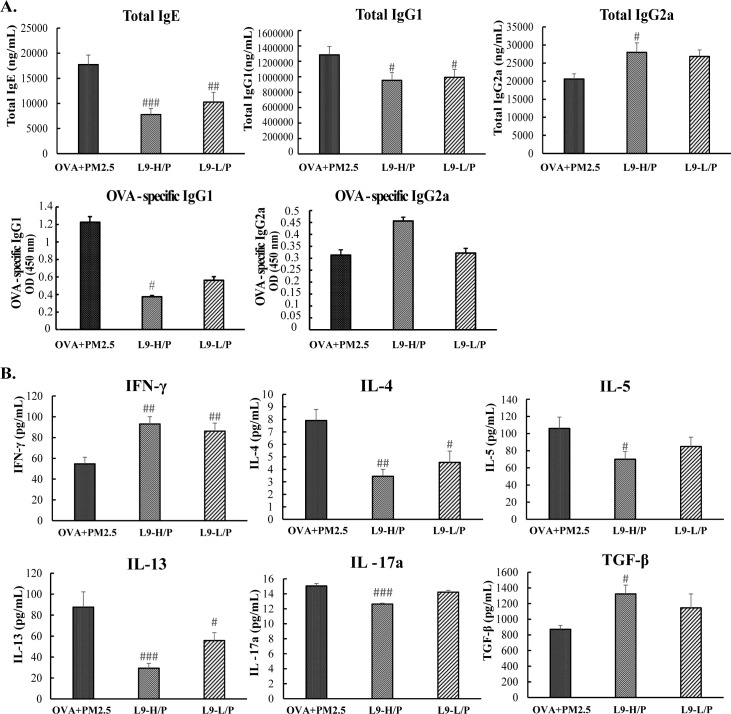
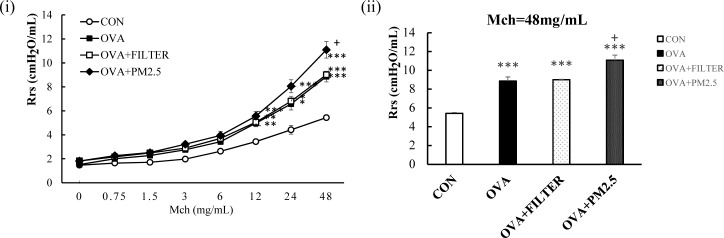
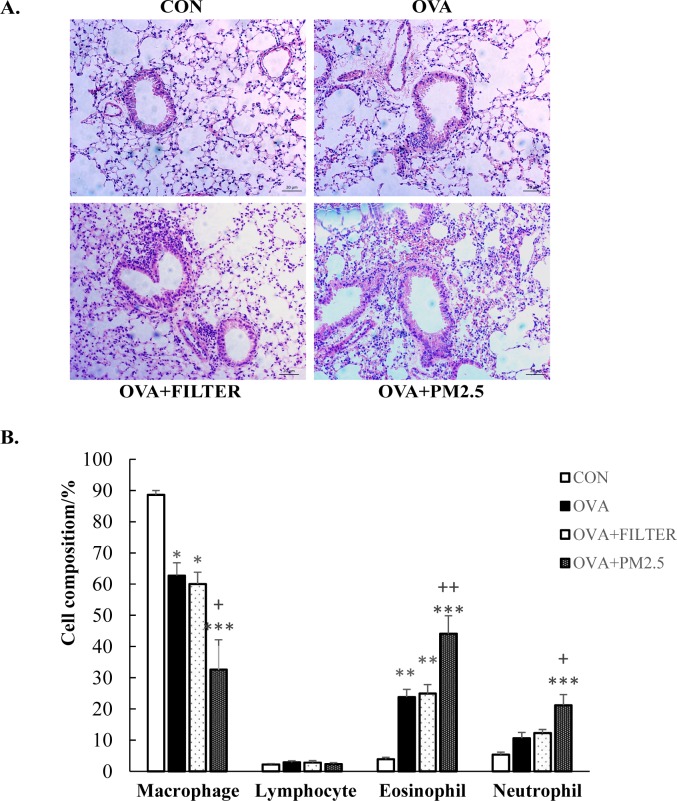
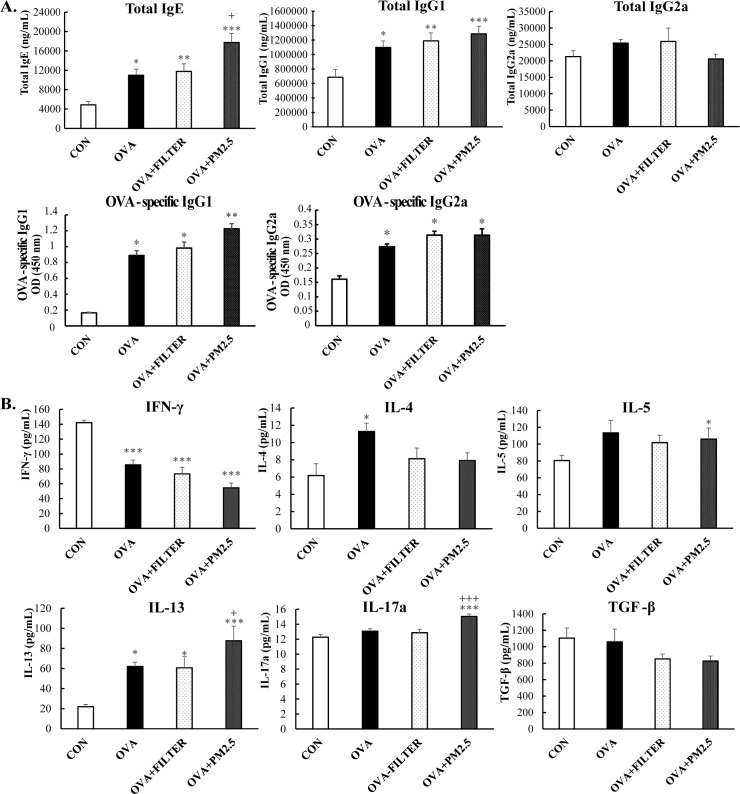
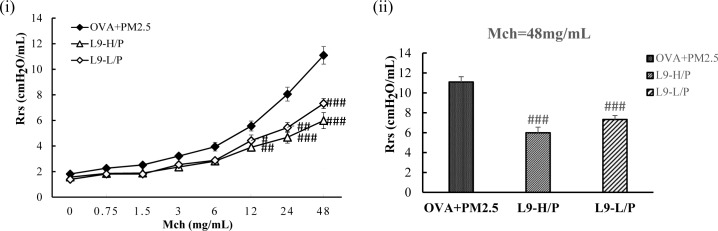
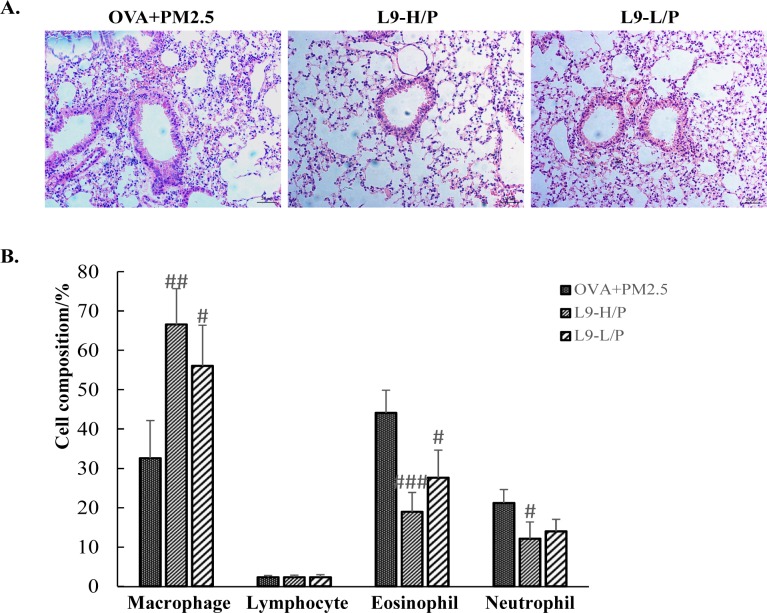
This study investigated allergy immunotherapy potential of Lactobacillus paracasei L9 to prevent or mitigate the particulate matter 2.5 (PM2.5) enhanced pre-existing asthma in mice. Firstly, we used a mouse model of asthma (a 21-day ovalbumin (OVA) sensitization and challenge model) followed by PM2.5 exposure twice on the same day of the last challenge. PM2.5 was collected from the urban area of Beijing and underwent analysis for metals and polycyclic aromatic hydrocarbon contents. The results showed that PM2.5 exposure enhanced airway hyper-responsiveness (AHR) and lead to a mixed Th2/ IL-17 response in asthmatic mice. Secondly, the PM2.5 exposed asthmatic mice were orally administered with L9 (4×10⁷, 4×10⁹ CFU/mouse, day) from the day of first sensitization to the endpoint, for 20 days, to investigate the potential mitigative effect of L9 on asthma. The results showed that L9 ameliorated PM2.5 exposure enhanced AHR with an approximate 50% decrease in total airway resistance response to methacholine (48 mg/ml). L9 also prevented the exacerbated eosinophil and neutrophil infiltration in bronchoalveolar lavage fluid (BALF), and decreased the serum level of total IgE and OVA-specific IgG1 by 0.44-fold and 0.3-fold, respectively. Additionally, cytokine production showed that L9 significantly decreased T-helper cell type 2 (Th2)-related cytokines (IL-4, -5, -13) and elevated levels of Th1 related IFN-γ in BALF. L9 also reduced the level of IL-17A and increased the level of TGF-β. Taken together, these results indicate that L9 may exert the anti-allergic benefit, possibly through rebalancing Th1/Th2 immune response and modulating IL-17 pro-inflammatory immune response. Thus, L9 is a promising candidate for preventing PM exposure enhanced pre-existing asthma.
本研究调查了副干酪乳杆菌L9的过敏免疫治疗潜力,以预防或减轻细颗粒物2.5(PM2.5)加重小鼠已有的哮喘。首先,我们使用哮喘小鼠模型(21天卵清蛋白(OVA)致敏和激发模型),并在最后一次激发的同一天对其进行两次PM2.5暴露。PM2.5取自北京城区,并对其金属和多环芳烃含量进行了分析。结果显示,暴露于PM2.5会增强气道高反应性(AHR),并在哮喘小鼠中导致Th2/IL-17混合反应。其次,从首次致敏日至实验终点,对暴露于PM2.5的哮喘小鼠每天口服L9(4×107、4×109 CFU/只小鼠),持续20天,以研究L9对哮喘的潜在缓解作用。结果显示,L9改善了PM2.5暴露增强的AHR,对乙酰甲胆碱(48 mg/ml)的总气道阻力反应降低了约50%。L9还防止了支气管肺泡灌洗液(BALF)中嗜酸性粒细胞和中性粒细胞浸润的加剧,并使血清总IgE和OVA特异性IgG1水平分别降低了0.44倍和0.3倍。此外,细胞因子产生情况表明,L9显著降低了支气管肺泡灌洗液中2型辅助性T细胞(Th2)相关细胞因子(IL-4、-5、-13)的水平,并提高了Th1相关的IFN-γ水平。L9还降低了IL-17A水平,提高了TGF-β水平。综上所述,这些结果表明,L9可能通过重新平衡Th1/Th2免疫反应和调节IL-17促炎免疫反应发挥抗过敏作用。因此,L9是预防PM暴露加重已有哮喘的一个有前景的候选物。