O'Brien Elizabeth, Holt Marilyn E, Thompson Matthew K, Salay Lauren E, Ehlinger Aaron C, Chazin Walter J, Barton Jacqueline K
Division of Chemistry and Chemical Engineering, California Institute of Technology, Pasadena, CA 91125, USA.
Departments of Biochemistry and Chemistry, Center for Structural Biology, Vanderbilt University, Nashville, TN 37235, USA.
Science. 2017 Feb 24;355(6327). doi: 10.1126/science.aag1789.
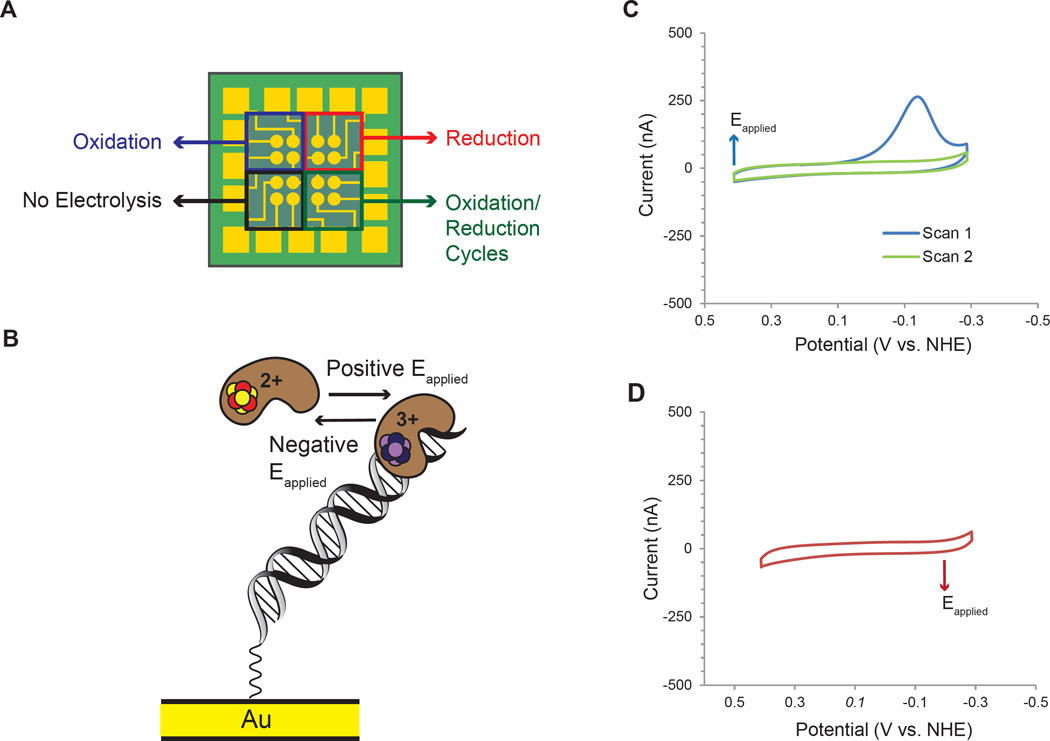
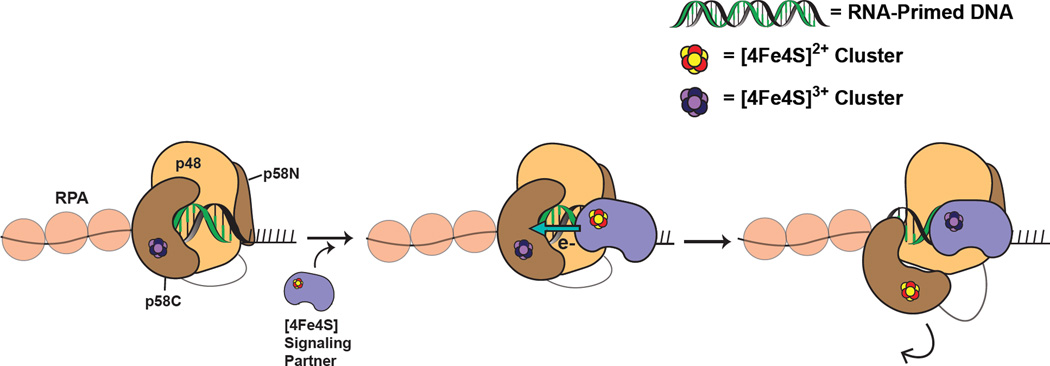
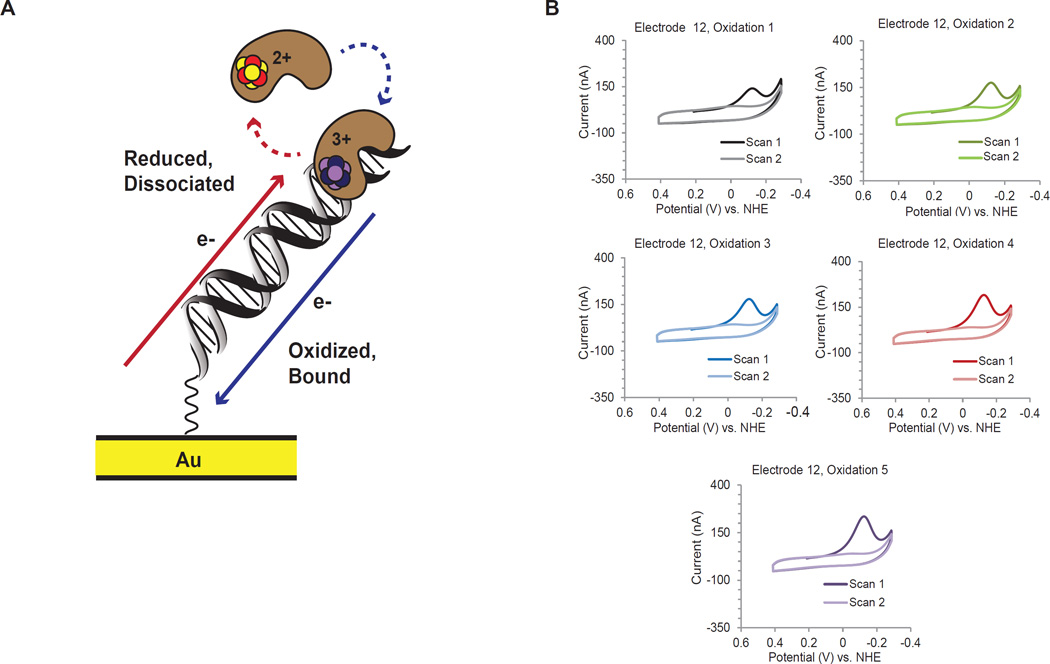
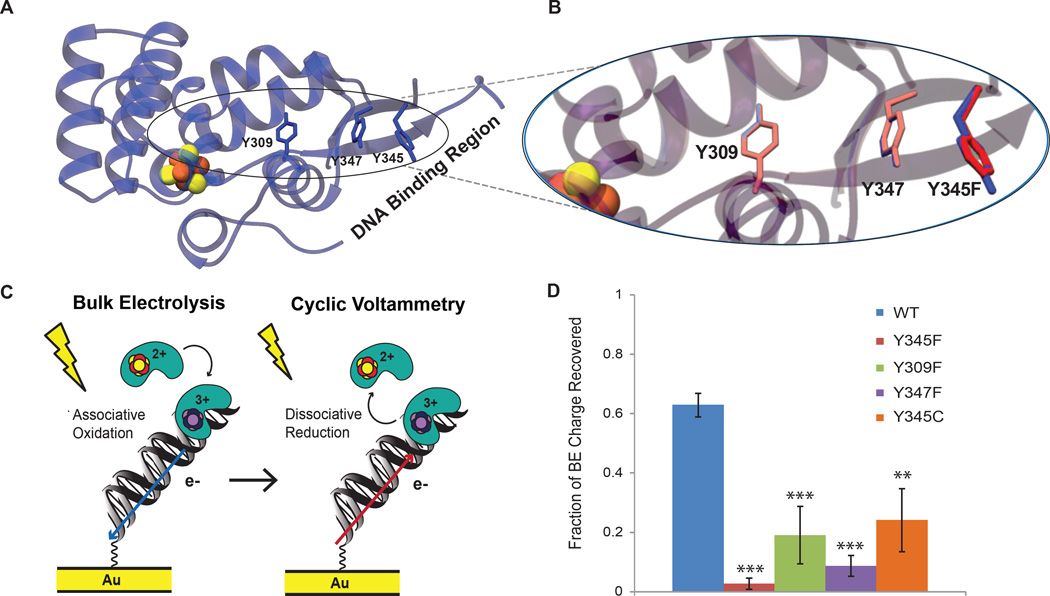
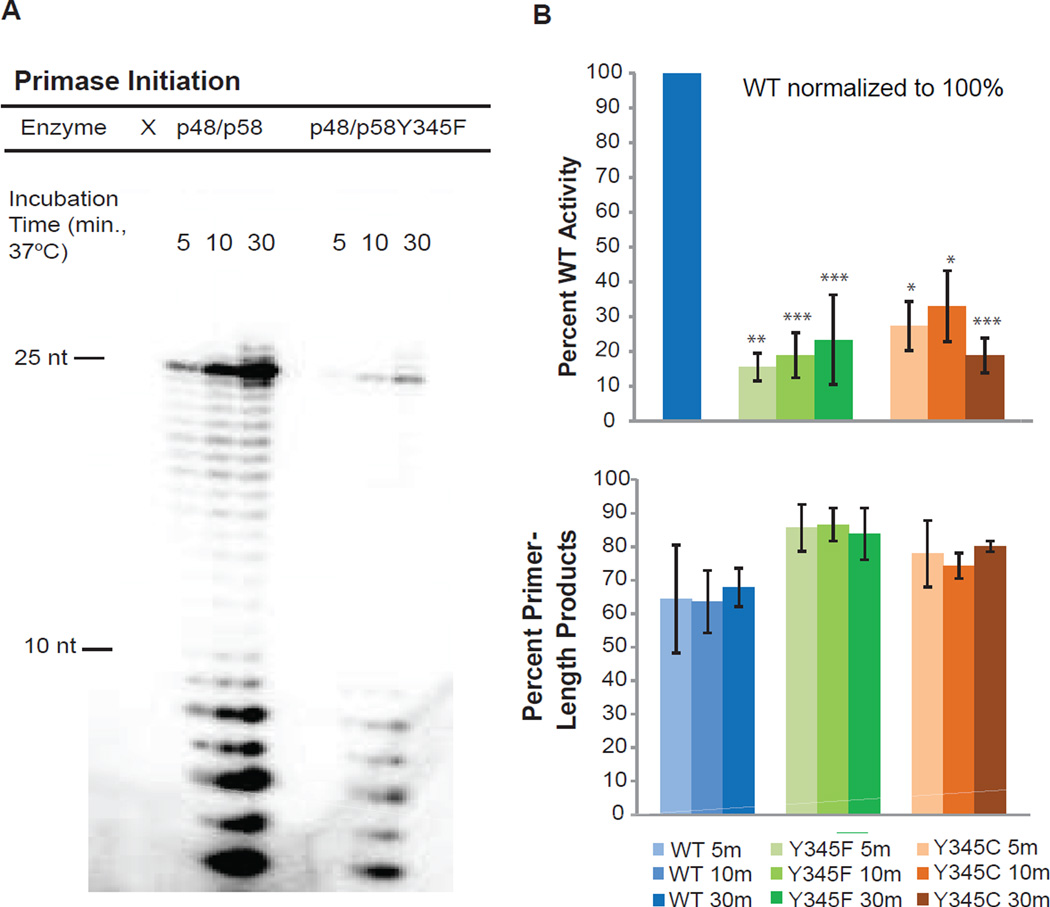
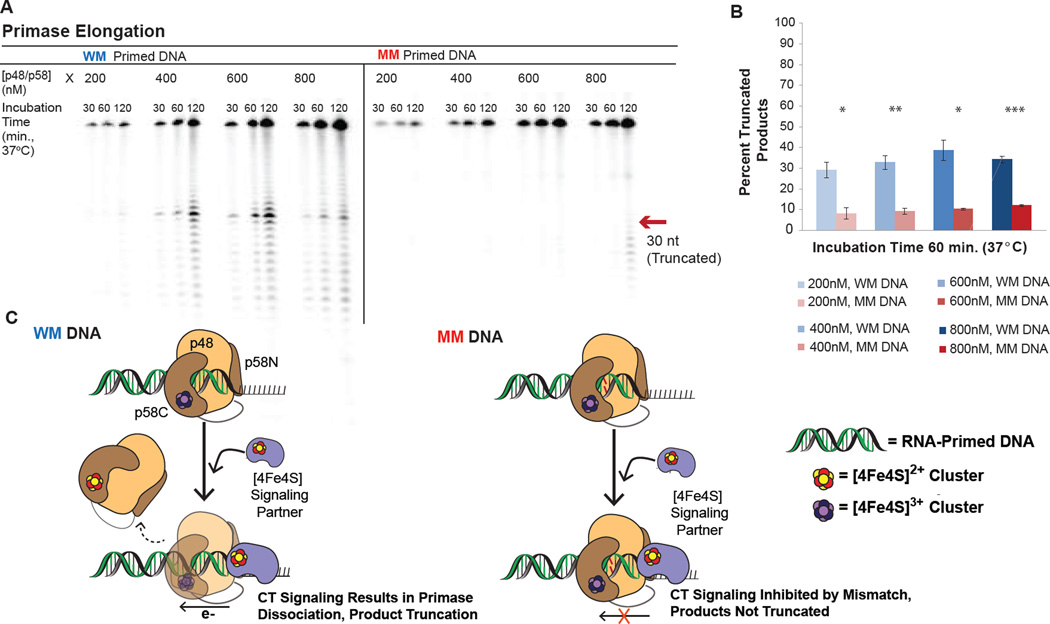
DNA charge transport chemistry offers a means of long-range, rapid redox signaling. We demonstrate that the [4Fe4S] cluster in human DNA primase can make use of this chemistry to coordinate the first steps of DNA synthesis. Using DNA electrochemistry, we found that a change in oxidation state of the [4Fe4S] cluster acts as a switch for DNA binding. Single-atom mutations that inhibit this charge transfer hinder primase initiation without affecting primase structure or polymerization. Generating a single base mismatch in the growing primer duplex, which attenuates DNA charge transport, inhibits primer truncation. Thus, redox signaling by [4Fe4S] clusters using DNA charge transport regulates primase binding to DNA and illustrates chemistry that may efficiently drive substrate handoff between polymerases during DNA replication.
DNA电荷传输化学提供了一种远程、快速氧化还原信号传导的方式。我们证明,人类DNA引发酶中的[4Fe4S]簇可利用这种化学作用来协调DNA合成的起始步骤。通过DNA电化学,我们发现[4Fe4S]簇氧化态的变化充当DNA结合的开关。抑制这种电荷转移的单原子突变会阻碍引发酶起始,而不影响引发酶结构或聚合作用。在正在生长的引物双链体中产生单个碱基错配会减弱DNA电荷传输,从而抑制引物截短。因此,利用DNA电荷传输的[4Fe4S]簇进行的氧化还原信号传导调节引发酶与DNA的结合,并阐明了在DNA复制过程中可能有效驱动聚合酶之间底物交接的化学作用。