Kotay Shireen, Chai Weidong, Guilford William, Barry Katie, Mathers Amy J
Division of Infectious Diseases and International Health, Department of Medicine, University of Virginia Health System, Charlottesville, Virginia, USA.
Department of Biomedical Engineering, University of Virginia, Charlottesville, Virginia, USA.
Appl Environ Microbiol. 2017 Mar 31;83(8). doi: 10.1128/AEM.03327-16. Print 2017 Apr 15.
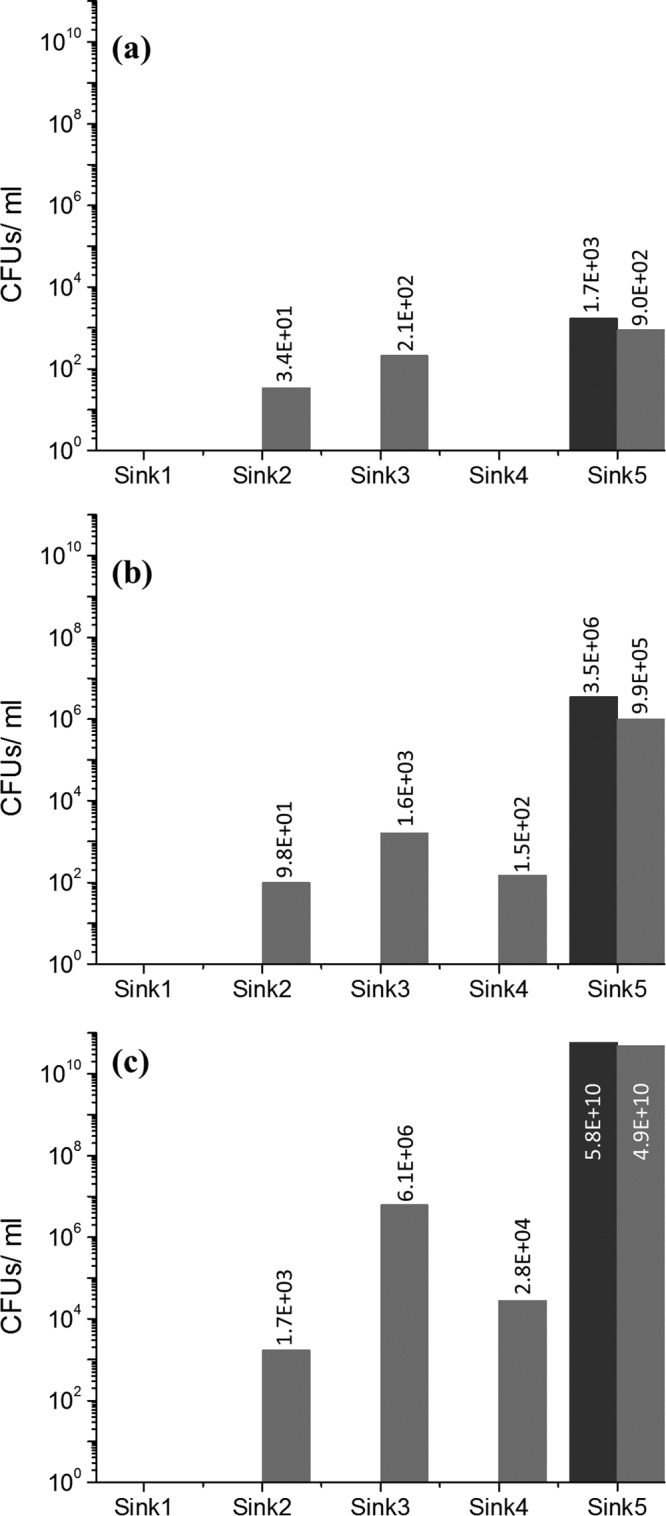
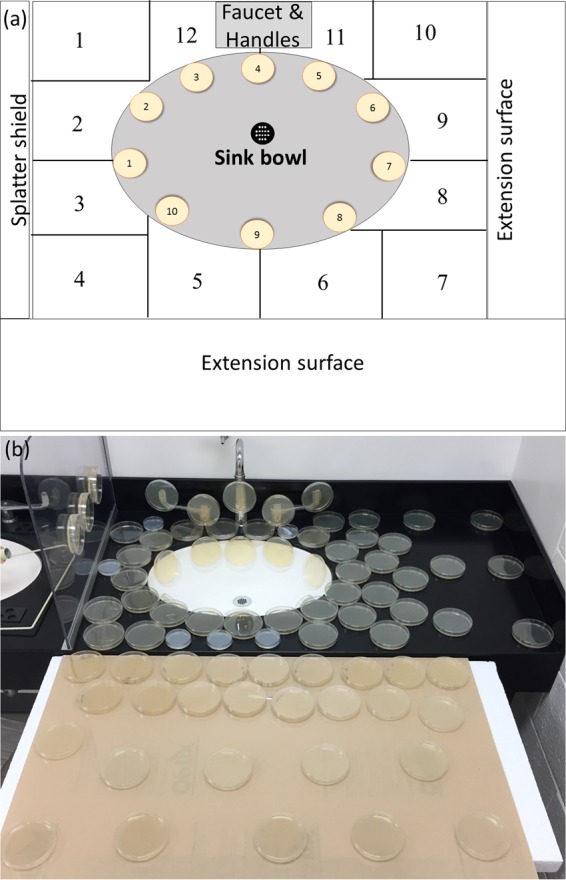
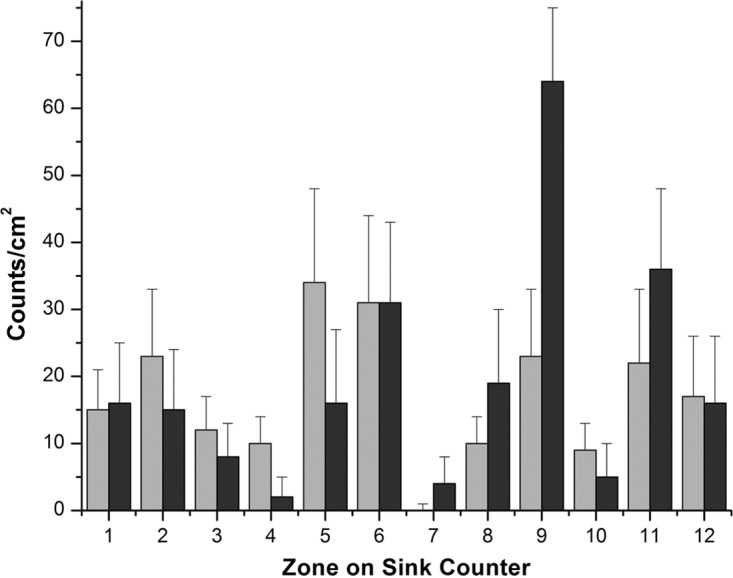
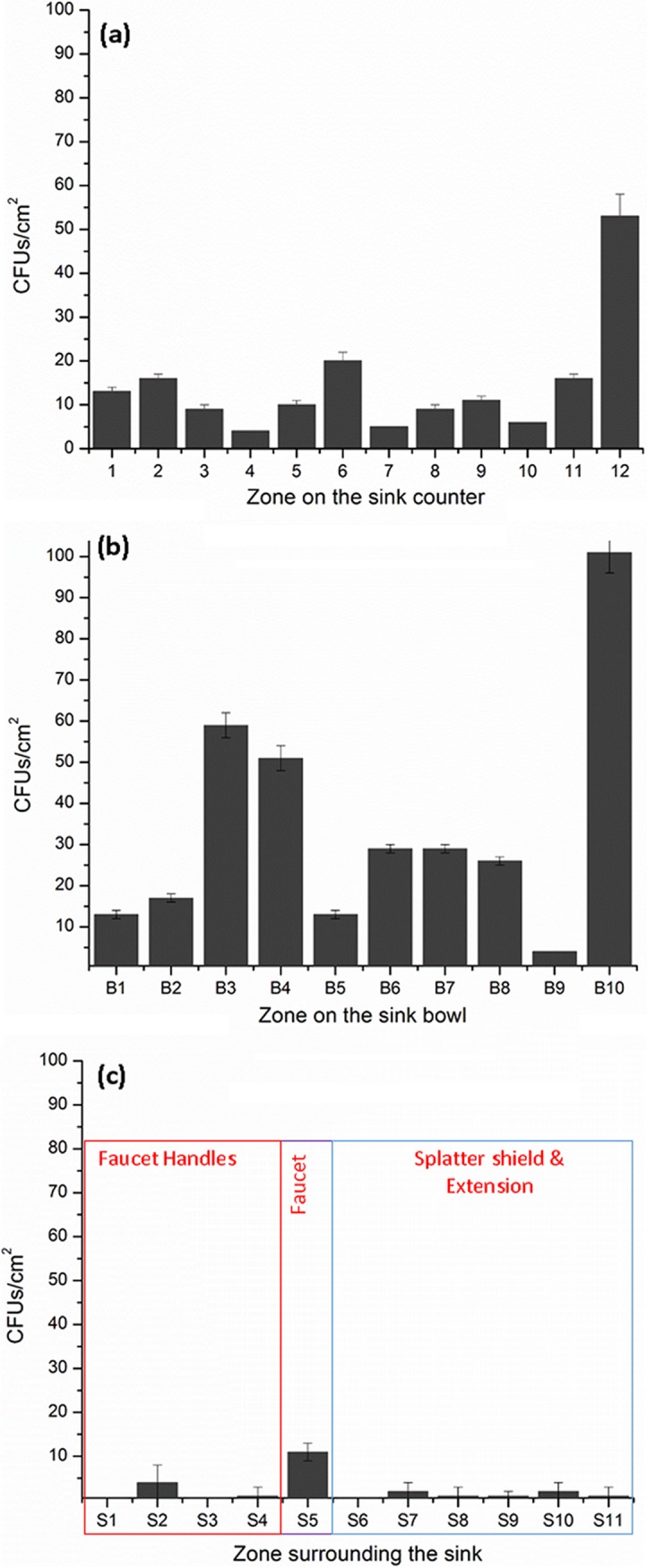
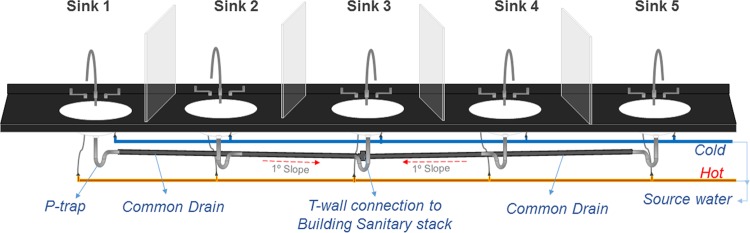
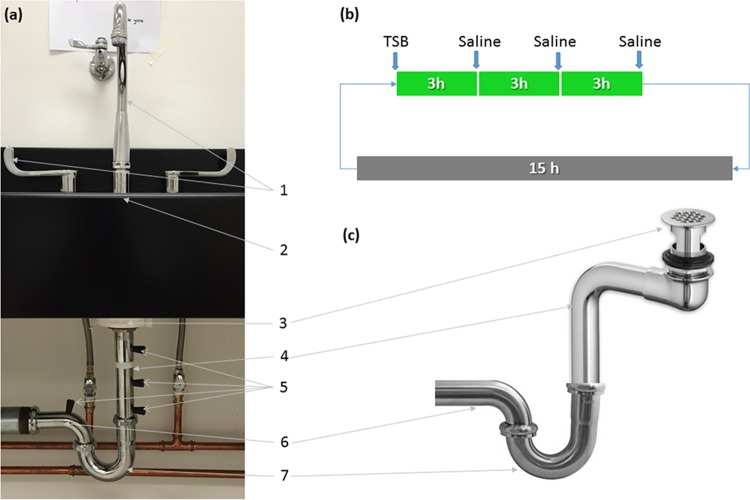
There have been an increasing number of reports implicating as often carrying genes of drug resistance from colonized sink traps to vulnerable hospitalized patients. However, the mechanism of transmission from the wastewater of the sink P-trap to patients remains poorly understood. Herein we report the use of a designated hand-washing sink lab gallery to model dispersion of green fluorescent protein (GFP)-expressing from sink wastewater to the surrounding environment. We found no dispersion of GFP-expressing directly from the P-trap to the sink basin or surrounding countertop with coincident water flow from a faucet. However, when the GFP-expressing cells were allowed to mature in the P-trap under conditions similar to those in a hospital environment, a GFP-expressing -containing putative biofilm extended upward over 7 days to reach the strainer. This subsequently resulted in droplet dispersion to the surrounding areas (<30 in.) during faucet operation. We also demonstrated that P-trap colonization could occur by retrograde transmission along a common pipe. We postulate that the organisms mobilize up to the strainer from the P-trap, resulting in droplet dispersion rather than dispersion directly from the P-trap. This work helps to further define the mode of transmission of bacteria from a P-trap reservoir to a vulnerable hospitalized patient. Many recent reports demonstrate that sink drain pipes become colonized with highly consequential multidrug-resistant bacteria, which then results in hospital-acquired infections. However, the mechanism of dispersal of bacteria from the sink to patients has not been fully elucidated. Through establishment of a unique sink gallery, this work found that a staged mode of transmission involving biofilm growth from the lower pipe to the sink strainer and subsequent splatter to the bowl and surrounding area occurs rather than splatter directly from the water in the lower pipe. We have also demonstrated that bacterial transmission can occur via connections in wastewater plumbing to neighboring sinks. This work helps to more clearly define the mechanism and risk of transmission from a wastewater source to hospitalized patients in a world with increasingly antibiotic-resistant bacteria that can thrive in wastewater environments and cause infections in vulnerable patients.
越来越多的报告表明,[具体细菌名称未给出]常常携带耐药基因,从已定植的水槽存水弯传播给易感染的住院患者。然而,从水槽P形存水弯的废水传播到患者的机制仍了解甚少。在此,我们报告利用一个专门设计的洗手水槽实验室通道,模拟表达绿色荧光蛋白(GFP)的[具体细菌名称未给出]从水槽废水扩散到周围环境的情况。我们发现,当水龙头流水时,表达GFP的[具体细菌名称未给出]不会直接从P形存水弯扩散到水槽盆或周围台面。然而,当表达GFP的[具体细菌名称未给出]细胞在类似于医院环境的条件下在P形存水弯中成熟时,含表达GFP的[具体细菌名称未给出]的假定生物膜在7天内向上延伸至滤网。随后,这导致在水龙头操作期间液滴扩散到周围区域(<30英寸)。我们还证明,P形存水弯的定植可通过沿共用管道的逆行传播发生。我们推测,这些微生物从P形存水弯向上移动到滤网,导致液滴扩散,而非直接从P形存水弯扩散。这项工作有助于进一步明确细菌从P形存水弯储库传播到易感染住院患者的传播方式。最近许多报告表明,水槽排水管被具有高度后果的多重耐药细菌定植,进而导致医院获得性感染。然而,细菌从水槽传播到患者的扩散机制尚未完全阐明。通过建立一个独特的水槽通道,这项工作发现,存在一种分阶段的传播模式,即生物膜从下部管道生长到水槽滤网,随后溅到水槽盆和周围区域,而不是直接从下部管道的水中溅出。我们还证明,细菌传播可通过废水管道连接到相邻水槽发生。在一个存在越来越多能在废水环境中繁衍生息并导致易感染患者感染的耐抗生素细菌的世界里,这项工作有助于更清楚地界定从废水源传播到住院患者的机制和风险。