Serafimidis Ioannis, Rodriguez-Aznar Eva, Lesche Mathias, Yoshioka Kazuaki, Takuwa Yoh, Dahl Andreas, Pan Duojia, Gavalas Anthony
Developmental Biology Laboratory, Biomedical Research Foundation of the Academy of Athens, Athens, Greece.
Paul Langerhans Institute Dresden of Helmholtz Center Munich at the University Clinic Carl Gustav Carus of TU Dresden, Helmholtz Zentrum München, German Research Center for Environmental Health, Neuherberg, Germany.
PLoS Biol. 2017 Mar 1;15(3):e2000949. doi: 10.1371/journal.pbio.2000949. eCollection 2017 Mar.
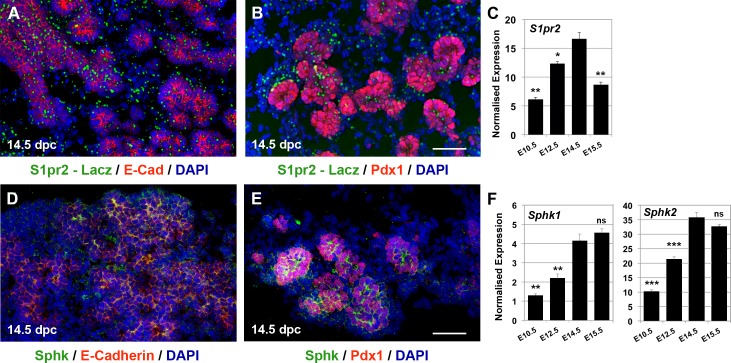
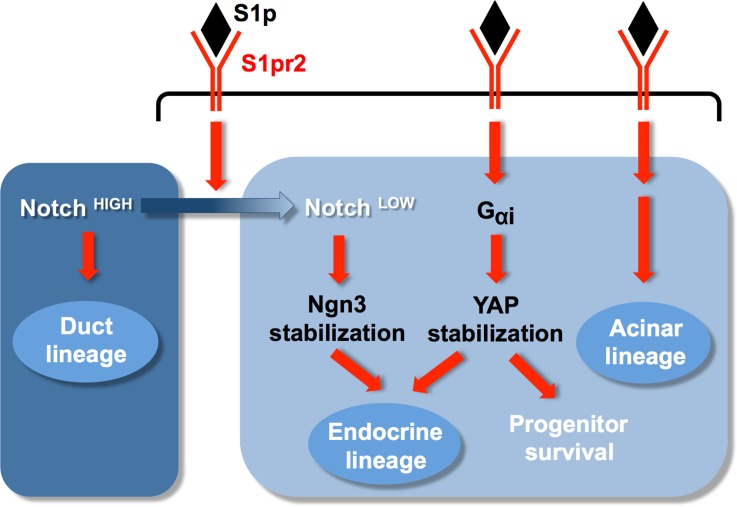
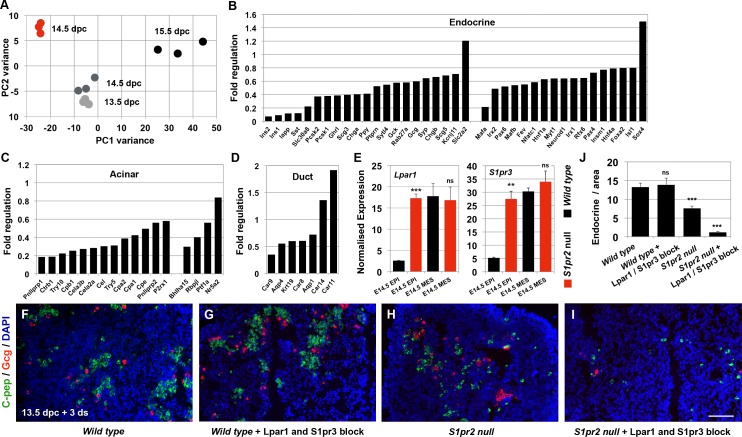
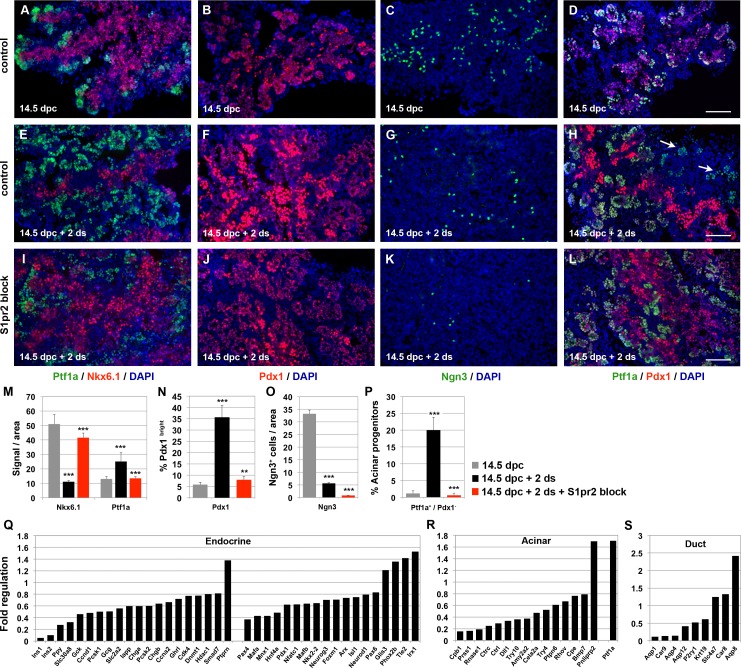
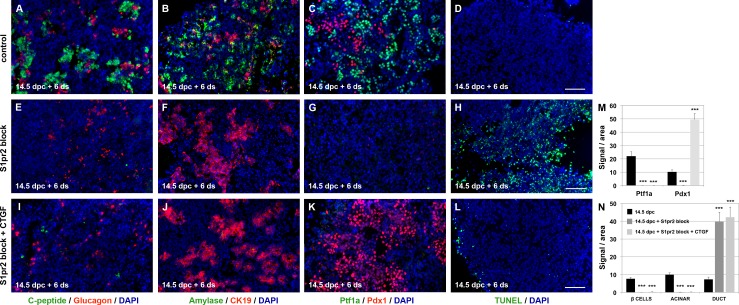
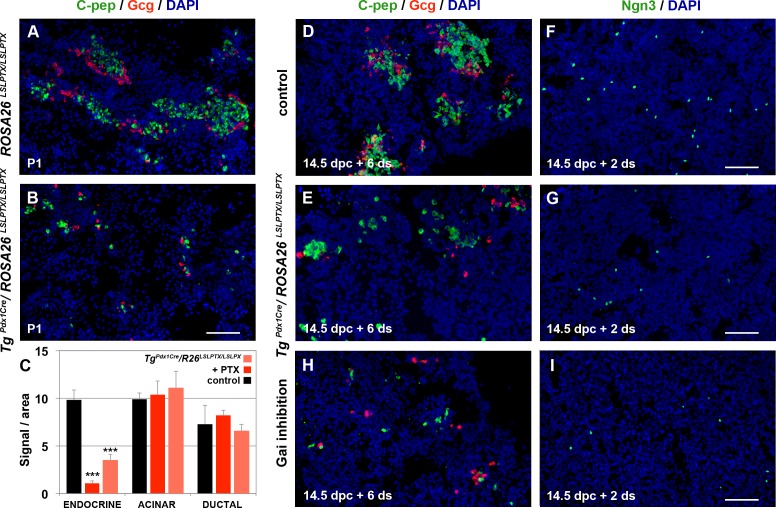
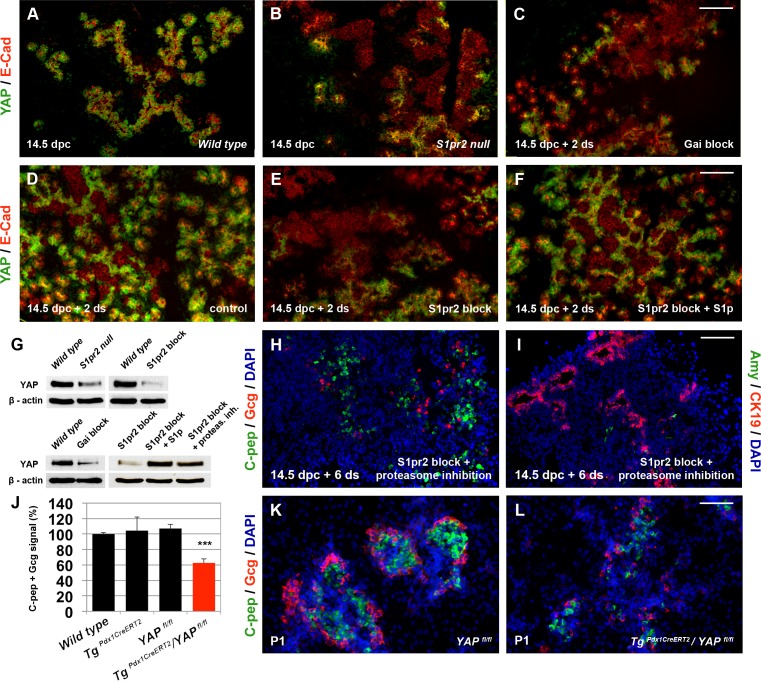
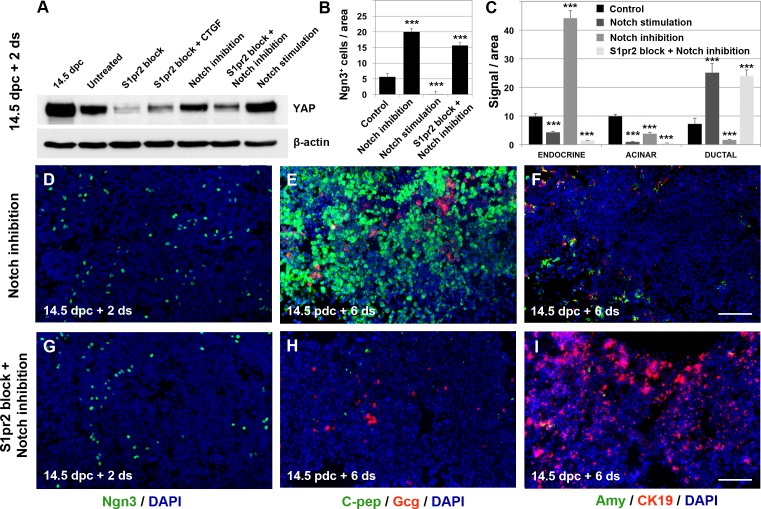
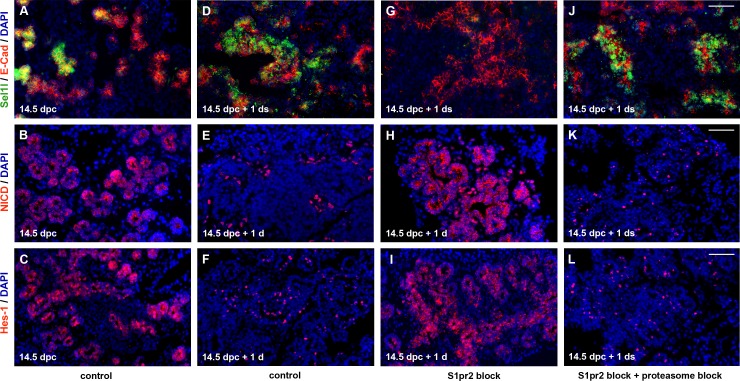
During development, progenitor expansion, lineage allocation, and implementation of differentiation programs need to be tightly coordinated so that different cell types are generated in the correct numbers for appropriate tissue size and function. Pancreatic dysfunction results in some of the most debilitating and fatal diseases, including pancreatic cancer and diabetes. Several transcription factors regulating pancreas lineage specification have been identified, and Notch signalling has been implicated in lineage allocation, but it remains unclear how these processes are coordinated. Using a combination of genetic approaches, organotypic cultures of embryonic pancreata, and genomics, we found that sphingosine-1-phosphate (S1p), signalling through the G protein coupled receptor (GPCR) S1pr2, plays a key role in pancreas development linking lineage allocation and specification. S1pr2 signalling promotes progenitor survival as well as acinar and endocrine specification. S1pr2-mediated stabilisation of the yes-associated protein (YAP) is essential for endocrine specification, thus linking a regulator of progenitor growth with specification. YAP stabilisation and endocrine cell specification rely on Gαi subunits, revealing an unexpected specificity of selected GPCR intracellular signalling components. Finally, we found that S1pr2 signalling posttranscriptionally attenuates Notch signalling levels, thus regulating lineage allocation. Both S1pr2-mediated YAP stabilisation and Notch attenuation are necessary for the specification of the endocrine lineage. These findings identify S1p signalling as a novel key pathway coordinating cell survival, lineage allocation, and specification and linking these processes by regulating YAP levels and Notch signalling. Understanding lineage allocation and specification in the pancreas will shed light in the origins of pancreatic diseases and may suggest novel therapeutic approaches.
在发育过程中,祖细胞扩增、谱系分配以及分化程序的实施需要紧密协调,以便生成数量正确的不同细胞类型,从而实现适当的组织大小和功能。胰腺功能障碍会导致一些最使人衰弱和致命的疾病,包括胰腺癌和糖尿病。已经鉴定出几种调节胰腺谱系特化的转录因子,并且Notch信号通路与谱系分配有关,但这些过程如何协调仍不清楚。通过结合遗传方法、胚胎胰腺的器官型培养和基因组学,我们发现1-磷酸鞘氨醇(S1p)通过G蛋白偶联受体(GPCR)S1pr2发出信号,在连接谱系分配和特化的胰腺发育中起关键作用。S1pr2信号通路促进祖细胞存活以及腺泡和内分泌特化。S1pr2介导的Yes相关蛋白(YAP)的稳定对于内分泌特化至关重要,从而将祖细胞生长调节因子与特化联系起来。YAP稳定和内分泌细胞特化依赖于Gαi亚基,揭示了所选GPCR细胞内信号成分的意外特异性。最后,我们发现S1pr2信号通路在转录后减弱Notch信号水平,从而调节谱系分配。S1pr2介导的YAP稳定和Notch减弱对于内分泌谱系的特化都是必需的。这些发现确定S1p信号通路是协调细胞存活、谱系分配和特化并通过调节YAP水平和Notch信号通路将这些过程联系起来的新关键途径。了解胰腺中的谱系分配和特化将有助于揭示胰腺疾病的起源,并可能提出新的治疗方法。