Research Institute for Electronics Science, Hokkaido University, Sapporo, Japan.
Institute of Math for Industry, Kyushu University, Fukuoka, Japan.
Sci Rep. 2017 Mar 7;7:42776. doi: 10.1038/srep42776.
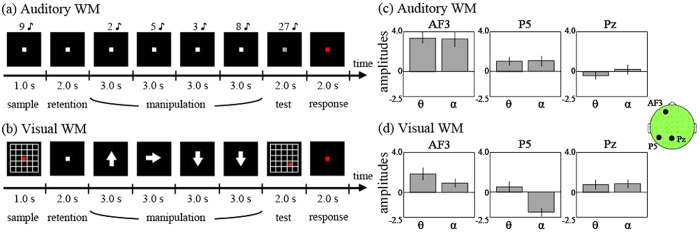
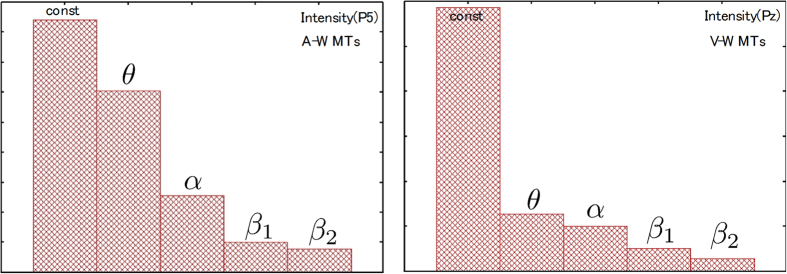
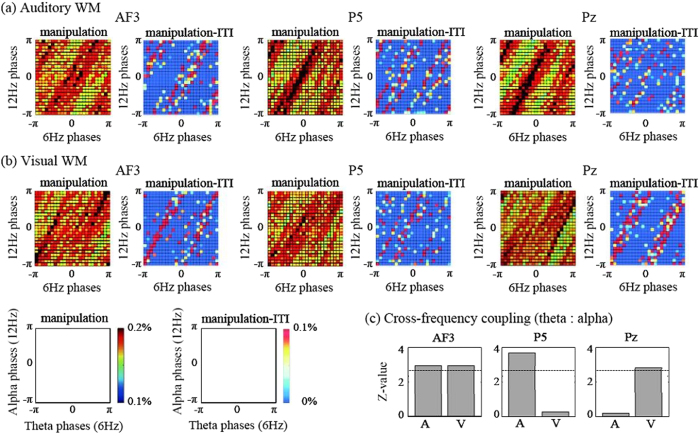
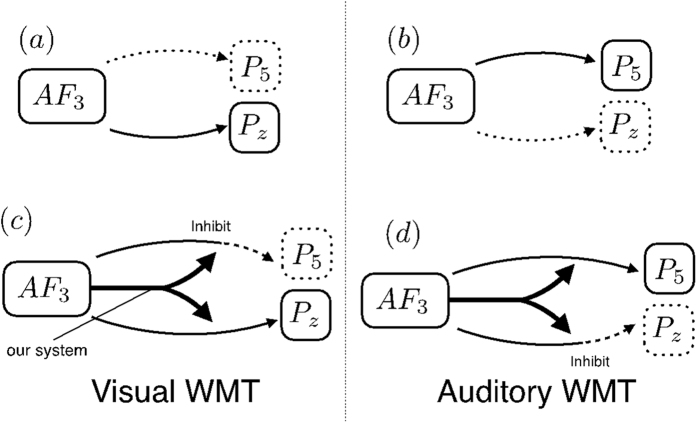
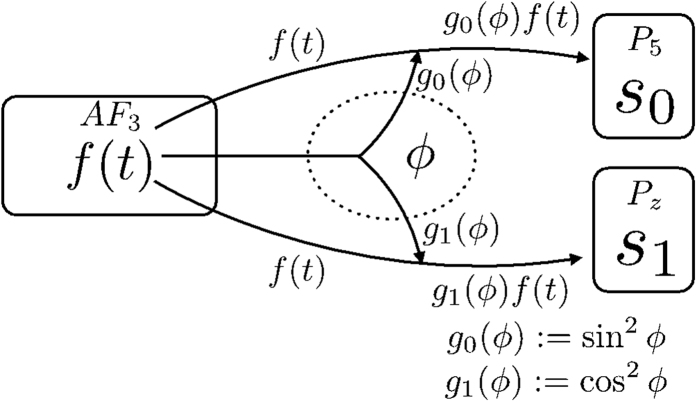
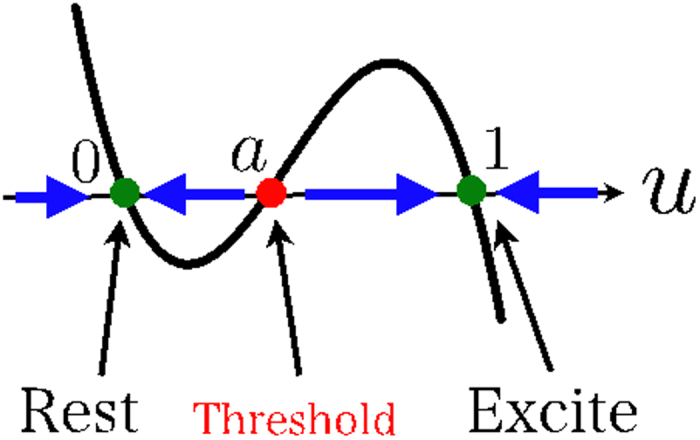
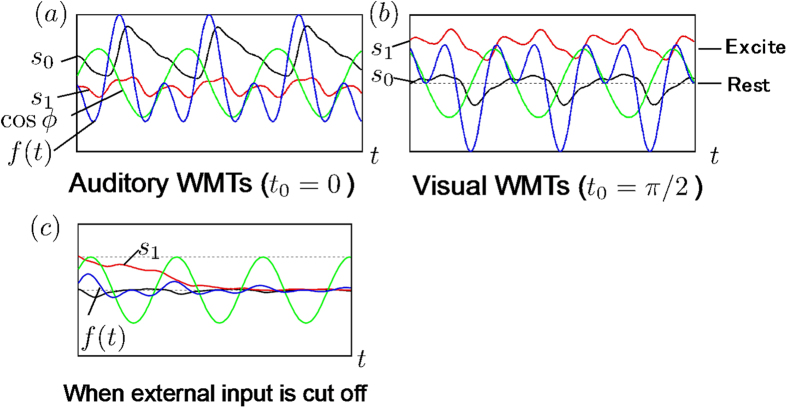
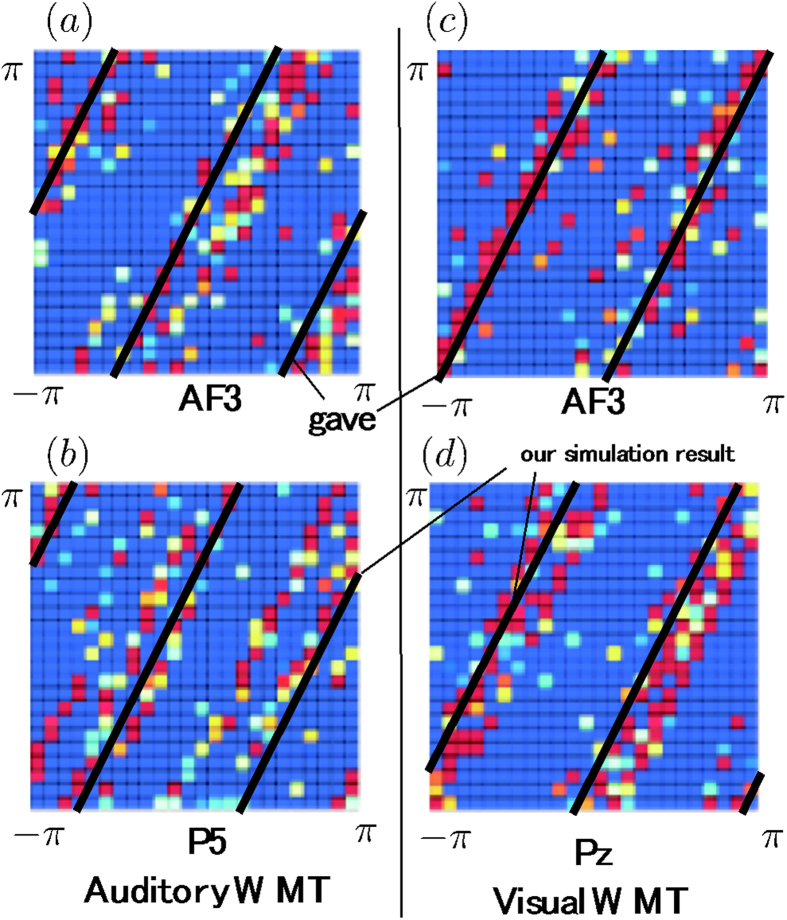
Working memory (WM) is known to be associated with synchronization of the theta and alpha bands observed in electroencephalograms (EEGs). Although frontal-posterior global theta synchronization appears in modality-specific WM, local theta synchronization in frontal regions has been found in modality-independent WM. How frontal theta oscillations separately synchronize with task-relevant sensory brain areas remains an open question. Here, we focused on theta-alpha phase relationships in frontal areas using EEG, and then verified their functional roles with mathematical models. EEG data showed that the relationship between theta (6 Hz) and alpha (12 Hz) phases in the frontal areas was about 1:2 during both auditory and visual WM, and that the phase distributions between auditory and visual WM were different. Next, we used the differences in phase distributions to construct FitzHugh-Nagumo type mathematical models. The results replicated the modality-specific branching by orthogonally of the trigonometric functions for theta and alpha oscillations. Furthermore, mathematical and experimental results were consistent with regards to the phase relationships and amplitudes observed in frontal and sensory areas. These results indicate the important role that different phase distributions of theta and alpha oscillations have in modality-specific dissociation in the brain.
工作记忆(WM)与脑电图(EEG)中观察到的θ和α频段的同步有关。虽然前后半球的全局θ同步出现在特定模态的 WM 中,但在非模态独立的 WM 中已经发现了额区的局部θ同步。额区θ振荡如何分别与任务相关的感觉脑区同步仍然是一个悬而未决的问题。在这里,我们使用 EEG 专注于额区的θ-α相位关系,然后使用数学模型验证它们的功能作用。EEG 数据表明,在听觉和视觉 WM 期间,额区的θ(6 Hz)和α(12 Hz)相位之间的关系约为 1:2,并且听觉和视觉 WM 之间的相位分布不同。接下来,我们使用相位分布的差异来构建 FitzHugh-Nagumo 类型的数学模型。结果通过θ和α振荡的三角函数正交复制了特定模态的分支。此外,关于在额区和感觉区观察到的相位关系和幅度,数学和实验结果是一致的。这些结果表明,θ和α振荡的不同相位分布在大脑中特定模态的分离中具有重要作用。