Sun Daxin, Ahn Haksoon, Lievens Tomas, Zeng Wu
School of Transportation and Civil Engineering, Fujian Agriculture and Forestry University, Fuzhou, Fujian, China.
School of Social Work, University of Maryland, Baltimore, MD, United States of America.
PLoS One. 2017 Mar 10;12(3):e0173346. doi: 10.1371/journal.pone.0173346. eCollection 2017.
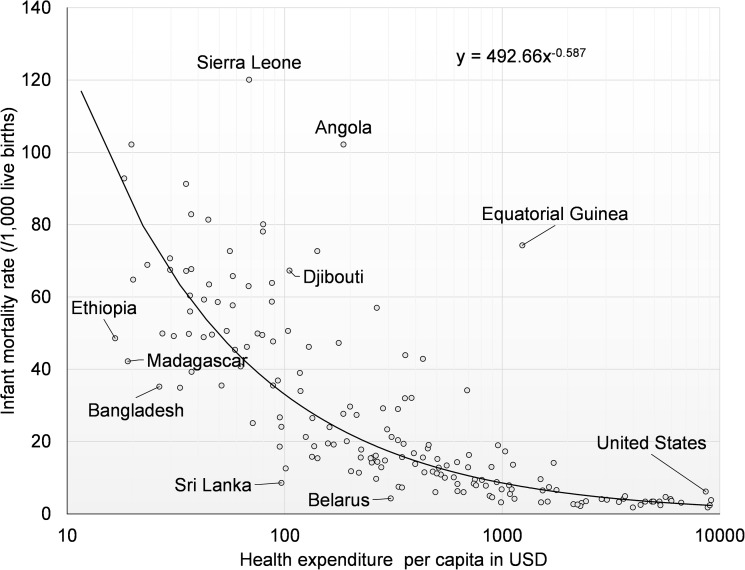
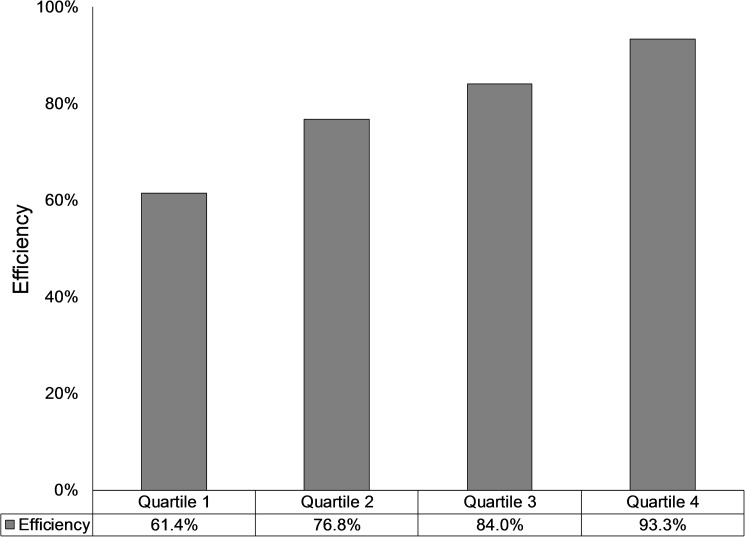
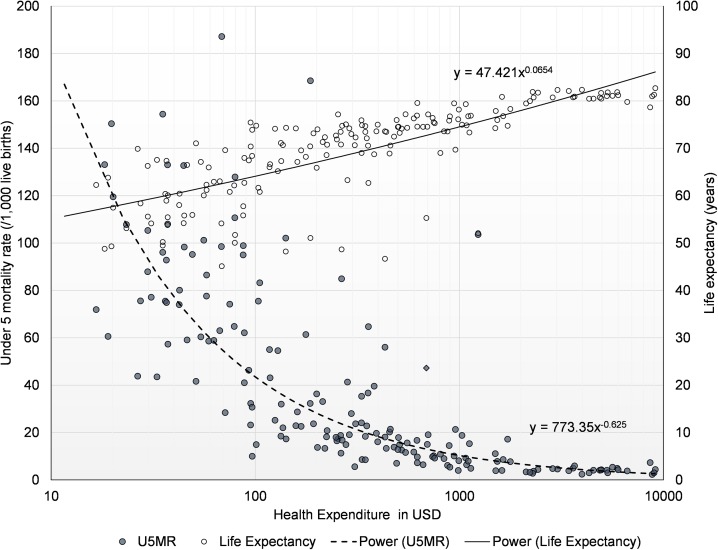
In an effort to improve health service delivery and achieve better health outcomes, the World Health Organization (WHO) has called for improved efficiency of health care systems to better use the available funding. This study aims to examine the efficiency of national health systems using longitudinal country-level data. Data on health spending per capita, infant mortality rate (IMR), under 5 mortality rate (U5MR), and life expectancy (LE) were collected from or imputed for 173 countries from 2004 through 2011. Data envelopment analyses were used to evaluate the efficiency and regression models were constructed to examine the determinants of efficiency. The average efficiency of the national health system, when examined yearly, was 78.9%, indicating a potential saving of 21.1% of health spending per capita to achieve the same level of health status for children and the entire population, if all countries performed as well as their peers. Additionally, the efficiency of the national health system varied widely among countries. On average, Africa had the lowest efficiency of 67%, while West Pacific countries had the highest efficiency of 86%. National economic status, HIV/AIDS prevalence, health financing mechanisms and governance were found to be statistically associated with the efficiency of national health systems. Taking health financing as an example, a 1% point increase of social security expenses as a percentage of total health expenditure correlated to a 1.9% increase in national health system efficiency. The study underscores the need to enhance efficiency of national health systems to meet population health needs, and highlights the importance of health financing and governance in improving the efficiency of health systems, to ultimately improve health outcomes.
为了改善卫生服务提供情况并取得更好的健康成果,世界卫生组织(WHO)呼吁提高卫生保健系统的效率,以便更好地利用现有资金。本研究旨在利用国家层面的纵向数据来考察各国卫生系统的效率。收集了2004年至2011年期间173个国家的人均卫生支出、婴儿死亡率(IMR)、5岁以下儿童死亡率(U5MR)和预期寿命(LE)数据,或对这些数据进行了估算。运用数据包络分析来评估效率,并构建回归模型来考察效率的决定因素。每年考察时,国家卫生系统的平均效率为78.9%,这表明如果所有国家都能达到其同类国家的水平,那么在实现儿童和全体人口相同健康状况的情况下,人均卫生支出可能节省21.1%。此外,各国国家卫生系统的效率差异很大。平均而言,非洲的效率最低,为67%,而西太平洋国家的效率最高,为86%。研究发现,国家经济状况、艾滋病毒/艾滋病流行率、卫生筹资机制和治理与国家卫生系统的效率在统计上相关。以卫生筹资为例,社会保障支出占卫生总支出的百分比每增加1个百分点,国家卫生系统效率就会提高1.9%。该研究强调需要提高国家卫生系统的效率以满足人群健康需求,并突出了卫生筹资和治理在提高卫生系统效率方面的重要性,最终改善健康成果。