Fasoli Fabio, Maass Anne, Paladino Maria Paola, Sulpizio Simone
School of Psychology, University of Surrey, Stage Hill Campus, Guildford, GU2 7XH, UK.
Center for Psychological Research and Social Intervention, Instituto Universitario de Lisboa, Lisbon, Portugal.
Arch Sex Behav. 2017 Jul;46(5):1261-1277. doi: 10.1007/s10508-017-0962-0. Epub 2017 Mar 15.
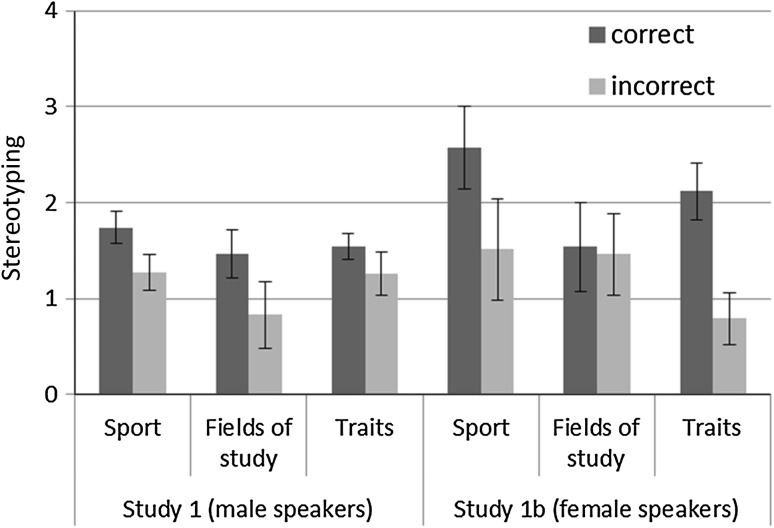
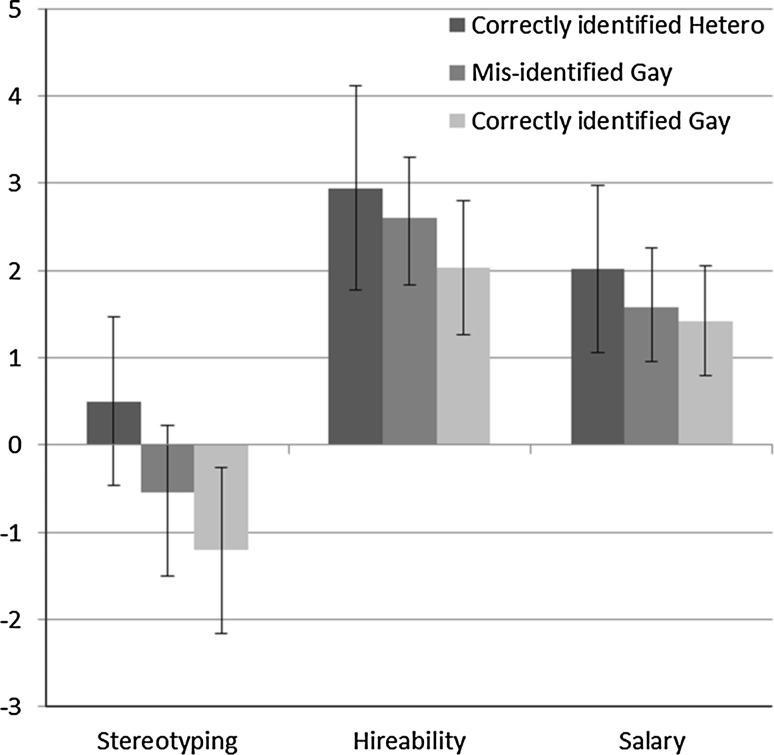
The growing body of literature on the recognition of sexual orientation from voice ("auditory gaydar") is silent on the cognitive and social consequences of having a gay-/lesbian- versus heterosexual-sounding voice. We investigated this issue in four studies (overall N = 276), conducted in Italian language, in which heterosexual listeners were exposed to single-sentence voice samples of gay/lesbian and heterosexual speakers. In all four studies, listeners were found to make gender-typical inferences about traits and preferences of heterosexual speakers, but gender-atypical inferences about those of gay or lesbian speakers. Behavioral intention measures showed that listeners considered lesbian and gay speakers as less suitable for a leadership position, and male (but not female) listeners took distance from gay speakers. Together, this research demonstrates that having a gay/lesbian rather than heterosexual-sounding voice has tangible consequences for stereotyping and discrimination.
关于从声音中识别性取向(“听觉同性恋雷达”)的文献越来越多,但对于拥有同性恋或异性恋特质的声音所产生的认知和社会后果却鲜有提及。我们在四项研究(总样本量N = 276)中对这个问题进行了调查,研究使用意大利语进行,让异性恋听众收听同性恋和异性恋者的单句语音样本。在所有四项研究中,听众对异性恋者的特质和偏好做出了符合性别的典型推断,但对同性恋者的特质和偏好做出了不符合性别的推断。行为意图测量表明,听众认为同性恋者不太适合担任领导职务,男性(而非女性)听众与同性恋者保持距离。综合来看,这项研究表明,拥有同性恋特质的声音而非异性恋特质的声音会对刻板印象和歧视产生切实影响。