Sharma Amit Kumar, Sahoo Pradeepta Kumar, Singhal Shailey, Patel Alok
Biofuel Research Laboratory, Institute of Alternative Energy Research, University of Petroleum and Energy Studies, Bidholi, Dehradun, Uttrakhand, 248007, India.
Department of Chemistry, University of Petroleum and Energy Studies, Bidholi, Dehradun, Uttrakhand, 248007, India.
3 Biotech. 2016 Dec;6(2):116. doi: 10.1007/s13205-016-0434-6. Epub 2016 May 31.
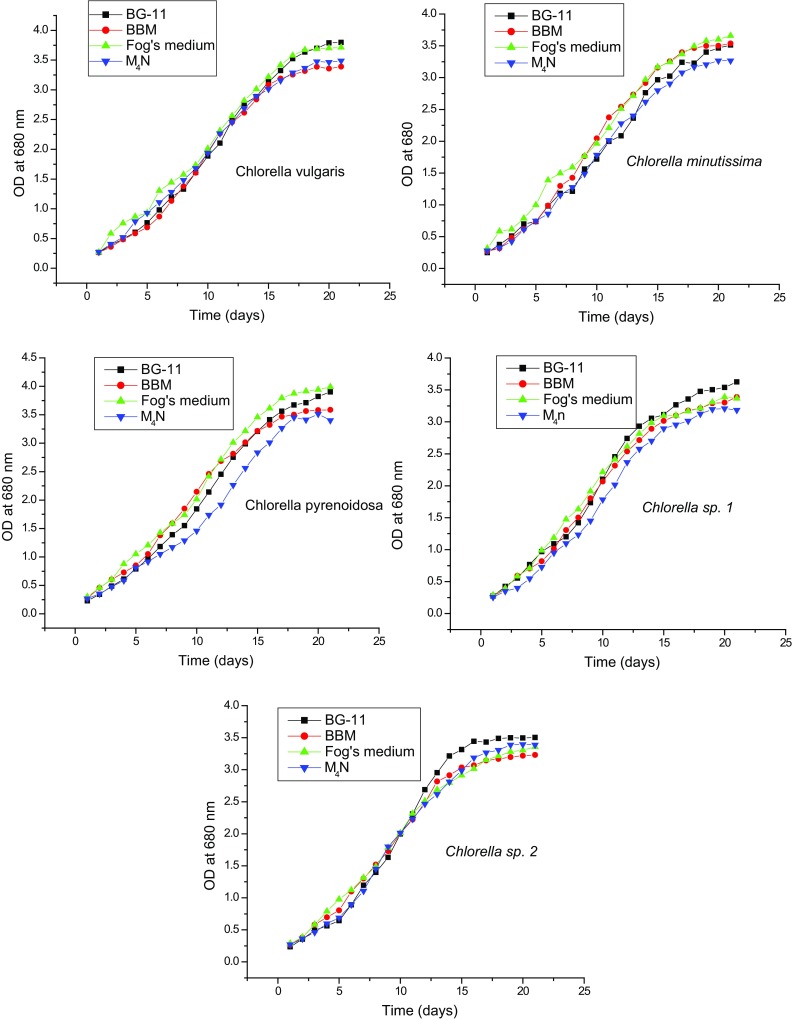
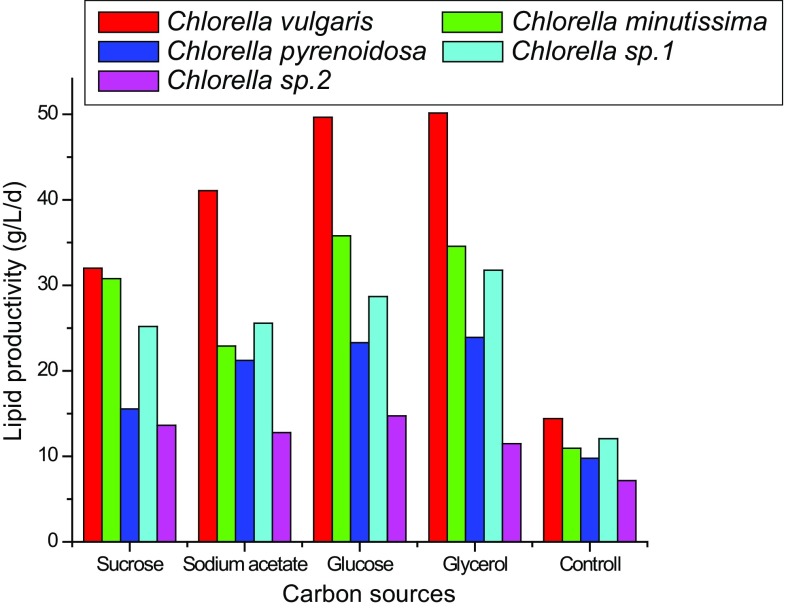
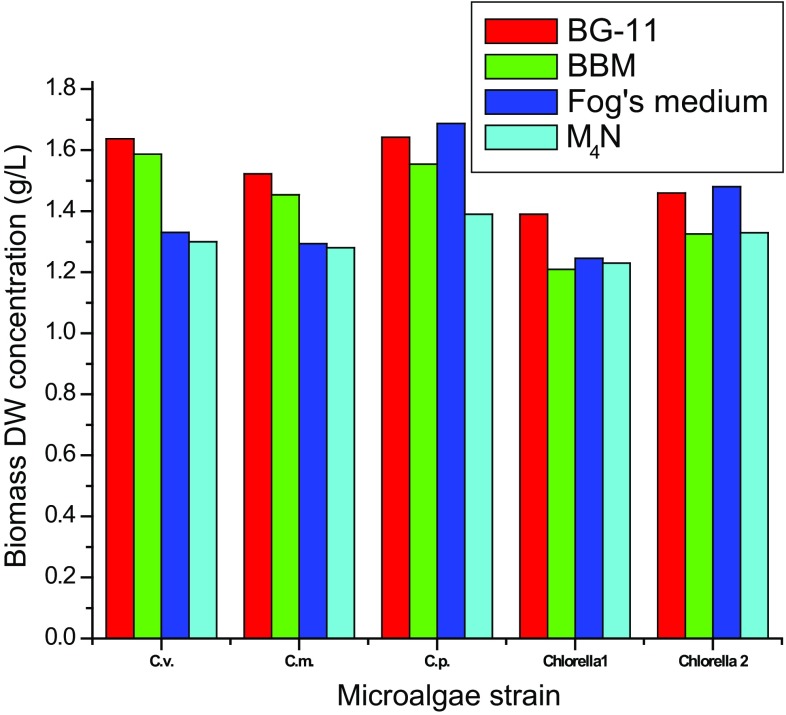
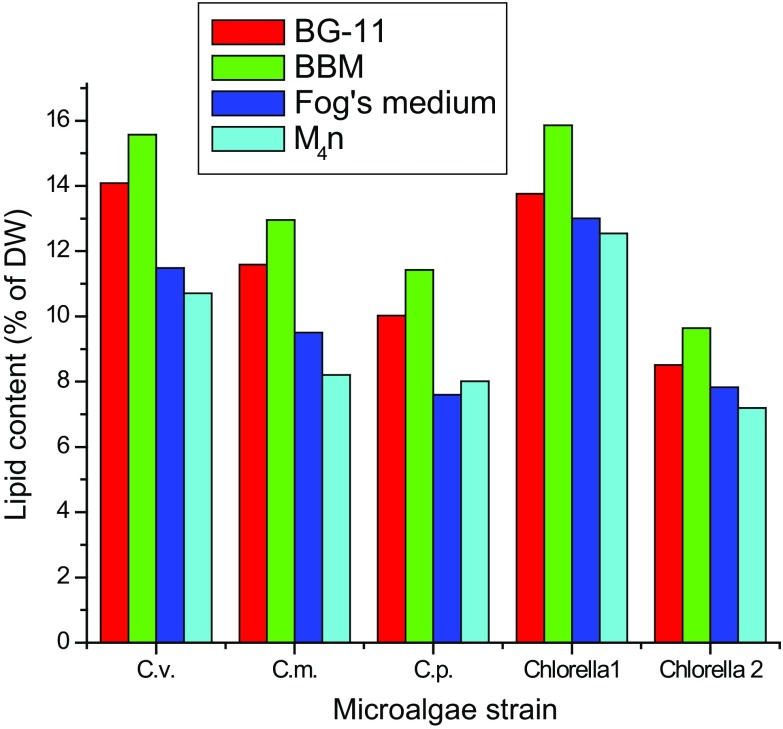
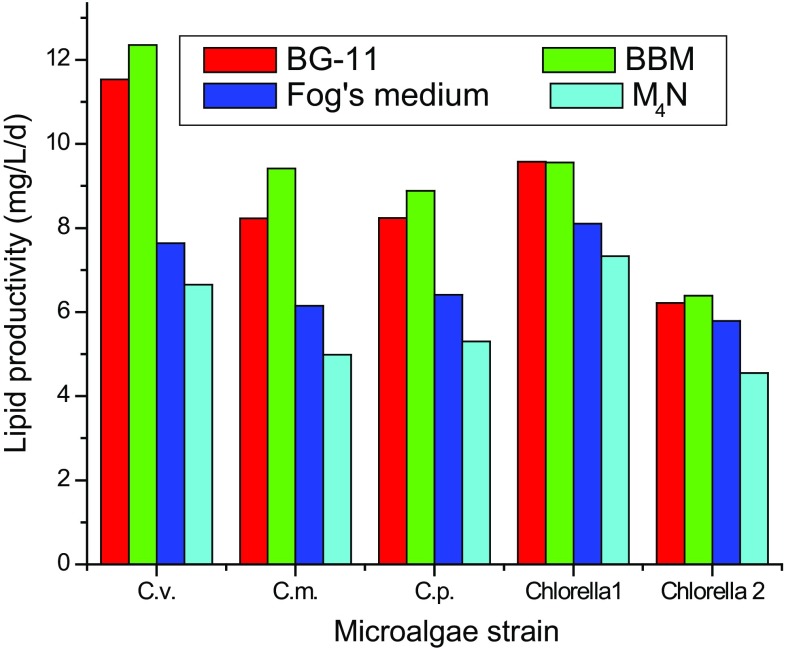
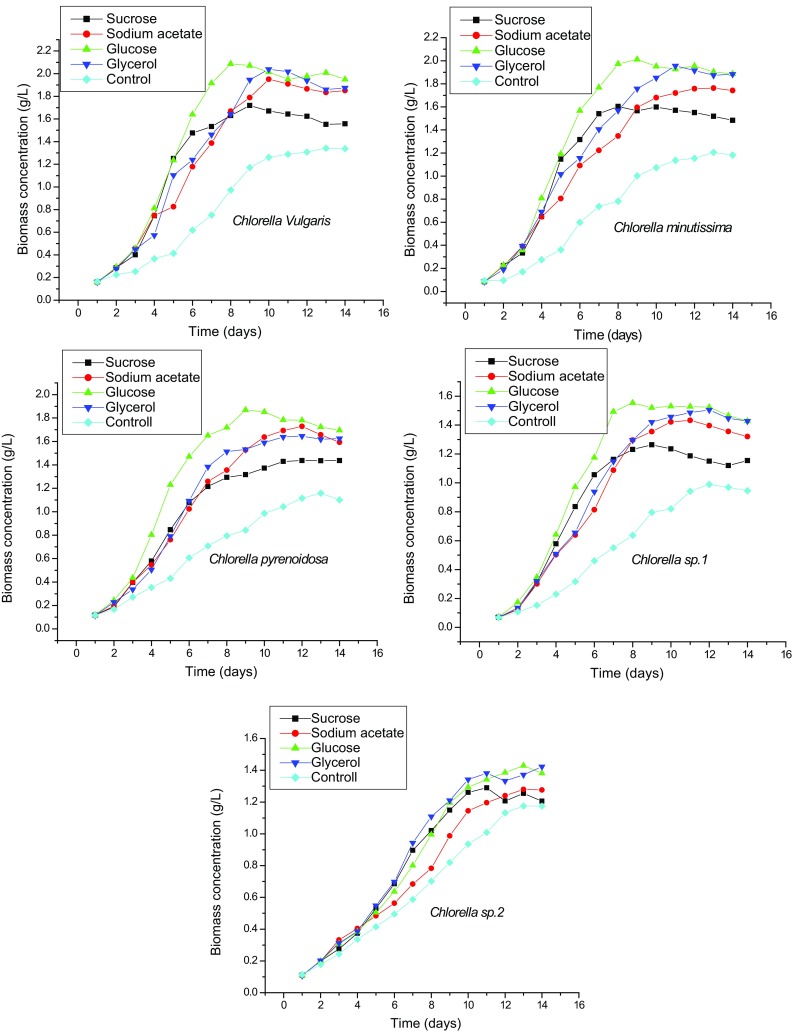
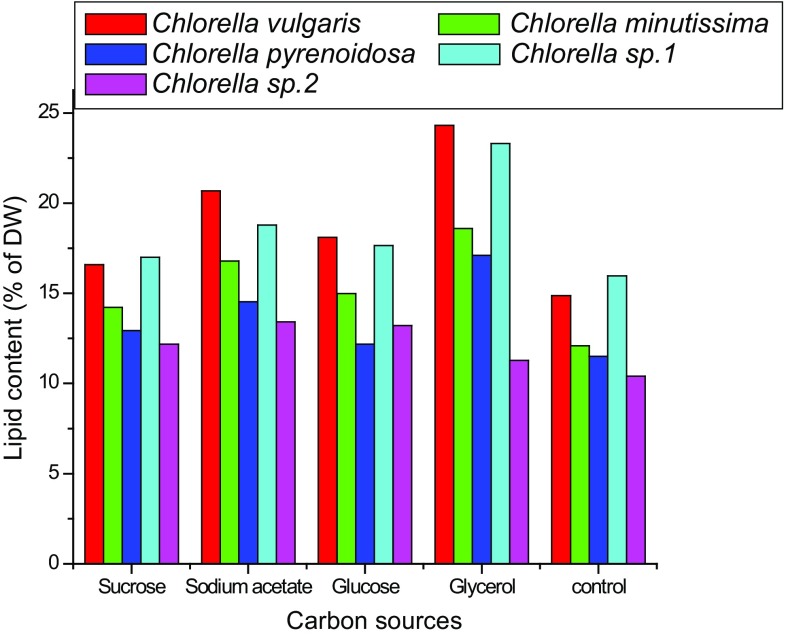
In this study, five Chlorella species (Chlorella vulgaris, Chlorella minutissima, Chlorella pyrenoidosa, Chlorella sp.1 and Chlorella sp.2) were grown in various nutrient medium including BG-11, BBM, Fog's medium and MN medium for the evolution of biomass and lipid production potential. Among the tested medium, BG-11 was found most economical and efficient medium for all Chlorella species. To see the impact of organic carbon sources on lipid production potential, all microalgae species were also cultured in selected medium (BG-11) with different organic carbon sources like glucose, glycerol, sodium acetate, and sucrose under mixotrophic condition. The results showed that all Chlorella species performs better under mixotrophic condition, but Chlorella vulgaris achieved maximum lipid productivity (3.5 folds higher) in glycerol supplemented culture medium than control medium among all species.
在本研究中,培养了五种小球藻(普通小球藻、极小小球藻、蛋白核小球藻、小球藻1号和小球藻2号),使其在包括BG - 11、BBM、Fog培养基和MN培养基在内的各种营养培养基中生长,以评估生物量的增长和脂质生产潜力。在所有测试的培养基中,BG - 11被发现是所有小球藻物种最经济高效的培养基。为了观察有机碳源对脂质生产潜力的影响,所有微藻物种还在选定的培养基(BG - 11)中,在混合营养条件下与不同的有机碳源(如葡萄糖、甘油、醋酸钠和蔗糖)一起培养。结果表明,所有小球藻物种在混合营养条件下表现更好,但在所有物种中,普通小球藻在添加甘油的培养基中比对照培养基实现了最高的脂质生产率(高3.5倍)。