Milan Amber M, Pundir Shikha, Pileggi Chantal A, Markworth James F, Lewandowski Paul A, Cameron-Smith David
Liggins Institute, University of Auckland, Private Bag 92019, Auckland 1023, New Zealand.
School of Medicine, Deakin University, 75 Pigdons Road, Warun Ponds, VIC 3216, Australia.
Nutrients. 2017 Apr 2;9(4):354. doi: 10.3390/nu9040354.
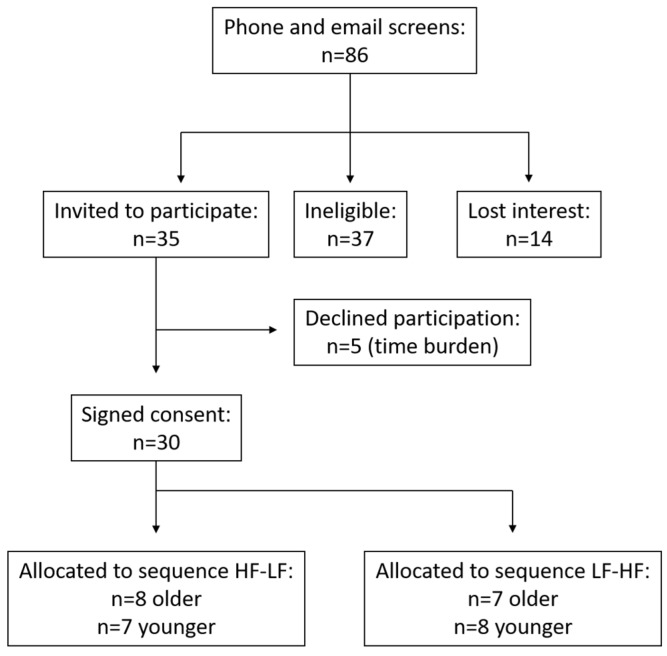
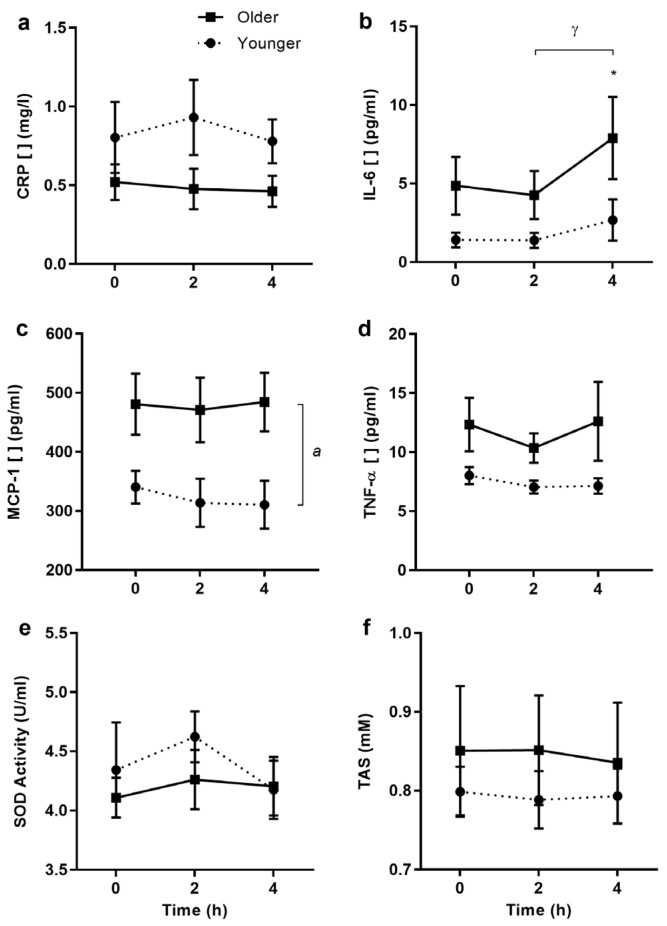
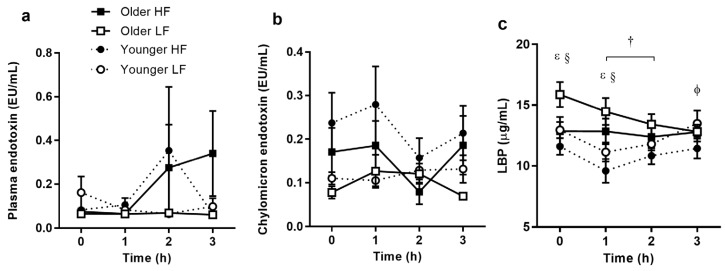
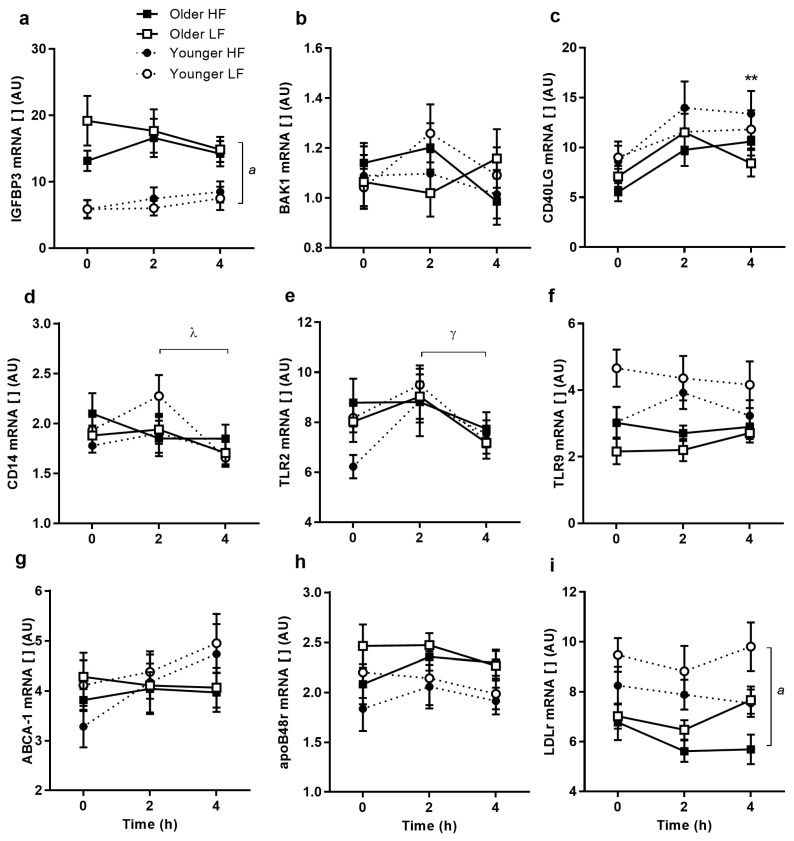
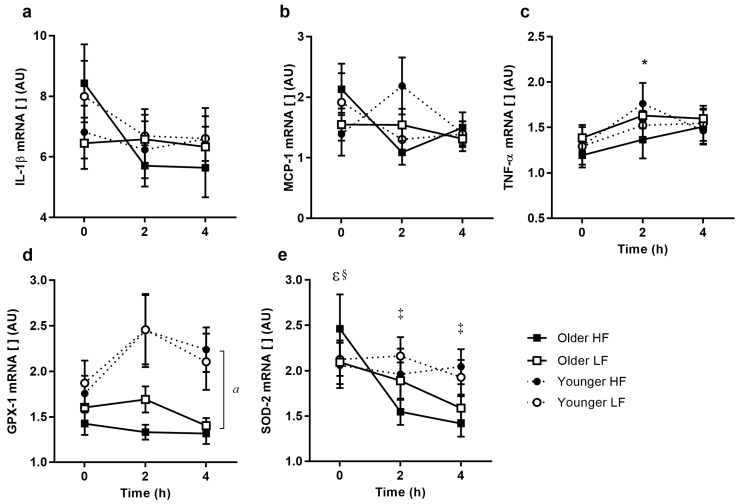
Postprandial inflammation and endotoxaemia are determinants of cardiovascular and metabolic disease risk which are amplified by high fat meals. We aimed to examine the determinants of postprandial inflammation and endotoxaemia in older and younger adults following a high fat mixed meal. In a randomised cross-over trial, healthy participants aged 20-25 and 60-75 years ( = 15/group) consumed a high-fat breakfast and a low-fat breakfast. Plasma taken at baseline and post-meal for 5 h was analysed for circulating endotoxin, cytokines (monocyte chemotactic protein-1 (MCP-1), interleukin (IL)-1β, IL-6, and tumour necrosis factor-alpha (TNF-α)), lipopolysaccharide binding protein (LBP), and inflammatory gene expression in peripheral blood mononuclear cells (PBMC). Older subjects had lower baseline PBMC expression of Glutathione peroxidase 1 (GPX-1) but greater insulin-like growth factor-binding protein 3 (IGFBP3) and circulating MCP-1 compared to younger subjects. After either meal, there were no age differences in plasma, chylomicron endotoxin, or plasma LBP concentrations, nor in inflammatory cytokine gene and protein expression (MCP-1, IL-1β, and TNF-α). Unlike younger participants, the older group had decreased superoxide dismutase (SOD)-2 expression after the meals. After a high-fat meal, older adults have no increased inflammatory or endotoxin response, but an altered oxidative stress gene response compared with younger adults. Healthy older adults, without apparent metabolic dysfunction, have a comparable postprandial inflammatory and endotoxaemia response to younger adults.
餐后炎症和内毒素血症是心血管疾病和代谢疾病风险的决定因素,高脂肪餐会加剧这些风险。我们旨在研究高脂肪混合餐后老年人和年轻人餐后炎症和内毒素血症的决定因素。在一项随机交叉试验中,20 - 25岁和60 - 75岁的健康参与者(每组 = 15人)分别食用了高脂肪早餐和低脂肪早餐。分析了基线和餐后5小时采集的血浆中的循环内毒素、细胞因子(单核细胞趋化蛋白-1(MCP-1)、白细胞介素(IL)-1β、IL-6和肿瘤坏死因子-α(TNF-α))、脂多糖结合蛋白(LBP)以及外周血单核细胞(PBMC)中的炎症基因表达。与年轻受试者相比,老年受试者的谷胱甘肽过氧化物酶1(GPX-1)基线PBMC表达较低,但胰岛素样生长因子结合蛋白3(IGFBP3)和循环MCP-1较高。用餐后,血浆、乳糜微粒内毒素或血浆LBP浓度以及炎症细胞因子基因和蛋白表达(MCP-1、IL-1β和TNF-α)在年龄上没有差异。与年轻参与者不同,老年组在用餐后超氧化物歧化酶(SOD)-2表达下降。与年轻成年人相比,高脂肪餐后老年人的炎症或内毒素反应没有增加,但氧化应激基因反应有所改变。没有明显代谢功能障碍的健康老年人与年轻成年人的餐后炎症和内毒素血症反应相当。